


The right to strike must be constitutional BFTU
31 Jul 2022
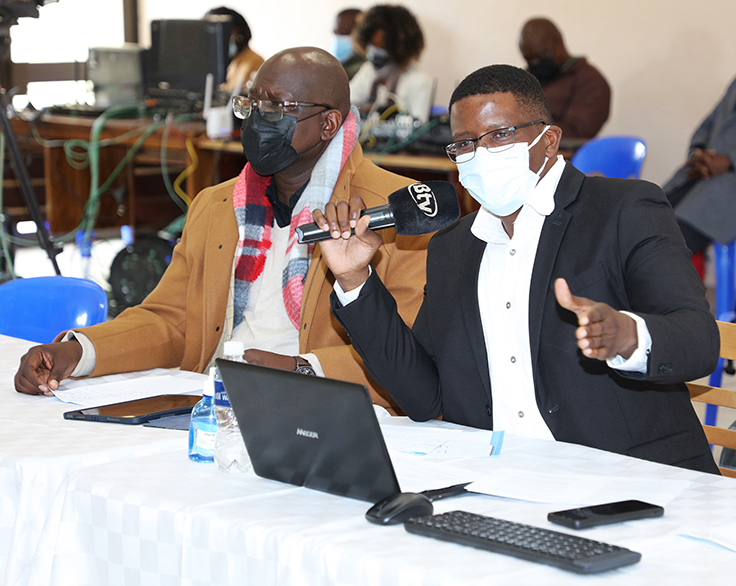
The right to strike as a tool of protest for employees together with the right to negotiate and the right to be paid should be made constitutional rights, says Mr Thusang Butale.
Mr Butale, who is Botswana Federation of Trade Union’s (BFTU) secretary general proposed this when making submissions before the Presidential Commission of Inquiry into the review of the Constitution in Gaborone on Wednesday.
He said his organisation believed that socio-economic and cultural rights formed core of the protection of the rights of both workers and trade unions.
“The protection of workers and trade union rights must include the right to work in just and favourable conditions, adequate standard of living, highest attainable standards of physical and mental health and enjoyment of the benefits of cultural freedom,” he said.
He stated, however, that while it was BFTU’s conviction that the full manifestation of workers’ rights was dependent upon laws adopted by Parliament, the labour movement was alive to some of the ‘claw back clauses’ in the bill of rights which he stated took away the right instead of giving them full effect.
Moreover, Mr Butale said the protection of personal data and privacy was an equally more important human right that his organisation felt should be embedded in the Constitution; a development he argued will better give effect to the already existing Data Protection Act.
On the separation of powers, he submitted that BFTU wanted a government that was, in terms of the Constitution, a servant of the people and not their master.
The Constitution under review, he added, should project the president who was only the most senior public servant.
“As BFTU we want a national constitution that will bring about national cohesion, national pride and national unity that will be celebrated around the world as an exemplar to other nations in Africa and beyond,” he said, adding this could only be achieved if both parliament and the judiciary were not subservient to the executive arm of government.
For his part, public service sector union’s Mr Topias Marenga advocated the recognition and official use of indigenous languages, which he argued had a bearing on the economic trajectory of the people in a given area.
“The aspect of freedom of assembly is also key to us as unions and should be given the due recognition as was the case in other jurisdictions,” he stated.
Mr Marenga was of the view that the time had arrived for Botswana to introduce the industrial court of appeal to deal with disputes work-related without delay.
Escalating unresolved cases through the Court of Appeal, he said, was a costly exercise for the majority of Batswana who wanted justice. Ends
Source : BOPA
Author : Mooketsi Mojalemotho
Location : Gaborone
Event : Commission of Inquiry
Date : 31 Jul 2022
Related News

06 Aug 2026
05 Aug 2026
Zim foreign currency earnings rise sharply in H1
05 Aug 2026
More women join ranks of game rangers

05 Aug 2026