


Constitution must be supreme- EFB
28 Jul 2022
The supremacy of the constitution as the apex law of the land must not be based on assumption.
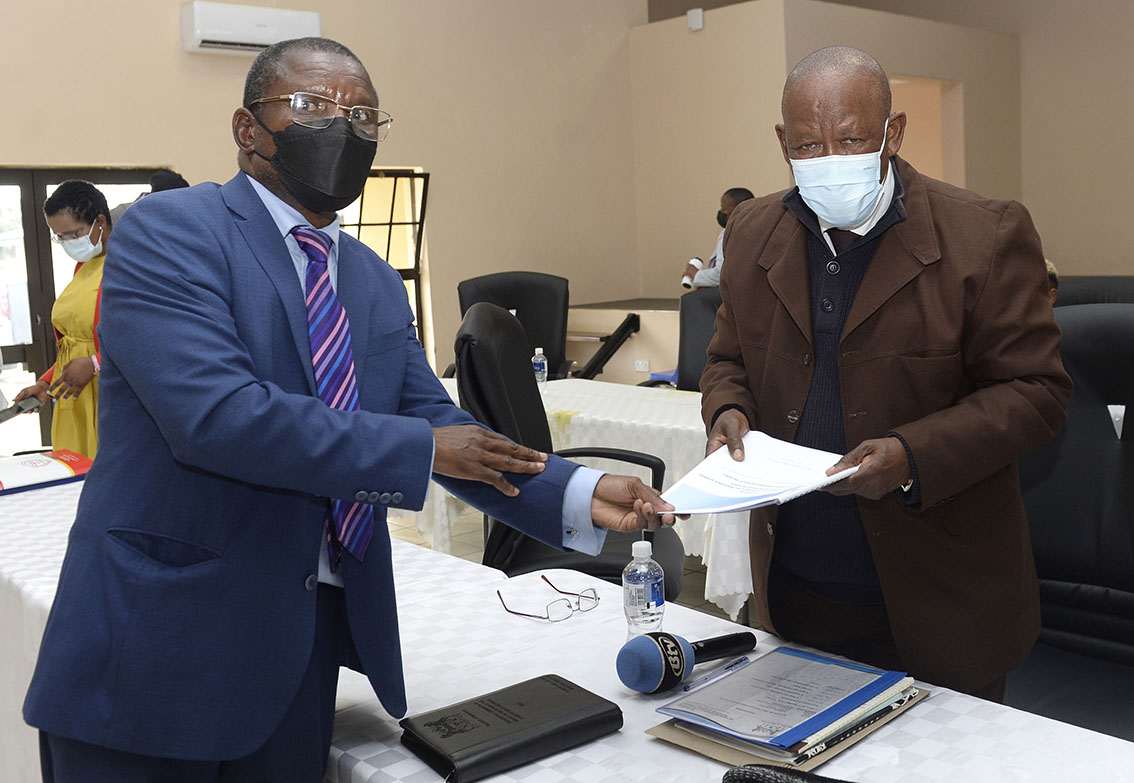
According to the Evangelical Fellowship of Botswana (EFB), the constitution must recognise and pronounce itself as the supreme law of the republic, and EFB representative Pastor Aobakwe Banamile says any law or conduct inconsistent with the document must be viewed as invalid.
Pastor Banamile, who was making submissions before the Presidential Commission of Inquiry into the Review of the Constitution on Wednesday said such recognition and pronouncement of the supremacy of the constitution should make it mandatory for the obligations imposed by it to be fulfilled.
Among other recommendations made by the Christian body, he mentioned to right to citizenship and nationality, as well as the right to human dignity.
Regarding the former, he suggested for the constitution to ‘ensure that everyone has a nationality and is not deprived of citizenship; and to guarantee all citizens equal entitlement to the rights, privileges and benefits of citizenship.’
As for the right to human dignity, he said the law must accord everyone inherent dignity, respect and the protection of their dignity.
Pastor Banamile further advocated the recognition and entrenchment in the constitution of the right to religion, belief and worship, and explained that individuals and communities should enjoy unfettered right to uphold, practise, propagate and proselytise both in private and in public, the religious convictions of their choice.
“Notwithstanding the right to religion, belief and worship; Satanism, its beliefs and the worship of Satan or any other religion that is clearly against good values and morality should be banned in Botswana,” he said, adding that the law should expressly prohibit any religious belief or practice that carried the potential to corrupt society’s entrenched value system.
Another of their proposals, he submitted, was the right to a safe environment; one which he said would ensure that citizens were entitled to an environment that was not harmful to their health and wellbeing, and one that was protected from pollution and ecological degradation. Children’s rights, he further added, also needed constitutional protection, which he said would accord them the right to a name, nationality, as well as family and/or parental care or an appropriate alternative.
The infusion of their rights in the constitution would also assure children of basic nutrition, shelter, basic health care services and social services, he said.
The EFB wants the law to similarly grant citizens the right to access to information, a right which Pastor Banamile said would ensure that everyone had access to information held by the state or other persons which was required for the exercise and protection of any rights.
Pastor Banamile had earlier outlined the weaknesses of Botswana’s constitution, among which he had cited its silence on second generation rights, as well as its silence on its status as the supreme law of the land.
On its strengths, he commended its clear distinction between the executive, legislature and judiciary, and he hailed it for its protection of the fundamental rights of the individual.
He also cited among its strengths, its prohibition of slavery and forced labour, inhuman treatment, deprivation of property and discrimination on the basis of race, tribe, place of origin, political opinions, colour, creed and sex. Ends
Source : BOPA
Author : Keonee Kealeboga
Location : Gaborone
Event : Commission of Inquiry
Date : 28 Jul 2022
Related News

06 Aug 2026
05 Aug 2026
Zim foreign currency earnings rise sharply in H1
05 Aug 2026
More women join ranks of game rangers

05 Aug 2026