


Entrench Ombudsman in constitution - Union
24 Jul 2022
The constitution must fully capacitate the Ombudsman for him/her to successively combat maladministration and corruption.
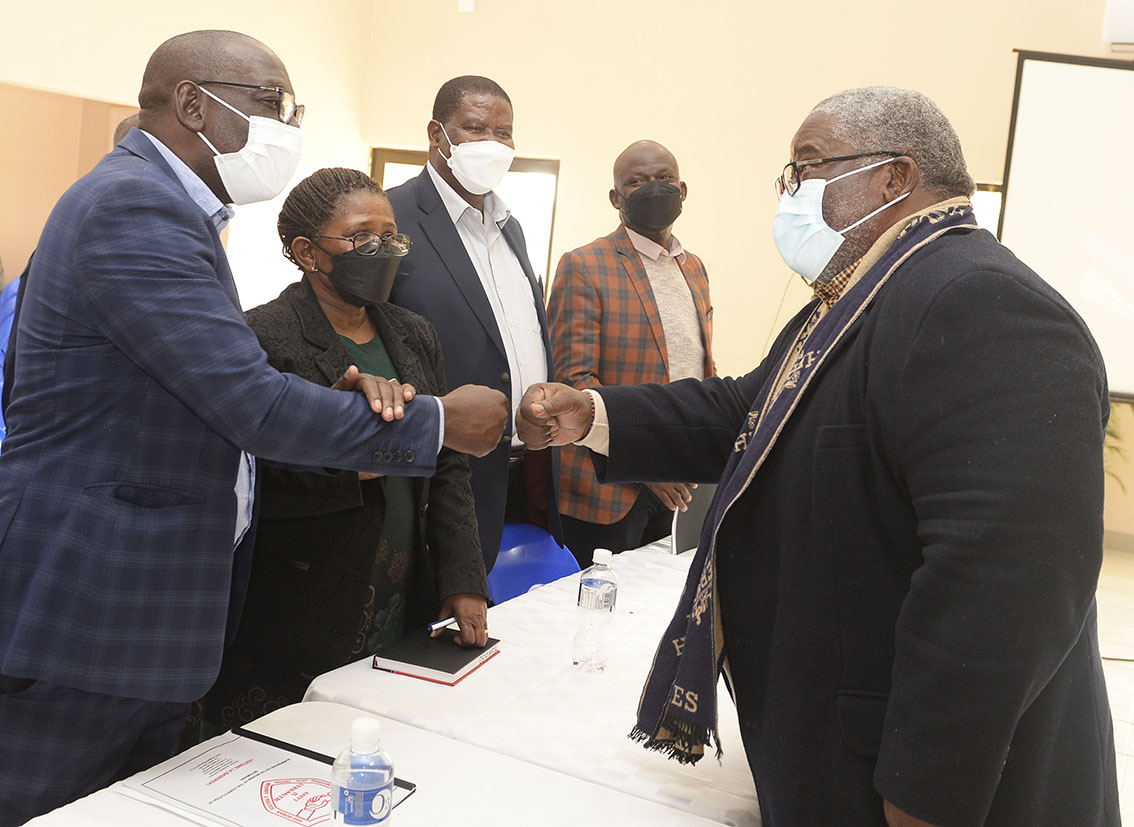
When presenting through its representative Mr Robert Rabasimane, Thursday, before the Presidential Commission of Inquiry into the Review of the Constitution, National Amalgamated Local, Central Government and Parastatal Workers Union, or Manual Workers Union, as commonly known, said under the current act the Ombudsman wielded no power to issue any binding remedial action.
He therefore called for the office of the Ombudsman to be entrenched in the constitution and given the capacity to issue binding recommendations.
“The office of the Ombudsman should be established under the constitution with powers to take remedial action to address issues of maladministration and governance lapses. The Ombudsman must be appointed by parliament and be accountable to it,” he added.
With regard to the National Assembly, he said to enhance the impartiality of its speaker, only persons who had not been politically been active for at least 10 successive years should be eligible for appointment to the position.
That, he said, would enhance the efficacy of debate in parliament. Mr Rabasimane said while the constitution provided for the appointment of the Speaker from amongst persons who were not members of parliament, practice in the country had been that Speakers had always been appointed from amongst politically active members of the ruling party.
“The Speaker is appointed from amongst persons who are not members of the National Assembly. Invariably, Speakers have been appointed from amongst ruling party political activists. We would therefore suggest that the Speaker of the National Assembly should be someone who has not been politically active for the last 10 years prior to his/her appointment,” he said.
The union also requested for reforms with regards the Judicial Service Commission (JSC), with Mr Rabasimane raising their concern over the composition of the body, stating that as presently constituted, it lacked sufficient representation of several interest groups.
Mr Rabasimane said since in its current form most of its members were public officers and presidential appointees, balance in its decision-making processes could not be guaranteed.
“We recommend that the composition of the JSC be enlarged to include representation of trade union representatives approved by parliament; a representative of human rights groups approved by parliament; four members of parliament, including two from the opposition,” he said.
Still on the JSC with regard to its role in the process of appointing judges of the High Court and those of the Court of Appeal, the union held the view that the secrecy of the process was worrying.
He said this raised doubts about the merit of those appointed, and this he said, was not in keeping with the values of an open and democratic society.
While the constitution takes care of basic and fundamental rights, it was the union’s further submission that second generation rights should also be encompassed in the country’s supreme law.
The union thus recommended that the right to education; the right to decent health care; the right to land and consequently housing; the right to food and water and the right to social security be entrenched in the constitution, Mr Rabasimane told the commission.
In addition to these, he proposed that special provision should expressly be made for the special protection of the rights of People with Disability (PwD), which provision he said would enjoin the state to take steps to ensure that that section of society enjoyed, on an equal basis, all the rights and opportunities that were enjoyed by the rest of the citizenry.
Also needing the protection of the constitution, Mr Rabasimane mentioned the right to work, the right to bargain collectively, and the lifting of limitations on the right to unionise. Ends
Source : BOPA
Author : Keonee Kealeboga
Location : Gaborone
Event : Commission of Inquiry
Date : 24 Jul 2022
Related News

06 Aug 2026
05 Aug 2026
Zim foreign currency earnings rise sharply in H1
05 Aug 2026
More women join ranks of game rangers

05 Aug 2026