


Rabies threat to human life livestock sector
13 Jul 2022
Though rabies is a vaccine-preventable viral disease, if not adequately controlled, it can cause terrible suffering and demise of unfortunate human victims.
“It also has the potential to cause serious economic losses to the livestock sector. That is why government has placed its control at the forefront and is doing everything it could do to mitigate the disease,” says Minister of Agriculture Minister Fidelis Molao.
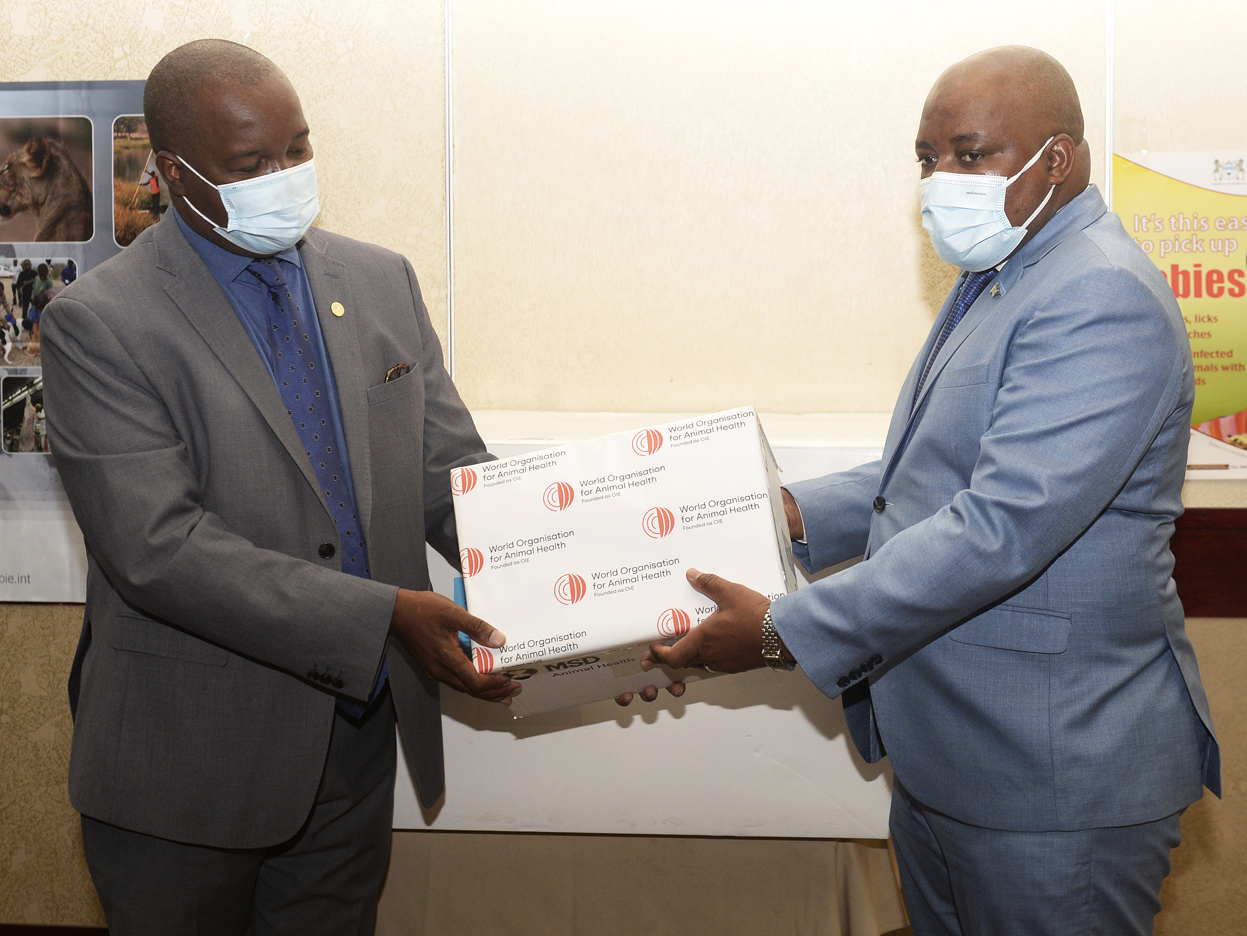
He made the remarks when receiving a batch of 50 000 doses of rabies vaccine from the World Organisation of Animal Health (WOAH) in Gaborone yesterday.
Mr Molao revealed that government had intensified public awareness on rabies following a decline in the number of vaccinated dogs and cats from 210 518 in 2019/20 to 187 856 in 2020/21.
“With the ongoing vaccination campaign we have so far vaccinated 97 140 dogs and cats.
I therefore, encourage all farmers to take their dogs and cats for vaccination before August 31 when the campaign closes,” said.
Mr Molao said his ministry was always ready to work with stakeholders such as WOAH who were generously donating vaccines to Botswana to combat rabies.
He said government considered WOAH an important partner, not merely a donor of vaccines or provider of technical support.
The organisation’s standards were important tools of trade in the protection of the livestock industry as they guided the country’s health policies and programmes.
He said WOAH, together with WHO and FAO, had prioritised rabies under a one-health approach.
The three organisations had launched the “United Against Rabies” programme which Botswana subscribed to, said Mr Molao.
The minister said to that end, government planned to establish a public health institute which would oversee one-health coordination of public health risks including zoonotic diseases such as rabies as well as antimicrobial resistance.
For his part, WOAH sub-regional representative for Southern Africa Dr Moetapele Letshwenyo said mass vaccination of dogs was the most practical and cost-effective method to interrupt the disease’s infectious cycle between animals and humans.
“It is estimated that by vaccinating 70 per cent of dogs, rabies could be eradicated in dogs and the number of human cases would rapidly drop,” he said.Dr Letshwenyo said WOAH had developed a rabies vaccine bank which delivered highly efficacious medicine to member countries.
He said since 2019, about 1 000 000 doses of rabies vaccine had been donated to SADC countries to encourage implementation of mass dog vaccination campaign and contribute to the elimination of dog-mediated rabies by 2030.
WOAH is an inter-governmental organisation responsible for setting scientific standards on animal health, welfare and veterinary public health as well as for diseases that are transmittable between animals and humans such as rabies. BOPA
Source : BOPA
Author : Aubrey Maswabi
Location : GABORONE
Event : Donation
Date : 13 Jul 2022
Related News

06 Aug 2026
05 Aug 2026
Zim foreign currency earnings rise sharply in H1
05 Aug 2026
More women join ranks of game rangers


05 Aug 2026