PPP way to go
06 Jul 2022
The availability of infrastructure is at the heart of Botswana’s efforts to graduate to high-income status. This explains why key infrastructural developments are going up all over the country. Worrisomely, nearly all of the projects have been funded directly by the government.
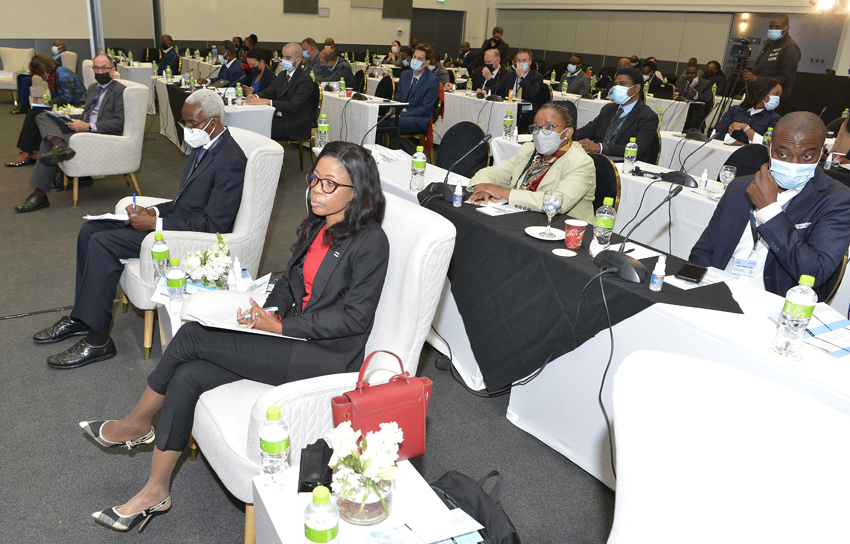
This is unsustainable and Botswana needs to find ways of engaging other players, finance minister Ms Peggy Serame said yesterday in Gaborone. She was speaking at a Botswana Government/World Bank project financing conference, which seeks to reinvigorate the Public Private Partnership (PPP) agenda.
Ms Serame said over the past ten years, , development spending on public infrastructure projects totalled approximately P108 billion, of which, only about P3.6 billion, or some 3.3 percent was financed by project loans while P1.4 billion came from donors.
That left government with the responsibility to pay a whooping 95% - nearly P103 billion. And the money came directly from the government investment account.
“This is not sustainable. Government revenues are declining … as the diamond industry matures and the cost of production increases, while the recurrent budget is continually increasing,” she said. Botswana needed to grow on average by 5.7 per cent to achieve its high-income status aspirations by 2036. For that to happen, she said, there was need to have high-impact infrastructure projects underpinning the country’s economic diversification. For that, a lot more money would be needed. But, government was having it tough with its investment account heavily withdrawn against by the end of last year, she said.
“The balance of government savings held in the Government Investment Account had declined to about P6 billion at the end of 2021, from over P18 billion before the COVID-19 outbreak.” Ms Serame said while the balance had increased to P16 billion by the end of April this year, the current global economic environment, resulting from the Russian/Ukraine war, presented a shaky post-COVID recovery. Adding to that was the growing impact of climate change, narrowing prospects of rapid economic recovery.
“This therefore necessitates a drastic change in the model adopted in procuring and financing infrastructure projects, hence [government’s] commitment to exploring new project financing options aimed at closing the infrastructure financing gap,” she said.
Ms Serame said the simple initiative could be where government used the private sector for project finance loans, or issued specialised bonds, such as Green Bonds or Infrastructure Bonds, while complex initiatives could be where the private sector handled everything, such as financing, delivering and operating water pipelines or public schools and hospitals.
She said the Public Investment Programme had a wide range of projects that could benefit from private financing, such as power generation, which was already being implemented through IPPs and power distribution, through PPP arrangements for grid construction and operation. Water distribution, recycling and waste reduction, transport, air, road and rail projects w were also suitable, she said.
She added: “Our urban services in some cities and towns can be considered for PPPs, including urban parking management, and perhaps public transport, as well as traffic management, recycling of waste and landfill management, to enhance cleaner cities.” Meanwhile, the World Bank Group, Country Director, Ms Marie Francoise Marie-Nelly said their partnership with the Government of Botswana was growing, covering many areas of focus, including infrastructure, in particular energy, transport, water and digital development.
Ms Marie-Nelly said the conference was particularly relevant at this time when Botswana was working hard to recover from the lingering aftermath of the COVID-19 pandemic, as well as the closely intertwined impacts of the conflict in eastern Europe on global supply chains, inflation, currency devaluation and increasing energy and food prices, among others.
She said the World Bank remained committed to supporting their clients, inclusive of resilient infrastructure investment and financing, as they navigated an uncertain future, underpinned by tightening of credit supply alongside evolving user demands and requirements.
Indeed, even in the best of times, infrastructure development is challenging to get right; it is capital-intensive, complicated, time-consuming, and involves multiple stakeholders, not to mention the challenging environmental, social and governance issues and fiscal affordability concerns, she said Ms Marie-Nelly said their engagement with the Government of Botswana on the topic brought forward various efforts that the country undertook towards an enabling PPP ecosystem, as well as the opportunities that Botswana envisaged for PPP in infrastructure development.
She added that the World Bank, together with its sister institutions, IFC and MIGA, looked forward to engaging in robust discussions with the development partners locally, together with private sector counterparts and representatives of various public sector agencies, and most importantly, with representatives of the Government of Botswana.
Ms Marie-Nelly said their discussions would focus on how, as the country moved forward with its post-pandemic and global economic challenge recovery strategy, it could make finance work its infrastructure development to accelerate economic recovery, create jobs (more importantly, green jobs), reduce poverty and stimulate broad-based economic development and human advancement. ENDS
Source : BOPA
Author : Marvin Motlhabane
Location : GABORONE
Event : Project Financing Conference
Date : 06 Jul 2022
Related News

06 Aug 2026

06 Aug 2026
District councils disburse Child Support Grant
06 Aug 2026
Zimbabwe eyes parliamentary menstrual Act
05 Aug 2026
Zim foreign currency earnings rise sharply in H1
05 Aug 2026