Still on Fight against desertification
22 Jun 2022
Botswana takes issues of desertification and drought seriously, hence various national plans to manage and control them.
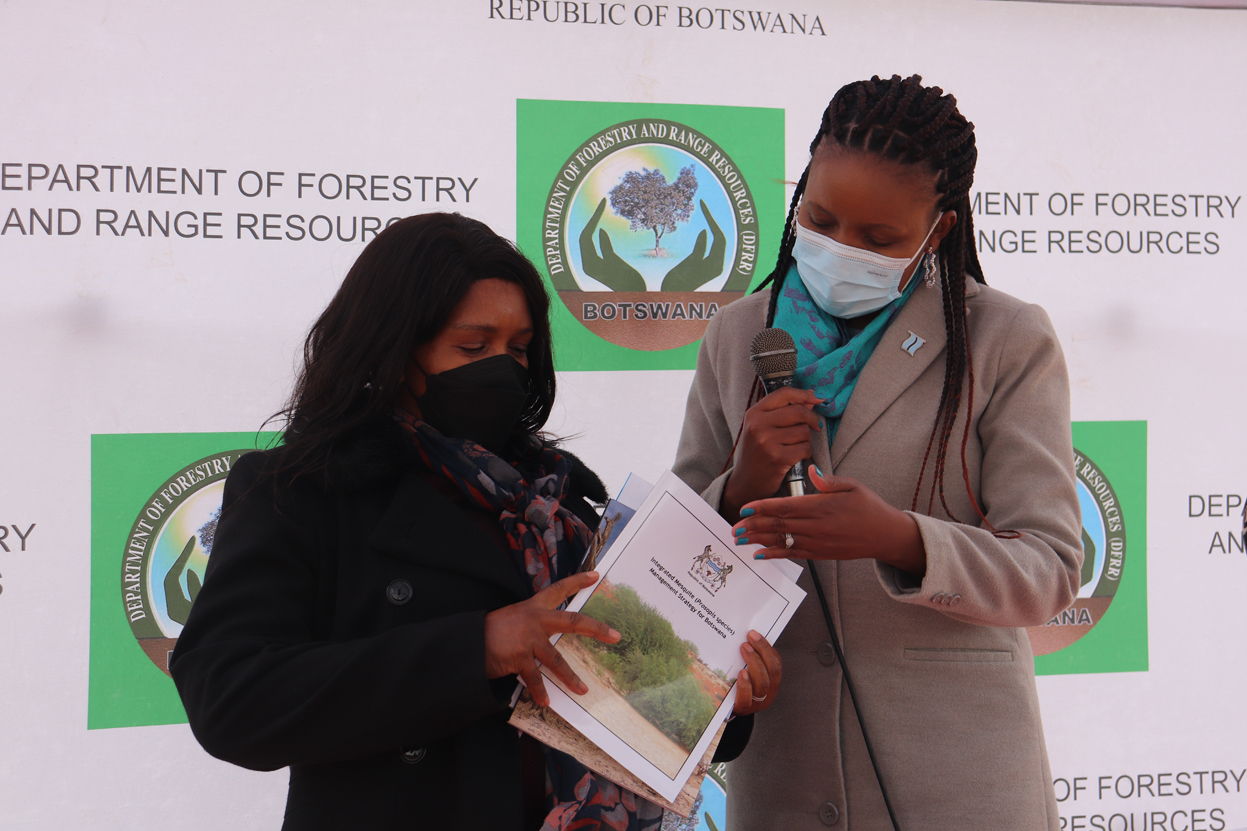
Acting permanent secretary in the Ministry of Environment and Tourism, Ms Abigail Engleton said this during the national commemoration of the World Day to Combat Desertification in Tshane on Tuesday, at which the ministry launched three documents for fighting the phenomena.
Ms Engleton said the three documents, namely National Adaptation, Drought Management and Integrated Prosopis Management plans were an indication of government’s commitment to fighting the occurrences.
She said government resolve to in implement the documents was strengthened by the realisation implementation was of economic benefit to communities.
“We have seen elsewhere such as at BORAVAST [Bokspits, Rappelspan, Vaalhoek and Struizendam] area where communities, through the eradication of Sexanana, have also benefited economically as they package the charcoal for sale. This is what we want other comminutes to leverage.” she said.
Ms Engleton therefore encouraged communities in the Matsheng area to form community trusts whereby they could benefit through conservation of natural resources around them, such as pans, which they could use for tourism purposes.
“Such efforts will ensure that we rise from the desert, that is to say we use the unfortunate occurrence of deserts to our benefits,” she said.
Despite its late launch of the three documents, Botswana nonetheless had for long been supporting communities to combat desertification and drought through initiatives such as nurseries for Village Development Committees (VDCs).
“What we are doing now is only a continuation and shifting of gears in our fight of drought and desertification. We have long committed to fighting them at the United Nations General Assembly in 1994, where we also agreed to commemorate this day annually on June 17,” she said.
Some government’s efforts in that regard included among others, moving cattle watering points out of villages to reduce overstocking and overgrazing.
For his part, Professor Julius Atlhopheng of the University of Botswana, who is also the chairperson of the United Nations Convention to Combat Desertification (UNCCD) Task Committee, said that 197 countries were affected by deserts, adding that should be a challenge to the global community to take action against the phenomenon.
Professor Atlhopheng said there was need to recognise indigenous knowledge in the fight against deserts and droughts, and that government would do well to involve communities in its planning. Lokgwabe VDC chairperson, Mr William Cloete said his village had a Prosopis Management Plan, which had been running since 2019, by which they removed 90 per cent of the species in their village.
He said in the process, they benefitted economically as they produced manure, charcoal and fodder.
He pleaded with government to consider increasing working hours of Ipelegeng workers in his village so that they could completely eradicate the remaining plants. BOPA
Source : BOPA
Author : Olekantse Sennamose
Location : TSHANE
Event : World Day to Combat Desertification
Date : 22 Jun 2022
Related News
06 Aug 2026

06 Aug 2026
Botswana future hinges on science

06 Aug 2026
Lesotho hails Botswana health decentralisation

06 Aug 2026