Implement affirmative action framework
23 May 2022
The Affirmative Action Framework for remote area communities should evolve into a constitutional item to compel government to implement it.
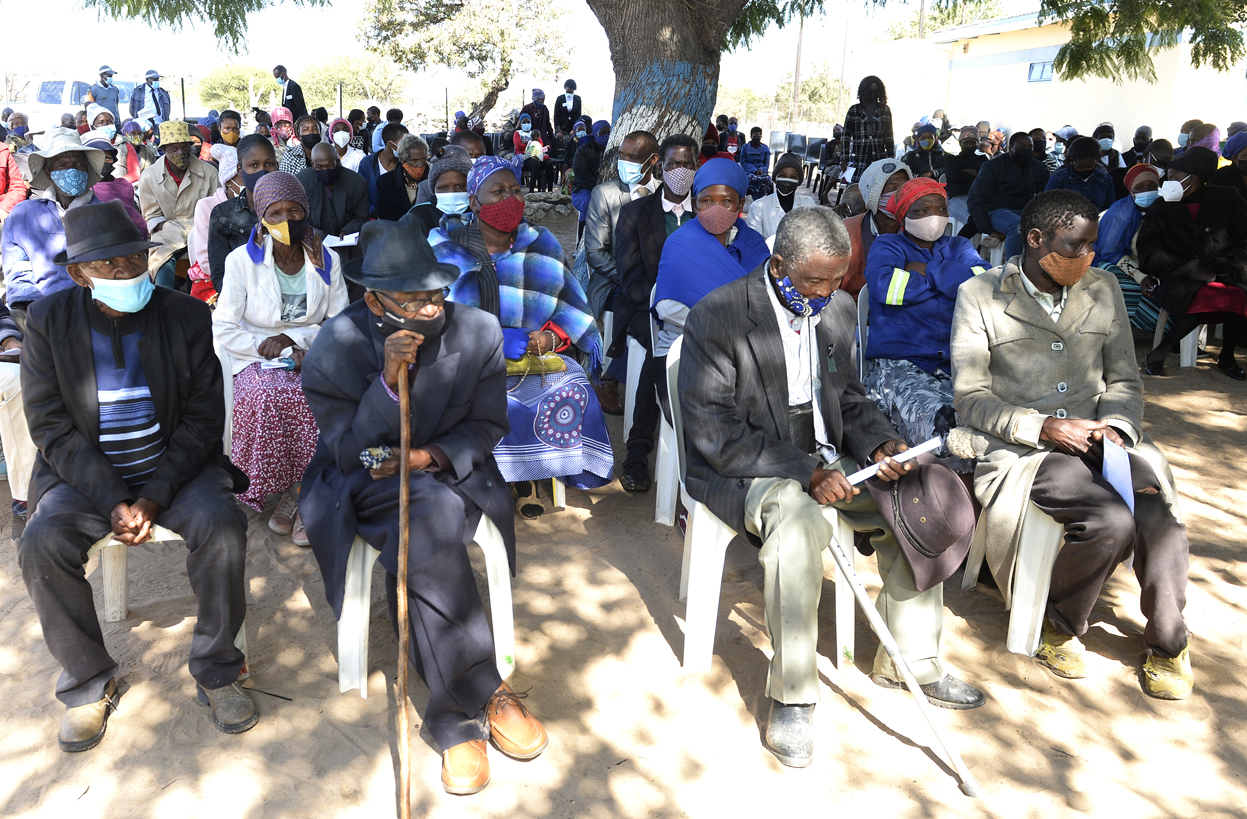
Acknowledging its impact on the community, Malatswae residents told the Presidential Commission of Inquiry into the Review of the Constitution on Monday that in its current form as a policy, the framework was not binding and government could thus abandon its implementation at will.
Area councillor, Mr Bernard Kenosi observed that making the framework enforceable by law would be a major step towards ensuring that it continued to benefit remote area communities by guiding their mainstreaming into the greater population as well as guaranteeing that they were not side-lined by any programmes and policies.
Mr Kenosi also appealed for the law to provide for communities in whose localities natural resources were being sourced to be paid royalties; a move that he indicated would spur on the pace of developments in the respective areas.
He said it was disheartening that such areas often had nothing to show in spite of the billions that natural resources from their areas contributing to the GDP.
Messrs Gosalamang Motsomela and Ditshupo Bakgaoganye concurred on the need for the Affirmative Action policy to be infused into the constitution.
They argued that in the event that government commitment towards its implementation waned, remote area communities would be greatly disadvantaged, hence it was critical that such be prevented.
Another resident Mr Tebogo Phiri noted that the setting up of a Constitutional Court was overdue and suggested that the ongoing constitutional review process should culminate into its establishment.
“As we are hard at work reviewing our constitution, we are likely to soon find ourselves at loggerheads with one another in respect of the interpretation of some of its clauses.
If that happens, we should have a Constitutional Court in place to address our differences by interpreting the contents of the constitution for us,” he stated.
Pleading for periodic land audits, Mr Kereng Makeshane observed that instituting them would allow the country to take stock of its land administration processes and enable it to timeously rectify any errors that would have occurred.
The resident also proposed that minimum educational requirements be set for all positions of responsibility to raise the standard of the calibre of people holding the positions.
He said dikgosi of all levels, councillors, Members of Parliament and cabinet ministers should all be appointed to their positions after satisfying the basic educational qualifications that would have been decided upon.
While embracing the ongoing constitutional review exercise as fundamental to giving Batswana a sense of ownership of their constitution, Mr Makeshane proposed further that the document be taught in schools; an undertaking that he said would ensure its entrenchment in the minds of citizens.
“We should start teaching the constitution right from upper primary school level to afford our future leaders the opportunity to gain better understanding of this ‘Bible’ that they will in future use to govern the country,” he said.
Mr Tshimologo Agapile bemoaned the non-recognition of many local tribes by the constitution.
He also decried the exploitation of Basarwa and their culture, and pleaded for the law to protect them against such.
“Rona Basarwa re dirisiwa mo dilong tse dintsi tse di tsenyang madi jaaka o ka fitlhela matlonyana a Basarwa, kana o ka fitlhela Basarwa ba beilwe fale e le go kgatlhisa bajanala.
A o ya kwa di-parkeng kana kae o a go fitlhela go kgatlhisiwa bajanala ka rona batho ba letso la Sesarwa mme Motswana ene a sa re lemoge re le batho ba lefatshe la gagwe,” Mr Agapile noted. BOPA
Source : BOPA
Author : Keonee Kealeboga
Location : MALATSWAE
Event : Constitutional review Commission
Date : 23 May 2022
Related News

06 Aug 2026
06 Aug 2026
Botswana future hinges on science

06 Aug 2026
Lesotho hails Botswana health decentralisation

06 Aug 2026