


Amend section 7 1 of constitution
12 May 2022
Section 7 (1) of the constitution should be considered for amendment to allow law enforcement officers the use of minimal torture to extract information from uncooperative individuals.
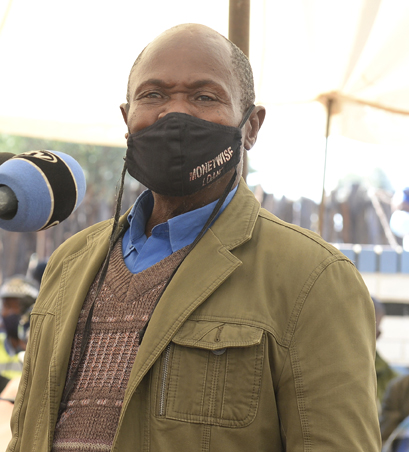
Reverend Edward Moganana of Taupye told the Presidential Commission of Inquiry into the Review of the Constitution yesterday, that in order to allow investigations to flow smoothly without any avoidable hindrances, the law should compel members of the public to aid them by sharing information with law enforcement officers on request, failing which the latter should be allowed to use reasonable force to get them to cooperate.
On whether that would not constitute a breach of international law, Rev Moganana explained later in an interview that it would be necessary to do that within reasonable limits to guard against the possibility of offending international statutes.
He noted that since suspects oftentimes complained of the police having tortured them into making confessions, it was vital that the law was amended to allow for that to be done within its confines.
“That would also protect the police against lawsuits where suspects later approach courts of law for recourse on allegations of having been tortured while in custody.
When the courts rule in favour of those crying inhumane treatment at the hands of the police, the government forks out large amounts of money in compensation; and that cannot be allowed to continue,” he stated.
In a related issue, Rev Moganana called for a variation in the time period within which a suspect could be hauled before a court of law to answer for criminal charges.
He said the 48-hour limit was inadequate for investigators to have covered sufficient ground before they could charge a suspect.
Thus, he proposed for the time period to be varied in line with the gravity of an offence; with suspects for more serious offences such as murder and rape being kept in custody longer before they could be charged.
Regarding Section 33 (b) which provides for one to have attained the age of 30 for eligibility to be elected as president, the Taupye resident proposed that the age limit be revised downwards to 18.
That he said, would bring it in line which Section 61 under which the said age limit formed part of the criteria for one to be eligible for election as Member of Parliament.
On the role of the church, Rev Moganana appealed for its input to be sought and taken aboard when National Development Plans (NDPs) and District Development Plans (DDPs) were being drawn.
Further, he proposed for NDPs and DDPs to be aligned to the manifesto of the ruling party, which he said would ensure that the government of the day did not find itself encumbered with having to implement projects and policies not in line with its own philosophy.
“Because they are long-term, our development plans generally render party manifestos a sham. Politicians dish out promises of developments, requests for whose implementation later hit a brick wall because they have not been planned for,” he observed.
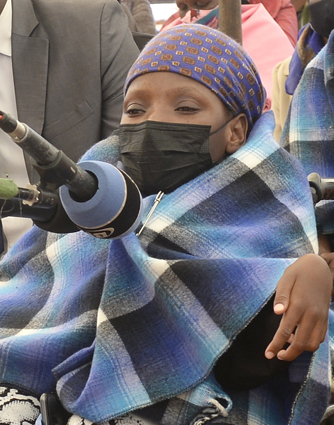
Representing People With Disability (PWD) Ms Onkokame Monyopi pleaded for their rights to be put on a pedestal so that they too would enjoy their place as citizens.
Of the handful of privileges that they desired, she said being disabled should be the sole yardstick for eligibility to receive the disability allowance, and that PWD be exempted from placement in waiting lists for land allocation.
Ms Monyopi also requested for the law to provide for every government department to have a person living with disability within its employ, whose role would among other things include advocacy for the rights of PWDs.
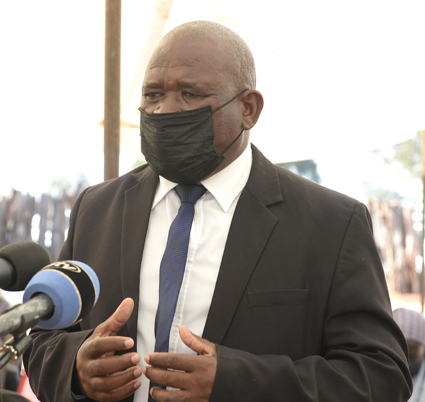
Rooting for the establishment of old age homes, Mr Oliver Bakaabatsile said instances of the neglect of members of the older section of the population were becoming a daily occurrence that continued to lower the quality of life of the elderly and leave them exposed to societal ills such as crime.
“Go tlogelwa ga bagolo ba le nosi go tsweletse ka go gola, jaanong nna ka re a ba agelwe kampa e ba ka nnang kwa go yone,” he said.
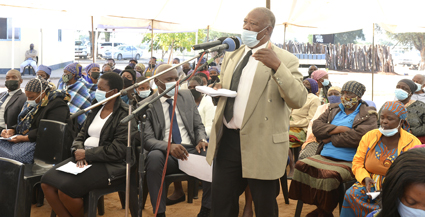
Yet another resident, Mr Onkemetse Bakaabatsile sought clarity on why the law and the Bible viewed marital rape differently.
“Baebele ya re ga gona thubetso mo lenyalong, jaanong go tla jang gore ka fa molaong e bo e sekisediwa?!” he queried, stating that Biblically neither spouse had absolute right to their own body with respect to affording the other their conjugal rights. ENDS
Source : BOPA
Author : Keonee Kealeboga
Location : TAUPYE
Event : Constitutional review Commission
Date : 12 May 2022
Related News

07 Aug 2026
Xiplomacy Hosting the world building the future

07 Aug 2026
Xiplomacy Pursuing the greater good for all
06 Aug 2026
Gaolathe inspires learners to aim high
06 Aug 2026