


Give destitute people institutional housing


03 Apr 2022
The destitute housing programme should be improved to make it a more worthwhile undertaking for government.
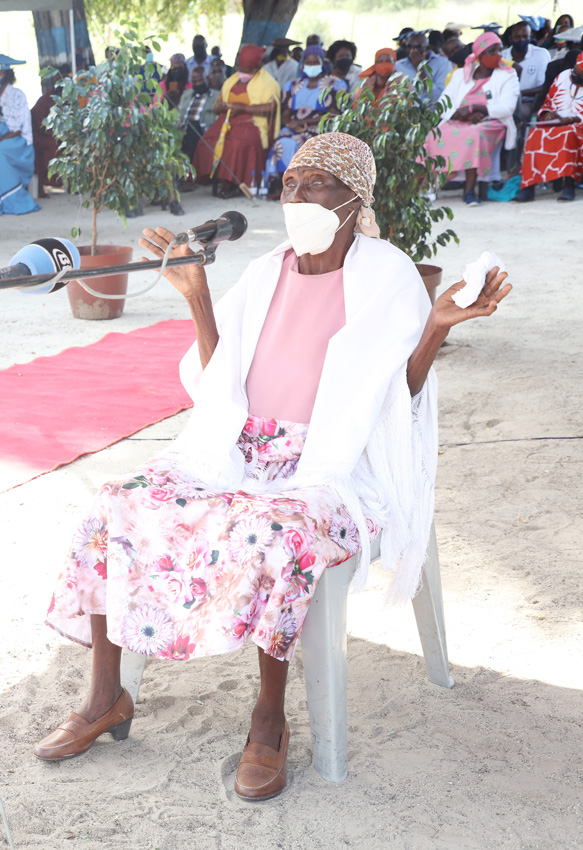
A Toteng resident Ms Uatirua Kandapaera suggested to the Presidential Commission of Inquiry into Review of the Constitution on Thursday that government should provide institutional houses for the beneficiaries of the programme instead of building houses for them on their respective pieces of land.
Her proposed arrangement she stated, would save government money particularly that upon the death of a beneficiary, the house often fell into the hands of relatives who had no need for government-sponsored shelter.
“They should have their houses on the same piece of land, and when one of them dies, another person in need of shelter will be offered to stay in the house that has fallen vacant,” she explained later in an interview.
Ms Kandapaera said government retaining ownership of the houses would ensure that they were better maintained and thus afforded their occupants housing of quality standards.
She argued that the money saved from the current form of the programme would then be channelled towards critical areas such as sponsoring young people for tertiary education.
Submitting his proposals, Mr Ezekiel Maoveka dismissed calls for DNA testing to be made compulsory, noting how adopting such a stance would render some children fatherless and deny them fatherly love and support.
Mr Maoveka said it was none of government’s business to want to ascertain the paternity of children in cases where their mothers had pinpointed the men who had fathered their children.
“You (government) go against the assertion of the mother on who the father of her child is and insist on DNA testing in cases involving the defilement of under-age girls.
Fa le tsena kwa DNA eo ya lona e a itatola gore ngwana yo ga se wa motho yoo, mme fa go sena go nna jalo puso ga e fe ngwana yoo rraagwe, e mo tlogela jalo mo legoeleleng a sena rraagwe,” he said.
Condemning the practice, he said it was worth that children often were the biggest losers as some would at times end up fatherless. Rooting for tribal equality, Mr Nguatuu Tjinyeka wondered why the same constitution that recognised the eight major tribes did not do the same with the rest of Botswana’s tribes.
Mr Tjinyeka also asked for the law to make provision for the election of dikgosi of different levels save only for paramount chiefs, and explained that would bring uniformity to the manner in which dikgosi assumed their positions. Mr Amon Nguvauva contested the nomination of candidates who had lost in both the primary and general elections to councils and parliament.
He said having been rejected by the voter, such people should not be forced upon the public through special nomination. Mr Nguvauva further proposed that livestock owners who neglected their animals should be punished harshly as they, to a certain extent, contributed to livestock rustling as their animals often became easy prey to rustlers.
Questioning the constitution’s lack of protection for the rights of the elderly, Ms Keorwele Sekgwa told the commission that the older section of the population regularly endured abuse at the hands of the youth. Ms Sekgwa wondered why the law continued to turn a blind eye to the plight of the elderly.
“A molao-motheo o a bona kana jang? Bana ba a re bolaya mme molao-motheo o le teng? Tiro ya one ke eng?” she, asked, essentially querying what she saw as the law’s silence on abused meted out on the elderly by the youth. ENDS
Source : BOPA
Author : Keonee Kealeboga
Location : TOTENG
Event : Constitutional review Commission
Date : 03 Apr 2022
Related News

07 Aug 2026
Xiplomacy Hosting the world building the future

07 Aug 2026
Xiplomacy Pursuing the greater good for all
06 Aug 2026
Gaolathe inspires learners to aim high
06 Aug 2026