


Discordant laws deny people justice
16 Mar 2022
The discordance between Section 10 of the Constitution and Section 32 of the Customary Court Act denies those charged with criminal offences their constitutional right to natural justice.
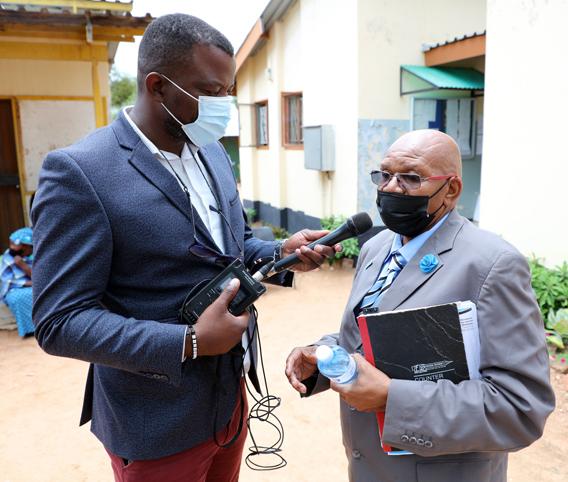
According to Oliphant’s Drift resident Mr Molefe Molefe, who appeared before the Presidential Commission of Enquiry into Review of the Constitution Tuesday, while Section 10 of the constitution provides for any person charged with a criminal offence to be afforded a fair hearing, the Customary Court Act disallowed legal representation for those brought before customary courts to answer for criminal charges.
Mr Molefe submitted that the prohibition of legal representation in customary courts was contrary to what the constitution, being the supreme law of the land provided for.
“Now the issue here is that the Constitution is supreme to the Act; that is why I say it (the provision in the Act) is unconstitutional and contrary to the principle of natural justice,” he said.
On a different issue, the resident pushed for the infusion of second generation rights into the constitution, arguing that would guarantee citizens enjoyment of fair and equal treatment.
“Batswana ba jewa ntsoma because it is not constitutional to protect the income of a Motswana, and to protect their health. It is not constitutional to protect how much they get paid,” he stated.
He said as long as socio-economic rights were not entrenched in the constitution, the exploitation of Batswana especially by employers would continue to haunt citizens of this country.
Mr Molefe said the ongoing country-wide consultative meetings afforded Botswana the opportunity to include in the constitution, the provisions of Article 23 of the Universal Declaration of Human Rights, which espoused four principles namely, the right to work; equal pay; just remuneration; and freedom of association.
Another speaker Mr Mpho Ramaduwe told the commission that should Botswana not limit children’s rights, the country risked an uncertain future with citizens of questionable morals and values.
He said the rights presently enjoyed by children in Botswana were excessive and overrode those of the rest of the citizenry.
“Ditshwanelo tsa bana di kgatlhanong le tumelo ya rona ya gore lore lo ojwa le sale metsi,” he elaborated, indicating how the rights of children were in contrast with the Setswana adage, which called for moulding of children into responsible citizens through firm guidance.
Appealing for stiffer penalties against those sexually violating children, Ms Kedibone Molefe proposed that perpetrators be castrated to ensure that they did not continue with their evil acts.
“A ba tseelwe maikutlo. Motho wa bone a nne le pelo fela ya go gakologelwa gore ekile ya re, go sale fela e le dijo tsa ditoro” she said, and noted how sad it was for children as young as seven to be raped.
Messrs Machonisa Mariri and Christopher Molokwe called for the constitution to be deliberate in safeguarding the cultures of Botswana’s different tribes.
While Mr Mariri observed how most Sekgatla cultural practices had faded away over time, Mr Molokwe wondered if democracy and the attainment of independence were strong enough reasons for Batswana to have started looking down upon their cultures to the extent that they were discarding them one piece at a time. ends
Source : BOPA
Author : Keonee Kealeboga
Location : OLIPHANT\'S DRIFT
Event : Commission Review
Date : 16 Mar 2022
Related News

07 Aug 2026
Xiplomacy Hosting the world building the future

07 Aug 2026
Xiplomacy Pursuing the greater good for all

06 Aug 2026
Gaolathe inspires learners to aim high

06 Aug 2026