


Septuagenarian compares COVID-19 to smallpox
10 Jun 2021
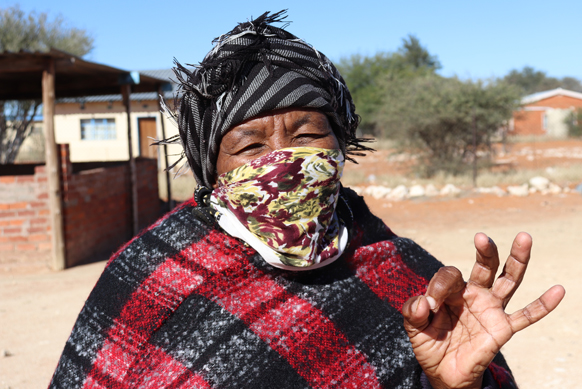
Following announcement that COVID-19 vaccination had commenced, Seventy-two-year-old Ms Lucy Bailelwang of Middlepits did not hesitate.
Her eagerness saw her leaving home very early in the morning heading towards Middlepits community hall where she queued to get her COVID-19 vaccine dose.
Seated amongst 17 65-year-olds and above elderly people queuing to get COVID-19 vaccine outside the community hall, she recalled how six decades ago the outbreak of highly contagious smallpox ravaged havoc worldwide claiming many lives just like it is happening with coronavirus.
A victim of smallpox disease herself, she does not want to be left behind during the COVID-19 vaccine rollout.
She vividly recalled events of the early 1940s during the smallpox era.
“What is happening now with coronavirus happened a long time ago during the outbreak of smallpox disease,” she said.
She said in 1944 her parents had to build a temporary structure at the back of the yard where she was kept in isolation as a child as the disease, which left her with painful sores all over her body and in the throat, was highly contagious. Scars of smallpox still remain on her body.
She narrated that most of the people lost their lives at the time and she survived by sheer luck. Back then, the health system was not as developed and people used whatever nature could provide to ease pain until smallpox vaccination was found.
The elder narrated that the health protocols laid down by the government to control the spread of coronavirus had been used before to control the spread of highly infectious diseases which have been there even centuries ago.
She recalled having lonely meals as her food was placed by the door with absolutely no human interaction. “When you were given food there was no touching. Those who bathed a smallpox patient tied a cloth around their bodies and face and washed immediately after leaving the patient’s hut. It was more like what is happening today with the outbreak of coronavirus where people walk around wearing masks and washing hands regularly,” she reminisced.
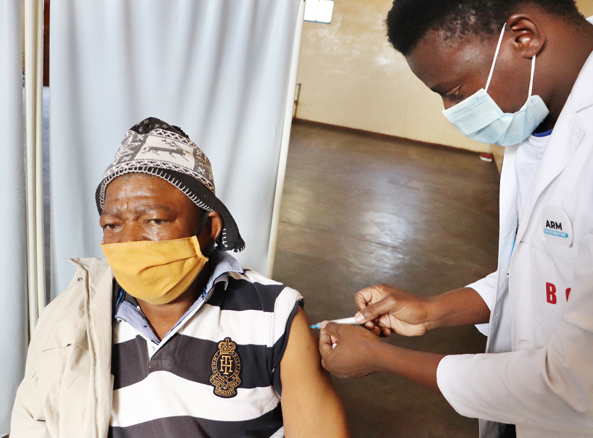
While at it, her turn to take COVID-19 vaccination finally comes and she breathes a sigh of relief when she steps into the hall where she gets her jab on her left arm.
She appreciated the government for bringing the COVID-19 vaccine and enforcing health protocols such as imposing curfews, social distancing, washing of hands and sanitising to minimise the spread of coronavirus.
The old woman remembers the lockdowns imposed back then to control the spread of smallpox, adding that everyone was asked to stay home and they could not cross the border to South Africa.
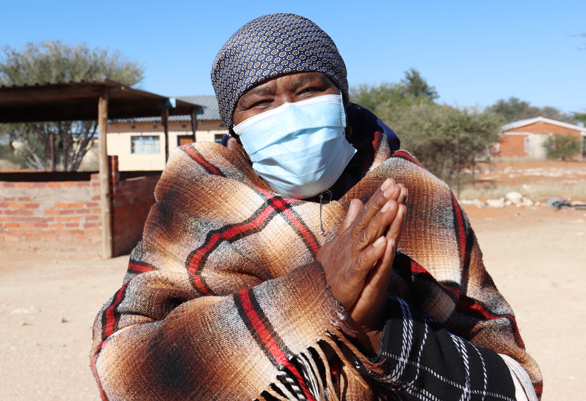
Another elder, 65-year-old Ms Dorothy Mampe appreciated the government for availing COVID-19 vaccine. She said when she received a call to come for vaccination, she was elated and did not sleep that night.
“The disease compromises the quality of life. These days when you wake up the next day you have to be thankful,” she said.
Ms Mampe could not hide the excitement when she heard her name being read out to enter the hall for her blood pressure to be taken before being inoculated.
“I felt relieved that I have finally found help. I am thankful that I have taken my first dose and will continue to follow health protocols,” she said.
Found moving amongst the elders on queue for the vaccine is the Middlepits Kgosi Setlamaruping Moseki.
Having been the first one to be inoculated in Middlepits recently, he appreciated the vaccination of elders in his village.
He said the virus was taking a different toll in schools in his village as Kgolagano Junior Secondary School nearly closed recently due to the high number of cases. Kgalagadi Regional health team coordinator, Ms Gaboelwe Rammekwa said vaccination in Kgalagadi South was ongoing for elders aged 65 and above.
The vaccination rollout started on April 9 with most people willing to vaccinate. However, she is worried by the surge of cases in the area of people who do not observe the stipulated health protocols.
“We still see cases of people who test positive and still go to the malls. In funerals, people do not observe social distancing and these are places where most people get infected. It is a challenge for the health care system,” she said.
Ms Rammekwa noted that such behaviours reflected that a lot of people were still in denial about the virus. She said some families refused to comply with COVID-19 burial rules which stipulate that a deceased should be buried within three days.
Ms Rammekwa said this defeated the government efforts to fight the virus.
“They take long to bury citing lack of resources,” she said adding that the reason why a COVID-19 positive deceased is buried within three days was to minimise transmission risks.
Ms Rammekwa stated that Kgalagadi South cases were on the rise with 1 925 positive cases recorded, 317 active cases and 18 deaths as at June 05. ends
Source : BOPA
Author : Calviniah Kgautlhe
Location : Middlepits
Event : Interview
Date : 10 Jun 2021
Related News

08 Aug 2026

07 Aug 2026
Xiplomacy Hosting the world building the future

07 Aug 2026