



Budget to prioritise ERTP projects
01 Feb 2021
The 2021/2022 budget will mainly finance proposed programmes and projects aligned to the mid-term review of NDP 11 and the Economic Recovery Transformation Plan (ERTP) as well as approved strategic thrusts.
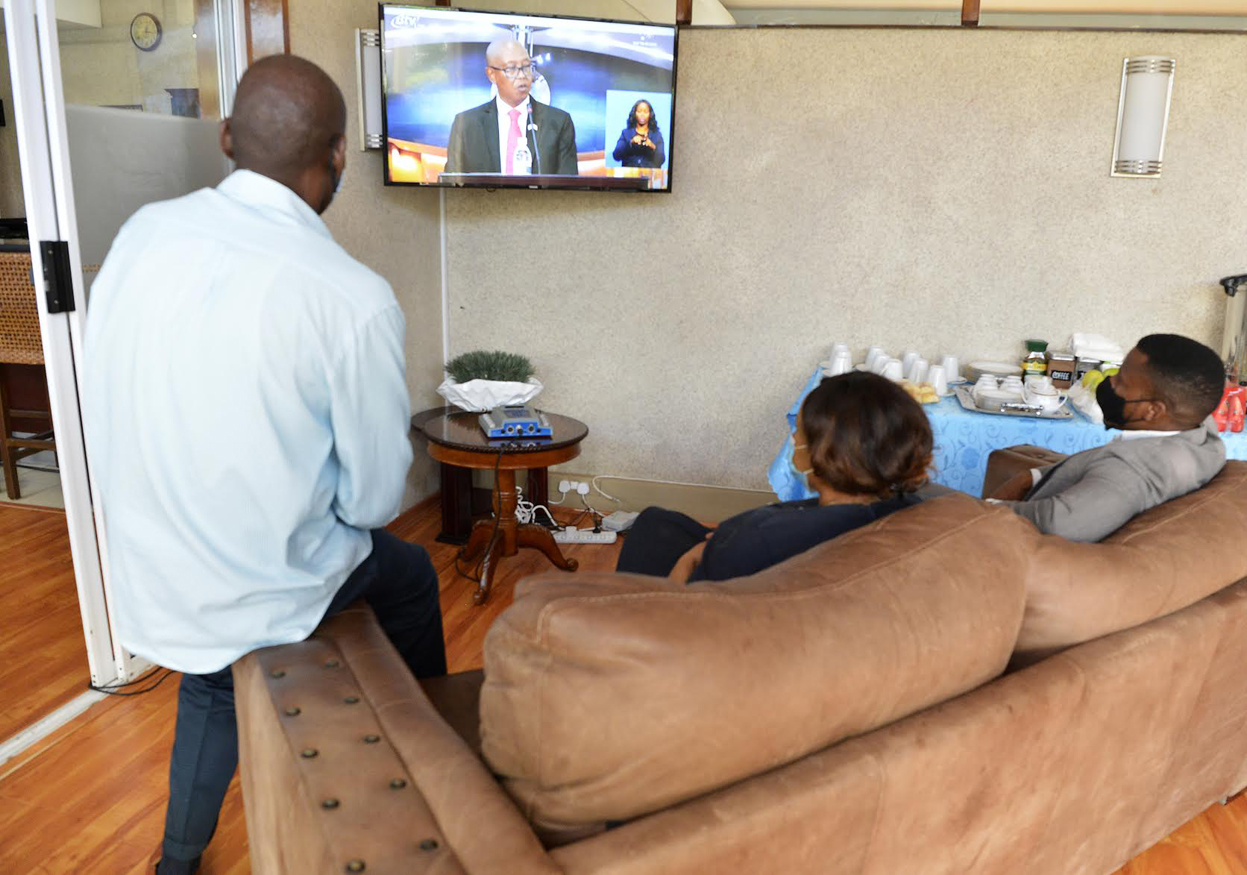
This was said by the Minister of Finance and Economic Planning, Dr Thapelo Matsheka when presenting the 2020/2021 budget proposals in Gaborone February 1.
He said P14.75 billion has been proposed for the development budget for the financial year 2021/2022.
Dr Matsheka stated that to alleviate pressure on the government budget in the short to medium term, other forms of project delivery such as Public-Private Partnerships (PPPs) continued to deliver on planned projects.
He said the Ministry of Land Management, Water and Sanitation Services had already invited the private sector to undertake the reclamation and treatment of the wastewater project at Glen Valley, while the Ministry of Mineral Resources, Green Technology and Energy Security had already pre-qualified bidders for the coal to liquid project.
Furthermore, he said private sector partners would be contracted in the coming financial year to finance, construct and operate these projects.
Dr Matsheka said requests for expressions of interest to build, finance and operate some projects on a PPP basis would be issued in the coming financial year. He named some such as the Zambezi agro-commercial development project, the Chobe-Zambezi water transfer scheme, Tshele Hill bulk fuel storage facility and the Sepopa Prison Farm. This also includes the headquarters for Botswana Prison Services, Serowe Magistrate Court, the Offender Rehabilitation Centre in Lobatse, the Francistown-Nata road, Maun-Mohembo road and the Mmamabula-Lephalale and Mosetse-Kazungula railways.
Meanwhile, Dr Matsheka expressed concern about the slow implementation of projects under the development budget.
He said while the low level of expenditure in the current financial year may have been exacerbated by COVID-19 restrictions, it was evident that there were deep-seated project execution challenges that existed before COVID-19.
He said bottlenecks in the implementation of the development programme, and the resultant underspending, pointed to capacity challenges in areas such as project design, contracting processes, project implementation, project monitoring and evaluation.
“This will be addressed by handing over the responsibility for implementation of selected projects to the private sector, however, with robust contract supervision structures in place,” he said.
In line with the NDP 11 mid-term review policy priority of improving the effectiveness of government spending, he said the allocation of resources for development projects would now be based on a more rigorous process of project appraisal or evaluation.
He said thematic working groups (TWGs) and ministerial department and agencies (MDAs) have adopted a three-phase appraisal process comprising of confirmation of concept, pre-feasibility study and full feasibility study, with some stages subjected to independent reviews.He said at each stage only projects that met the required selection criteria would proceed to the next stage, and hence, weaker projects would be weeded out.
This, he said, would apply to large projects (of P250 million and above) proposed for inclusion in NDP 12.
Furthermore, he said the ministry was also concerned by high construction costs, which were mainly due to failure to thoroughly interrogate the cost of projects by implementing agencies, and the frequency and magnitude of claims from contractors.
“This state of affairs cannot be allowed to continue, as it is a major drain on scarce resources,” he said.
In that regard, he said the above-mentioned enhanced project selection process would help to ensure that projects that were finally approved for implementation would have been properly costed.
Furthermore, he said to enhance efficiency in government spending, social protection programmes such as LIMID and poverty eradication were being evaluated.
He said the review was expected to be completed by the second quarter of the coming financial year, and that government would be advised on the appropriate measures to implement the recommendations given that the programmes were ongoing.
He said it was imperative to upscale the level of monitoring and evaluation, which was a key stage in the project cycle, particularly under the current strained fiscal conditions.
In this regard, he said his ministry had undertaken to upgrade the development projects monitoring system (DPMS) into a more versatile and comprehensive tool which would also provide a high-level executive dashboard. BOPA
Source : BOPA
Author : Mmoniemang Motsamai
Location : GABORONE
Event : Budget Speech
Date : 01 Feb 2021
Related News

25 Aug 2026
Forensic audit generates 90 priority actions
25 Aug 2026