



Affirmative action implementation requires collaboration
18 Nov 2020
Letlhakeng/Lephepe Member of Parliament Mr Liakat Kably has pleaded with all stakeholders to work cohesively in the implementation of the affirmative action framework.
Commenting on the State-of the-Nation-Address, Mr Kably expressed gratitude towards the implementation of the affirmative action framework in rural areas since its inception.
He explained that major milestones had been achieved in developing the livelihoods in rural areas through the affirmative action framework and applauded the civil service for spearheading the initiative.
Affirmative action framework, he said, had facilitated and mobilised all the stakeholders in planning for programmes geared towards improving the living conditions of residents of all settlements across Letlhakeng/Lephephe constituency.
He said it was pleasing that the affirmative action remained viable to development for remote area communities since they faced social-economic hindrances which largely emanated from their geographic location and proximity to social amenities.
Mr Kably nonetheless complained of the slow rollout of government social safety net programme, particularly in Diphuduhudu settlement.
He said many households in Diphuduhudu did not receive their food ration timely primarily due to poor workmanship from the social welfare officers.
Mr Kably similarly noted that the government was committed to resuscitating some community-based projects to enable residents to harness their natural resources to generate income.
He said government, had long promised to construct a cultural village at Diphuduhudu settlement which would upon completion be a cultural product that would increase tourism flow to the area.
The area, he said was an untapped tourism destination with great tourism opportunities that ranged from game drives and landscape viewing.
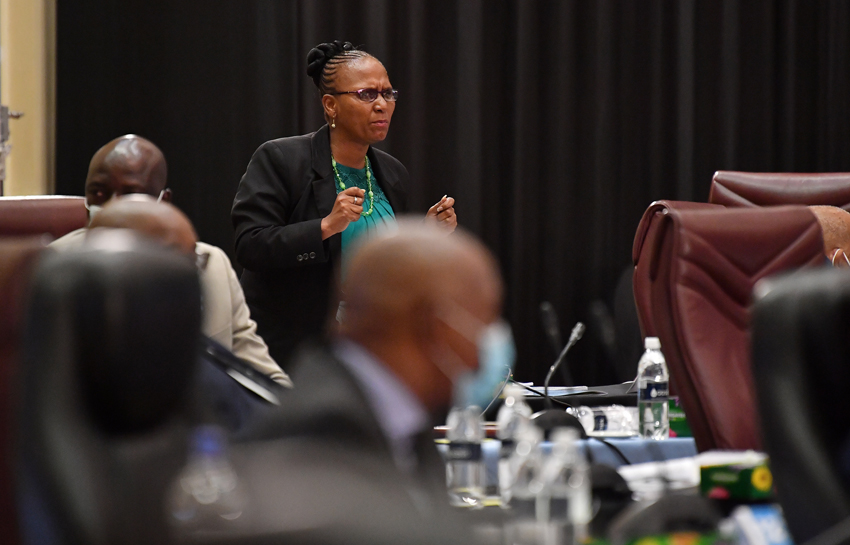
Contributing to the debate, Kgalagadi North MP, Ms Talita Monnakgotla applauded the youth empowerment programme for the role it played in assisting young people in RADs communities.
She said the youth was a very vibrant group of the society who possessed a lot of creativity and vibrancy that needed to be tapped into to break the poverty cycle in settlements.
Ms Monnakgotla noted that settlements were the most hard hit by poverty and that it was essential for such communities to be empowered.
Ms Monnakgotla further urged the government to strengthen the promotion of cultural artefacts and crafts as an income-generating strategy through which RADs communities could elevate themselves from poverty.
She complained of lack of communal grazing area in Kgalagadi, saying the area was mostly dominated by Wildlife Management Areas (WMA).
The community, she said was generally not happy that much of the land in the district had been zoned for use as WMA, thereby leaving them with very little land for arable and pastoral activities.
Concerning water situation in her constituency, Ms Monnakgotla stated that Kgalagadi North was the most hard-hit by water shortage, hence implored the relevant ministry to consider water reticulation from the Ncojane boreholes to relieve the greater Hukuntsi area.
Moreover, Ms Monnakgotla protested of the status of roads that linked Hukuntsi with surrounding settlements. ENDS
Source : BOPA
Author : Thato Mosinyi
Location : Parliament
Event : Parliament session
Date : 18 Nov 2020
Related News

25 Aug 2026
Forensic audit generates 90 priority actions
25 Aug 2026