SDGs achievement more urgent now
22 Oct 2020
The COVID-19 pandemic has made the task of achieving Sustainable Development Goals (SDGs) more urgent and challenging given its impacts on the world economy, an official from the Ministry of Agricultural Development and Food Security, Ms Nancy Chengeta has said.
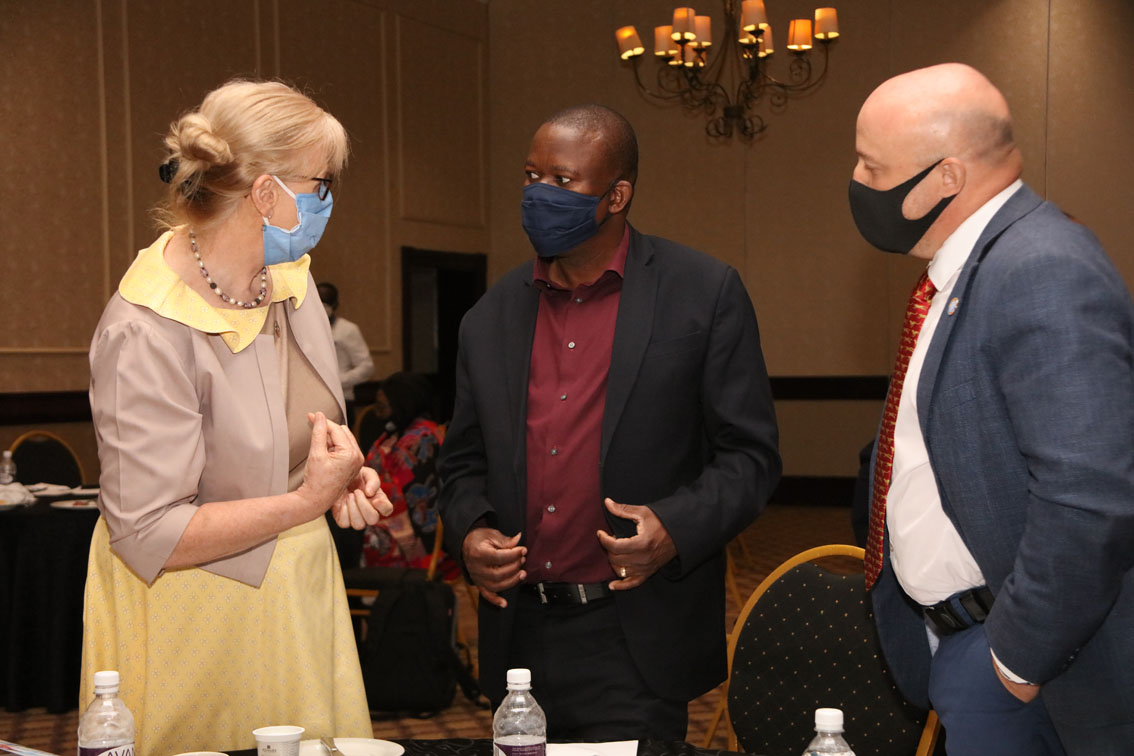
Speaking at an SDGs meeting in Gaborone recently, Ms Chengeta said the impacts were also felt by the food and agriculture sector which was experiencing a substantial shift in the level of demand for some commodities.
She said the measures put in place to contain the spread of the virus had disrupted the supply of agro-food products to markets and consumers both within and across borders.
“How damaging these impacts turn out to be for food security, nutrition and the livelihoods of farmers, fishers and others working along the food supply chain will depend largely on policy responses,” she said.
On short term basis, Ms Chengeta advised governments to manage multiple demands among them response to the health crisis, consequences of shock to the economy as well as ensuring smooth functioning of the food system.
She said recovering from the pandemic presented opportunities to accelerate the necessary reforms for achieving SDGs as well as transformations in the food and agriculture sector.
This, she said would help to build resilience in the face of a range of challenges, including climate change.
Ms Chengeta explained that Botswana’s vision encompassed maximizing production and contributing to economic development while protecting scarce land and water resources, reducing pollution and waste as well as contributing to biodiversity and landscape conservation.
The country, she said, had prepared important steps for implementing SDGs which began with the development of domesticated framework and mainstreaming of the 2030 Agenda in National Development Plan (NDP) 11.
Ms Chengeta said the next big task was to perform the alignment of SDG targets adopted in the NDP 11 framework for easy measuring and monitoring.
She said one of the major challenges was building a comprehensive database, where each indicator had to be disaggregated by gender, age group, disability status, geographic location and income level.
Presenting the road map implementation guidelines of SDGs for the ministry, a consultant, Professor Patrick Malope said the meeting gave the country a unique opportunity to achieve inclusive transformative and sustainable development.
Professor Malope further said the adoption of Agenda 2030 coincided well with preparation of key documents being Vision 2036, NDP 11, District Development Plan 8 and Urban Development Plan 4. Ends
Source : BOPA
Author : Aubrey Maswabi
Location : Gaborone
Event : Meeting
Date : 22 Oct 2020
Related News
10 Aug 2026
10 Aug 2026
MoU to drive innovation and investment
10 Aug 2026
First Lady urges support for teenage mothers
10 Aug 2026
Gaolathe hails partnership for HIV response

10 Aug 2026