



First hunting quota generates P28m
03 Sep 2020
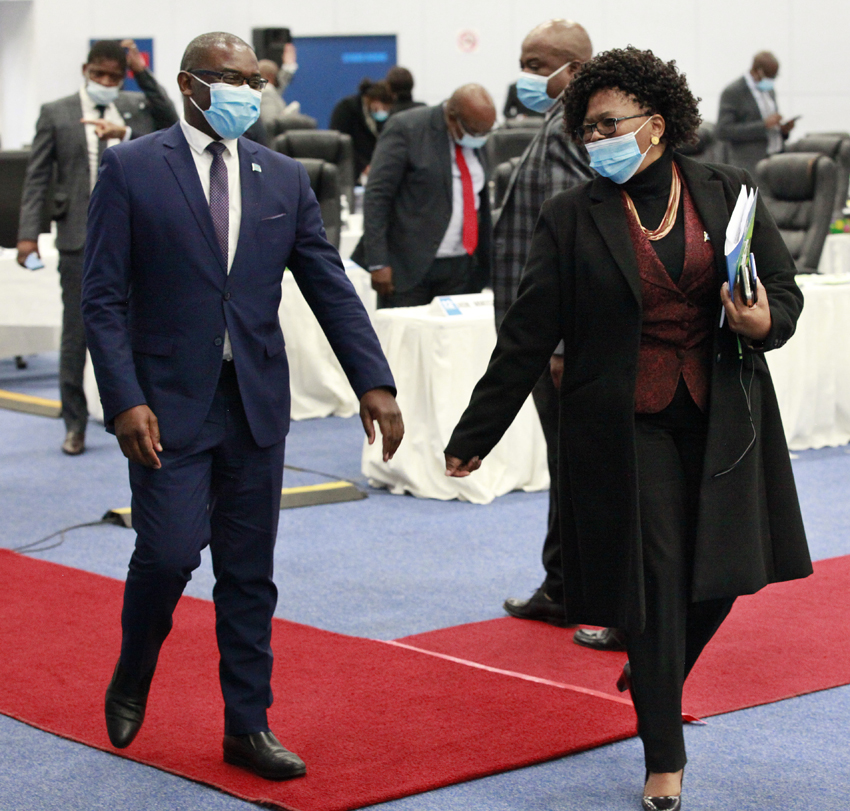
Minister of Environment, Natural Resources Conservation and Tourism, Ms Philda Kereng has stated that the first hunting quota in 2019/2020 has generated P28m towards Community Based Organisation (CBOs).
Presenting the mid-term review of NDP 11 on sustainable environment sector, Ms Kereng said so far 147 CBOs had been registered in the first half of NDP 11, of which 53 were active and the rest were dormant.
She said the active CBOs had to date created employment opportunities to 907 citizens, adding that Botswana should continue using natural resources in a way and at a rate that maintained and enhanced the resilience of ecosystems and the benefits they provided.
She said the accrued benefits from Community-Based Natural Resources Management (CBNRM) would be strengthened to gain buy-in from communities.
Minister Kereng also highlighted that government would continue its efforts to promote sustainable utilisation and management of natural resources by communities through the CBNRM programme.
Further, she said capacity development of CBOs and Technical Advisory Committees was being undertaken to address some of the challenges experienced by the programme over the years.
She stated that the realisation of beneficial use from natural and cultural resources must be preceded by value addition that transformed such resources to yield tangible public benefits.
She thus said the demand for resources as inputs for developmental initiatives was currently stretching ecosystems beyond their regenerative abilities.
Minister Kereng indicated that significant investments had been made in the development of monuments around the country to preserve cultural heritage through community participation and beneficiation.
With regards to species management programme, Ms Kereng said available statistics as of 2018 indicated a stable elephant population of about 137 000, with a density of 0.8 per km2 against a target of 0.5.
She decried increasing cases of human/wildlife conflicts, saying it was evident that measures to reduce the conflict were required, given that there were at least 8 879 cases in 2017, increasing to 9 280 in 2019.
She said the number of human fatalities from wildlife attacks had also increased from 15 in 2017 to 20 in 2019.
The influx of elephants into settled areas, she said, continued unabated during the 2019-20 as a consequence of the drought, which was experienced over much of the country and this had increased human/wildlife conflict.
“A more proactive approach is needed to reduce human/wildlife conflict and to promote coexistence, thus, the National Elephant Action Plan and Human Wildlife Coexistence Strategy will be implemented during the second half of NDP 11 and will require resources,” she said.
She said greater efforts would be placed on extension to empower communities to adopt and implement conflict mitigation measures.
Communities, she said also would be used to assess damage caused by wildlife and compensation payments done through post offices around the country. Eends
Source : BOPA
Author : Monniemang Motsamai
Location : Gaborone
Event : Parliament
Date : 03 Sep 2020
Related News


25 Aug 2026
Forensic audit generates 90 priority actions

25 Aug 2026