



Vocational training undergoes transformation
02 Sep 2020
Government is in the process of transforming vocational training with a view to delivering entrepreneurship, industry relevant and indigenous skills related programmes.
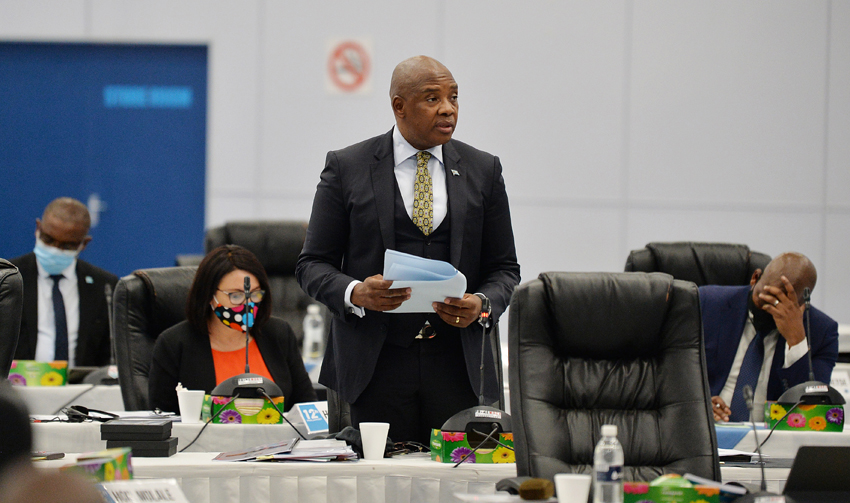
Presenting the ministry’s Mid-term Review of NDP 11 to Parliament on Monday, Minister of Employment, Labour Productivity and Skills Development, Mr Mpho Balopi said the transformation was in pursuit of government priority of transiting from a resource based economy to a knowledge based one in the spirit of addressing skills demand by industry.
He said investment would be made in new technology equipment, as well as rehabilitation of brigades and technical colleges in order to position the country to compete globally in the advent of the Fourth Industrial Revolution.
He stated that all brigade institutions had been connected to Government Data Network, with the exception of Borolong and Tshwaragano brigades, which were experiencing limitation of telecommunication infrastructure.
Minister Balopi further said the ministry was allocated a total estimated cost of over P592m for development during NDP 11, adding that only P56m of the cost had been spent thus far.
The funds, he said, had been used for maintenance of the ministry’s facilities, Local Area Network upgrading in brigades and at Madirelo Training and Testing Centre (MTTC) as well as computerisation of the services of Botswana National Productivity Centre and acquisition of vehicles.
With regard to labour laws, the minister indicated that the ministry had developed Botswana Decent Work Country Programme (BDWCP) 2020-2024, with the assistance of the International Labour Organisation (ILO).
“The decent work country programme is the vehicle for delivery of ILO support to member countries, and its main objective is to promote decent work as a key component of national development strategies,” he said.
He said BDWCP was anchored on three pillars of creation of sustainable and decent employment, enhanced social protection and conditions of work and strong labour market governance institutions.
He noted that the successful implementation of BDWCP would deliver decent jobs for the young persons sustainable businesses and improve working conditions and labour relations in the country.
Noting the challenges raised in the global competitiveness and ease of doing business reports, Mr Balopi said the ministry would undertake reforms in the work permit system, including computerisation of the process.
He said the national productivity blue print was also being developed to provide policy direction and guidelines on issues of productivity and work ethic, adding that consultations with stakeholders in this regard were on-going.
Minster Balopi further indicated that the ministry had proposed projects aimed at contributing to NDP 11 Mid-term Review as well as Economic Recovery and Transformation Plan priorities.
He said the ministry would upgrade the provision of ICT equipment for Technical and Vocational Education Training Institutions to provide an enabling environment for e-learning.
The project, he said, commenced in the 2018/2019 financial year and was on-going as there was need to provide additional ICT equipment to institution.
Minister Balopi decried challenges that hindered the execution of the ministry’s mandate, particularly in the inception of NDP 11 and procurement.
The challenges, he said, resulted in delayed project implementation and low development budget expenditure. Other challenges that inhibited delivery of services in the ministry, he said included lack of capacity to carry out labour and factory inspections, as well as to monitor obsolete and unserviceable workshop equipment in brigades and technical colleges. Ends
Source : BOPA
Author : Mmoniemang Motsamai
Location : Gaborone
Event : Parliament
Date : 02 Sep 2020
Related News

25 Aug 2026
Forensic audit generates 90 priority actions
25 Aug 2026