



Tertiary education moves to improve education system
31 Aug 2020
In order to achieve a knowledge-based society, Tertiary Education, Research Science and Technology is making concerted efforts to improve on the tertiary education system.
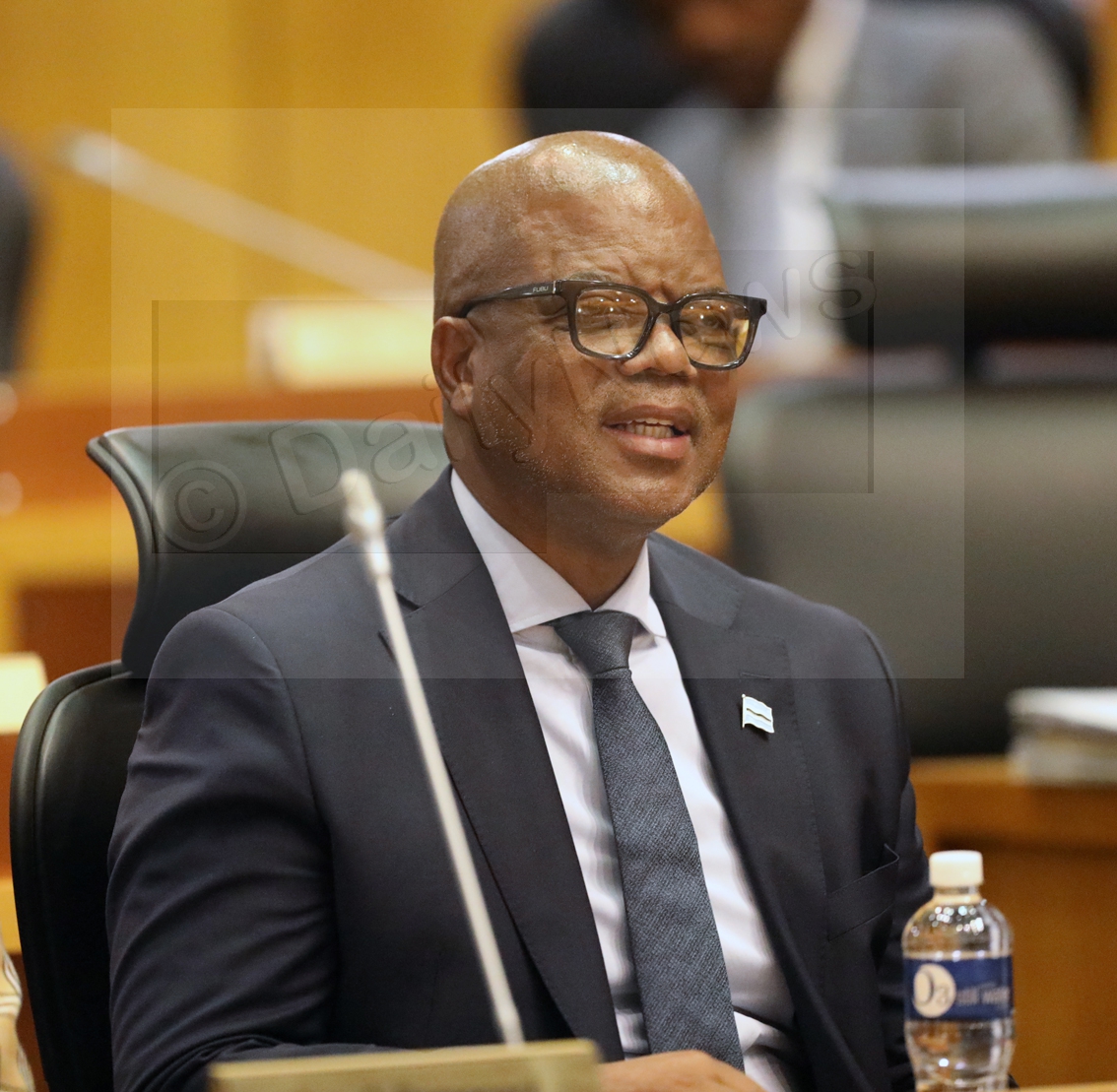
This was said by the Minister of Tertiary Education, Research Science and Technology, Dr Douglas Letsholathebe when presenting the ministry’s Mid-Term Review of NDP11 in Parliament under the thematic areas of Economy and Employment.
He said policies for public funding of Tertiary Education Institutions and student sponsorships would be developed and implemented to support the implementation of the said National Human Resource Development (NHRD) initiatives through a responsive and adaptive tertiary education financing system.
“This will ensure that funding is prioritised to areas that are critical to the achievement of Vision 2036 goals and aspirations with respect to knowledge development, while delivering value for money and improved efficiency in tertiary education,” he stated.
Further, Dr Letsholathebe said Labour Market Observatory would be revitalised to provide a Labour Market Information System (LMIS) that would act as a data hub on the supply of and demand for labour, as well as guide human resource development initiatives to meet national and global skills needs.
In addition to LMIS, he said the ministry would go a step further in defining the labour market for Botswana, adding that a foresight analysis for the country would be necessary.
Dr Letsholathebe said for the ministry to execute its mandate, funds amounting to P391.9 million under development budget would be required for the remaining half of NDP 11.
During the planning period, he said the ministry would improve the quality and relevance of education and training through the enforcement of quality assurance measures.
One of the measures, he said, would be the implementation of the National Credit and Qualifications Framework (NCQF), one of whose interventions would be to build the capacity of Botswana Qualifications Authority (BQA).
Dr Letsholathebe noted that ‘this will be done through identifying resources available nationally including unbundling the mandate of the organisation to facilitate more efficient accreditation’. With regards to Research, Science, Technology and Innovation (RSTI), the minister stated that strategies for Indigenous Knowledge and Space Science would be finalised so as to guide key players and build capacity in harnessing emerging technologies.
He said the Private Sector Engagement Framework would also be finalised to facilitate meaningful industry participation and contribution to research and innovation. Further, he said there were efforts to make RSTI data readily available to inform policy and decisions through the coming into operation of the Research Information Management System in the remaining part of NDP 11.
Dr Letsholathebe further stated that the establishment of a Research Fund critical to pool the investment efforts from government with those of the private sector would be prioritised to create a facilitative environment for research and innovation. He also said continuous research on emerging technologies, collaboration and inclusive stakeholder engagement would also be key in harnessing the benefits of emerging technologies.
“At the same time, these technologies usher in cyber-related threats and misuse, calling for the development of resilient and robust broadband infrastructure,” he stated.
With regard to Improving Productivity and Competitiveness, he said vocational training sector would be transformed to provide skills relevant to global and local industry needs.
He also said there would be establishment of data sources and tools to facilitate productivity monitoring and evaluation.
One of the key challenges to the ministry, he said, was the decline of tertiary education gross enrollment rate from 20.2 per cent in 2017/18 to 18.2 per cent in 2018/19.
This, he attributed to decline in the BGCSE pass rate, the shift towards [high cost] science programmes and slow process of accreditation of new programmes.
Other factors are that higher education institutions are not able to speedily implement new programmes that will accommodate increased numbers of students, limitations in the availability of finance for tertiary education scholarships and weaknesses in collecting loan repayments from graduates. Ends
Source : BOPA
Author : Mmoniemang Motsamai
Location : Gaborone
Event : Parliament
Date : 31 Aug 2020
Related News


25 Aug 2026
Forensic audit generates 90 priority actions

25 Aug 2026