



Botswana need to be lifted from poverty
26 Aug 2020
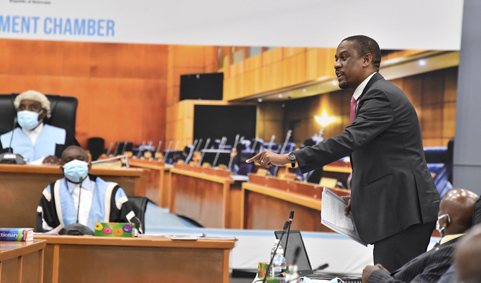
For the economy to have meaningful effect on Batswana, three areas of unemployment, poverty and high income inequality should be addressed, Leader of the Opposition, Mr Dumelang Saleshando, has told Parliament.
Contributing to debate on the National Development Plan 11 (NDP 11) mid-term review on Tuesday, Mr Saleshando said those three areas were important for transforming living conditions.
Instead, Mr Saleshando said NDP 11 had focused on attaining a high income status for the country, as opposed to addressing what such economic growth would mean to people’s lives.
Previous experience had proved that since independence, Botswana registered high economic growth and moved from low income to middle income economic status driven by mineral sales without large scale job creation and this did not correspond with a clear improvement in people’s lives, Mr Saleshando said.
As such, even if Botswana moved to high income status as a resource-based economy, there would be no guarantee that people’s lives would transform, unless there were deliberate interventions to diversify the economy, create jobs, address poverty and income inequalities.
While Botswana Democratic Party (BDP) legislators had taken turns to state that the COVID-19 pandemic had presented them with a wake up call that Botswana needed to be self-sufficient in industrial development and food production, Mr Saleshando said this had always been the position of the official opposition.
He said political parties that made up the Umbrella for Democratic Change (UDC) had consistently called for the country to invest in being self-sufficient in manufacturing of basic goods, agricultural output and key commodities such as fuel, water and electricity.
Mr Saleshando said when past opposition leaders such as Mr Motsamai Mpho and Dr Kenneth Koma tabled those suggestions in Parliament, the BDP leadership then chose the comfort of exporting raw materials and importing finished goods, which delayed the country’s development.
He also said while the opposition preached import substitution manufacturing, the BDP government had not supported the few local industries in the past.
Mr Saleshando cited purchase of building materials from outside the country for government projects while a firm engaged in such produce, Lobatse Clay Works, struggled for business opportunities at the time.
The Maun West legislator, said he had been part of the 10th Parliament in the years 2009 to 2014 when the opposition called for citizen empowerment to be designed as law, while the BDP chose instead to leave it at policy level.
Mother tongue education and the teaching of different skills at schools, commonly known as education with production were other key opposition policies that the BDP seemed to be warming up to, Mr Saleshando said.
The recent UDC manifesto had further proposed the extension of the country’s rail network, the use of technology in schools as well as having manageable classroom sizes, he added.
Mr Saleshando decried the lack of a radical industrialisation plan in the NDP 11 mid-term review, stating that this would continue the anomaly of Botswana exporting jobs through the country’s resources being utilized elsewhere for downstream manufacturing activity.
He further called on the national leadership to desist from engaging in private business dealings with government. Mr Saleshando said that while there were no laws that prevented members of the executive from partaking in private business, they ran the risk of unethical trade practice, insider trading and conflict of interest, as well as their business partners potentially having undue influence in state affairs.ENDS
Source : BOPA
Author : Pako Lebanna
Location : GABORONE
Event : Parliament
Date : 26 Aug 2020
Related News

25 Aug 2026
Forensic audit generates 90 priority actions
25 Aug 2026