



Botswana committed to combating financial terrorism
23 Aug 2020
Botswana is fully committed to contributing to global efforts towards combating financial terrorism, money laundering and the proliferation of arms of mass destruction.
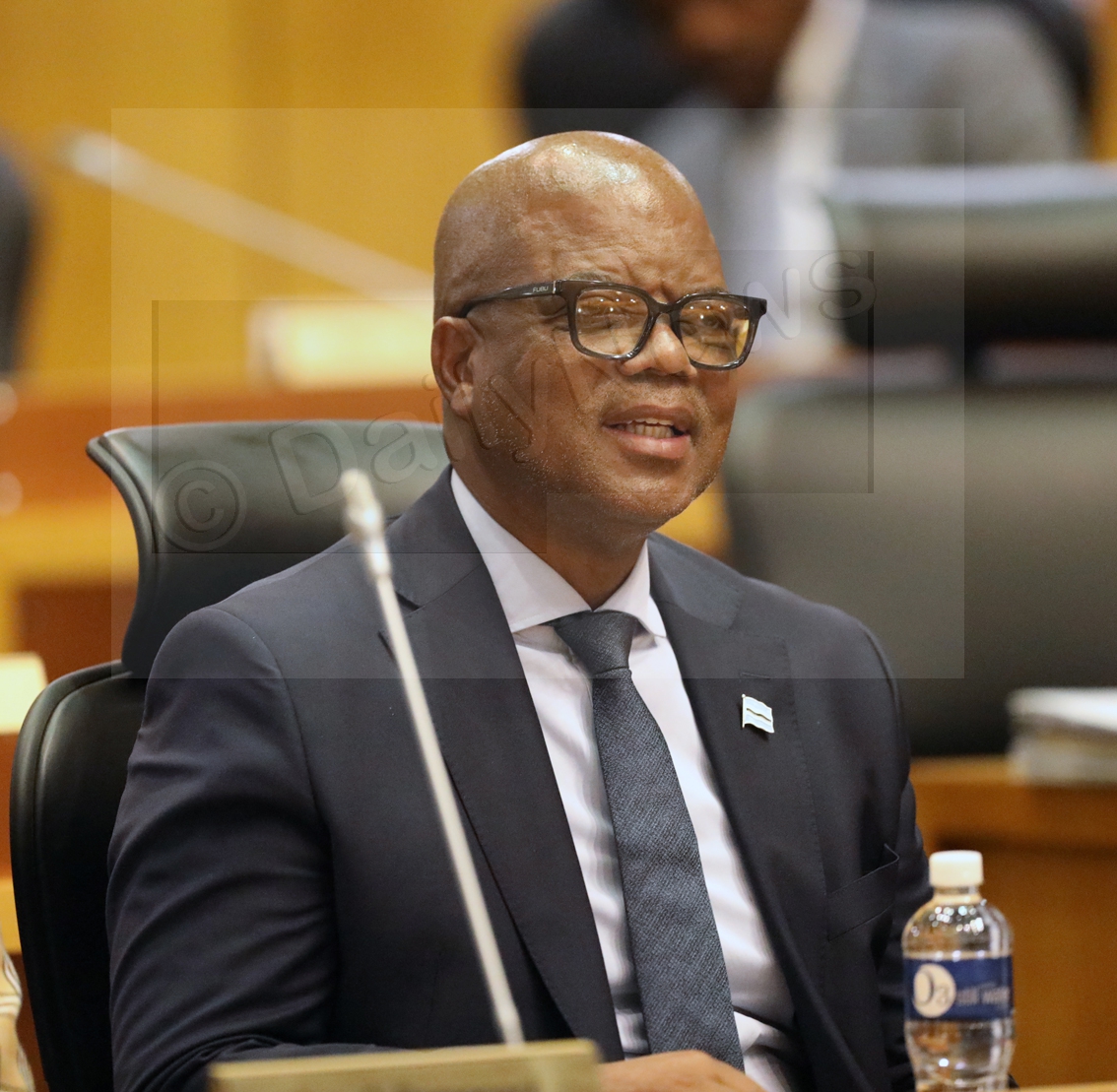
Delivering a statement on anti-money laundering and countering the financing of terrorism in Parliament on Friday, Minister of Finance and Economic Development,Dr Thapelo Matsheka said Botswana contributed to efforts by the international community to combat illicit financial trade.
“In response to the escalating incidence of money laundering and the threat posed to the international financial system, the international community had built a far-reaching global governance regime whose objective is to combat all forms of financial crime,” Dr Matsheka said.
He further revealed that Botswana was a member of the Eastern and Southern African Anti-Money Laundering Group (ESAAMLG), a regional body whose primary objective was to foster the implementation of Financial Action Task Force (FATF).
“In 1989, the group of seven industrialised countries (G7) established the FATF as a global body to develop and promote policies to combat financial crimes. Botswana is an FATF member through ESAAMLG, a regional body which fosters international standards,” Dr Matsheka said.
Among the global standards that the ESAAMLG member countries engage in include developing capacity to combat money laundering, terrorism financing and proliferation financing; undertaking evaluation of member countries’ measures to counter illicit financial trade; carrying out relevant research and training officials.
“Through ESAAMLG, Botswana has trained 21 officers in different ministries and departments and has participated in a number of regional country peer reviews known as mutual evaluations, done by member countries in some instances with the support of the World Bank or International Monetary Fund (IMF,” Dr Matsheka stated.
Botswana underwent such mutual evaluation exercises in 2007 and 2017, and after the second assessment, it was deemed that the country still needed to further build capacity, and the legal framework had shortfalls.
“Following the results of the 2017 mutual evaluation review, the FATF through its organ, the International Corporation Review Group (ICRG) identified Botswana as having strategic deficiencies in its anti-money laundering and countering of the financing of terrorism system,” Dr Matsheka revealed.
He said Botswana was subsequently placed on a one year observation period from June 2017 to June 2018, and a subsequent assessment noted that sufficient improvements had not been made, and as a result the country was included in the FATF grey list.
The country has since worked on a an action plan to address the identified strategic deficiencies, and fully committed to work with the ICRG to among others, assess risks, develop and implement supervisory manuals, improve analysis and dissemination of financial intelligence by the Financial Intelligence Agency (FIA), the minister said.
Among other points the country was working on was to develop and implement the counter financing of terrorism strategy; to ensure the implementation of targeted financial measures related to terrorist financing as well as to apply a risk-based approach to monitoring non-profit organisations, Dr Matsheka said.
“In relation to effectiveness compliance, the FATF has extended timeliness from December 2020 to January 2021 on three action items, prompted by the disruptions in the implementation of remedial measures as a result of COVID-19,” Dr Matsheka said. ENDS
Source : BOPA
Author : Pako Lebanna
Location : GABORONE
Event : Parliament
Date : 23 Aug 2020
Related News

25 Aug 2026
Forensic audit generates 90 priority actions
25 Aug 2026