



Population growth exacerbates low water yield

04 Dec 2019
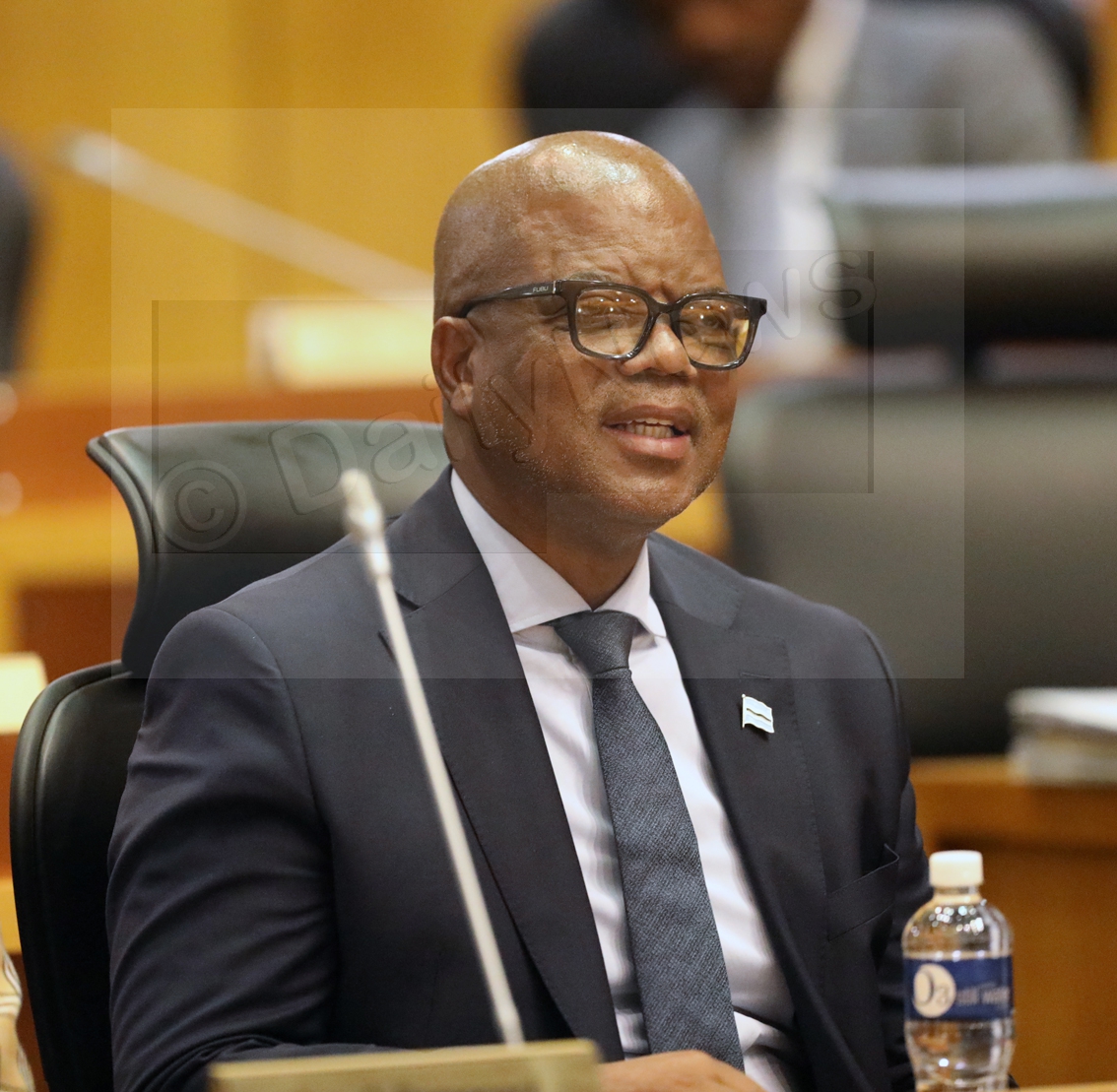
MMinister of Land Management, Water and Sanitation Services has told Parliament that shortage of water in Kanye is attributed to a decline in yield from groundwater sources, population growth and economic developments.
Minister Kefentse Mzwinila said the situation was exacerbated by high water losses due to a pipe network that had now passed its design life of 10 years. He said current water sources were in the order of 40 per cent on average.
Mr Mzwinila further said Kanye sourced water from four boreholes in Kgwakgwe wellfield, four in Ramonnedi wellfield, five in Gasegogwane wellfield and four in Dilokwane wellfield. He said the wellfields produced a total of 10.7 megalitres per day against a total demand of 14.9 megalitres per day, resulting in a supply deficit of 4.2 megalitres per day.
Mr Mzwinila said water shortage in Moshaneng was due to a decline in borehole yield. He said the village was supplied from one borehole (BH7934) with a yield of 0.16 megalitres a day following the drying up of the second borehole (BH1667) with a yield of 0.006 megalitres a day.
He said current supply was 0.15 megalitres per day against a demand of 0.258 megalitres per day resulting in a supply deficit of 0.108 megalitres per day.
He said Ranaka was supplied from one borehole (BH2670) at an abstraction rate of 0.32 megalitres per day against a demand of 0.41 megalitres per day resulting in a supply deficit of 0.09 megalitres per day. Ha said the shortage of water was attributed to the limitation in the availability of water that could be supplied.
“Although Ranaka is connected to the Gaborone-Lobatse pipeline, the source is overstretched and cannot cater for the village,” he said.
In the case of Lekgolobotlo, Ntlhantlhe, Magotlhwane and Kgomokasitwa, Mr Mzwinila said the shortage was attributed to the limitation in the availability of water to be supplied as supply to the villages was sourced from Gaborone Dam and Ramotswa wellfield through the Gaborone-Lobatse water supply scheme.
He said Gaborone Dam provided 20.174 megalitres per day and Ramotswa wellfield provided 1.31 megaliters per day.
Mr Mzwinila said the two sources currently supplied a total of 21.484 megalitres per day against a demand of 27 megalitres per day thus resulting in a supply deficit of 5 516 megalitres per day.
He said the total demand of 27 megalitres per day presented the combined demand from Ramotswa, Lobatse, Good Hope and Molapowabojang clusters.
He said the provision of adequate, reliable and good quality water to local communities was government’s top priority hence government had secured funding to the Mmamashia-Kanye NSC pipeline and the Kanye Network Rehabilitation Projects.
Furthermore, he said the acquisition of a loan from the World Bank to address water challenges in different parts of the country was an example anchored as a top priority given the water supply issues by government.
He said short-term mitigations to address water supply in the villages included rationing and bowsing in Kanye, although it was not sufficient, adding that bowsing was not a permanent solution.
Furthermore, he said within the framework of Mmamashia-Kanye NSC pipeline an additional 2 megalitres per day would be supplied to Kanye by December 2019 and would reduce the water supply deficit in Kanye from 4.2 megalitres per day to 2.2 megalitres per day.
Mr Mzwinila said Moshaneng was planned to be connected to Gasegogwane wellfield after the NSC pipeline connection to Kanye.
He further indicated that there was no short-term measure being implemented currently at Ranaka. He, however, said when supply to Kanye through Mmamashia-Kanye NSC pipeline commence in mid-December 2019, augmentation by bowsing to Ranaka from Kanye would commence.
He said Lekgolobotlo, Ntlhantlhe, Magotlhwane and Kgomokasitwa were being rationed and that no bowsing was done due to shortage of water bowsers.
“Once the supply is realised in Kanye from the Mmamashia- Kanye water scheme in December 2019, a redistribution of the current water bowsers supplying Kanye will be undertaken to alleviate the current situation. My ministry is currently procuring 30 water bowsers which are expected to be delivered by the end of June 2020. Out of the 30 bowsers, two will be dedicated to augmenting supply in the four villages,” he said.
With regards to water solutions, he said through the Kanye Network Rehabilitation which entailed the optimisation and refurbishment of the distribution network, the ministry was in the process of transferring the project from Project Management Office (PMO) to Water Utilities Corporation (WUC) in order to fast track its implementation,
Mr Mzwinila further said through the Lobatse Water Master Plan project which entailed the laying of a pipeline from Gaborone to Lobatse, a pump station, construction of two reservoirs and upgrading of the Lobatse distribution network, the pipeline would bring an additional 37 megalitres per day of water over and above the current 21.484 megalitres per day to the Gaborone-Lobatse water supply scheme.
He said the laying of the NSC 11 pipeline (from Palapye to Mmamashia treatment plant) and the expansion of Mmamashia Water Treatment Plant Projects would serve as a long-term mitigation project addressing supply to the southern part of the country, including Kanye, Moshaneng, Ranaka, Lekgolobotlo, Ntlhantlhe, Magotlhwane and Kgomokasitwa.
Kanye North MP, Mr Thapelo Letsholo had wanted to know if the minister was aware that shortage of water continued to plaque areas of Kanye, Moshaneng, Ranaka, Lekgolobotlo, Ntlhantlhe and Kgomokasitwa.
He also wanted to know the reasons for water shortage in the said areas which he said had lasted for many years.
Mr Letsholo also asked what negative social and economic impacts were being experienced as a result, and why the water challenge was not being prioritised and given the urgency it deserved.
The MP also wanted to know the short-term actions in place to alleviate the water shortages for each village and how effective they were and what medium to long-term solutions were being envisaged or being implemented, with timelines.
He also wanted the minister to state when the water problem would be resolved. ENDS
Source : BOPA
Author : BOPA
Location : GABORONE
Event : Parliament
Date : 04 Dec 2019
Related News

25 Aug 2026
Forensic audit generates 90 priority actions
25 Aug 2026