



Six brigades courses not accredited
21 Nov 2019
Parliament has been informed that out of the 28 courses offered at brigades institutions, only six were not accredited by Botswana Qualifications Authority (BQA).
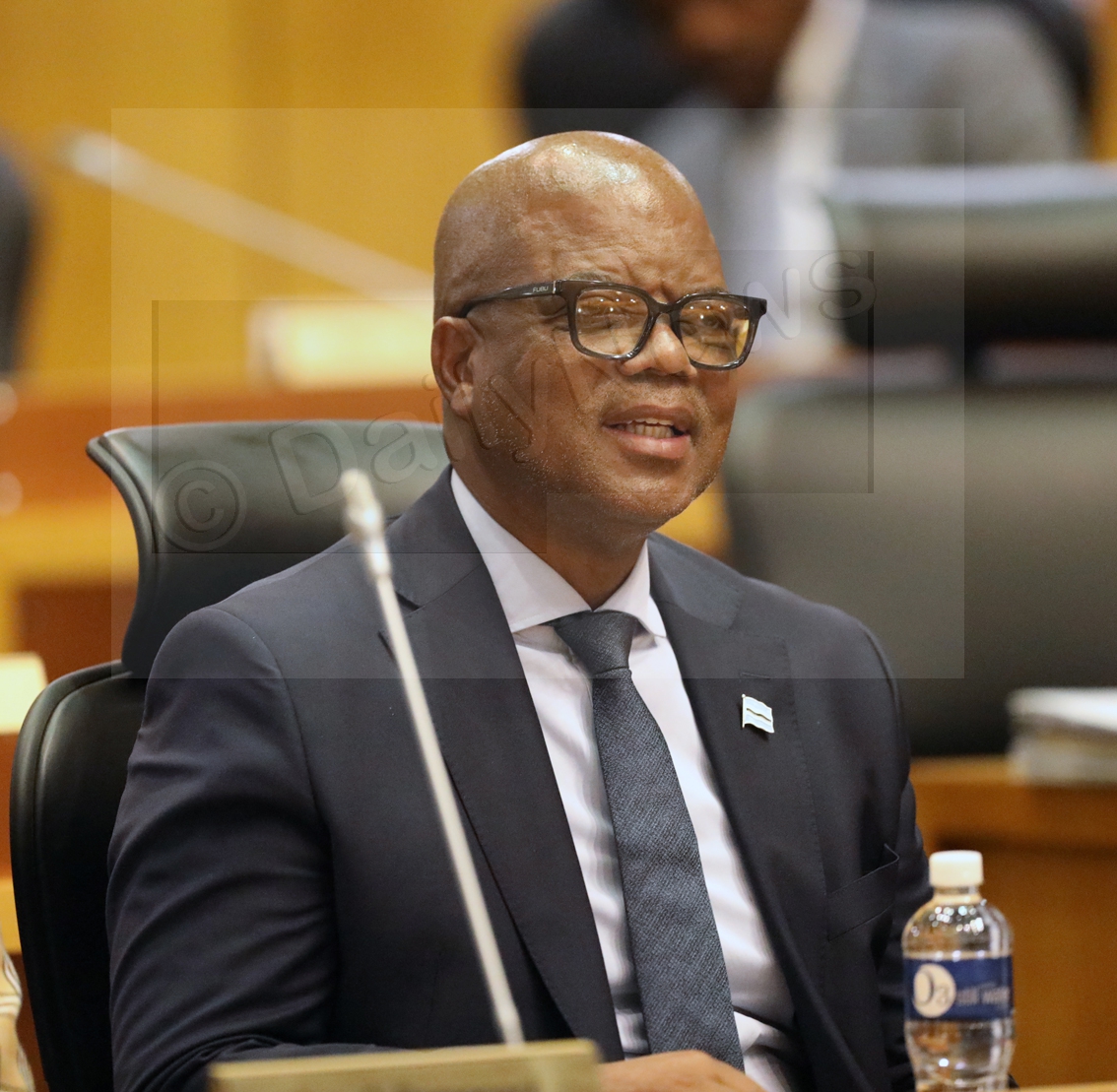
Answering a question in Parliament on November 20, employment, labour productivity and skills development minister, Mr Mpho Balopi, said the other 22 courses were registered and accredited by Botswana Training Authority (BOTA) under the old regulations, which were still operational to date.
Mr Balopi said the six courses were unaccredited due to insufficient resources both human and equipment, adding that resources ought to be in place to facilitate institutional compliance.
The minister explained that the non-accreditation of the courses was a result of a misalignment between timing of the offering of vocational courses and the availability of financial resources to deliver the required outcome.
He said as a result of the mismatch cited above, 13 468 learners were enrolled for either unaccredited programmes or that the institutions were limited by the available resources to accommodate all the admitted students at the beginning of 2019.
As a result, Mr Balopi said his ministry was working in collaboration with relevant stakeholders to normalize the situation and optimize facilitation of learning while operating within the law and attaining the required standards. Mr Balopi said through the ongoing rationalization, the available facilities at brigades have the capacity to absorb 9 091 out of the total number of 13 468 students admitted.
Mr Balopi further revealed that after consulting with BQA, an agreement was reached that standards must be entrenched and maintained.
Furthermore, it has been agreed that availing the enabling resources to facilitate compliance was a priority for both the government and the learners, said Mr Balopi.
Mr Balopi said his ministry had through engaging brigades principals and through direct interaction with students absorbed 7 200 students into the 22 accredited programmes.
The minister said government was engaged on rapid mobilisation of resources, as a way of complying with standards set by the law while on one hand offering programmes which covered a varied number of continuing students who were admitted prior to 2019.
“Even though the decision at hand affected students that were admitted in 2019, they were other continuing students doing second and third year under the 22 courses approved by BOTA and will be completing their studies in 2021,’ he said.
He said a decision was taken to revert to the existing Trade C, B and National Craft Certificate (NCC), Accounting, Business and Computer Studies while awaiting the availability of adequate resources.
Mr Balopi further appealed to the private sector and other able stakeholders to engage and share the load.
He indicated that the issue of accreditation required a sequence of events to be addressed. Mr Balopi said the ministry was supposed to source out financial and other resources which were not available at present. He said his ministry was doing all in its power to mitigate the prevailing adversity.
“This is a difficult exercise, which requires all the stakeholders to work together and progressively in dealing with the facts and therefore we need the understanding and cooperation of all, and in particular the learners,” said Mr Balopi.
Mr Balopi said the government aimed to entrench and maintain a world-class standard of vocational training for the youth and to effectively address challenges of unemployment and poverty.
Member of Parliament for Nata/Gweta, Mr Polson Majaga, had asked the minister why most of the courses in brigades and technical colleges were not accredited and when the abnormality will be rectified.
Mr Majaga had also asked the minister to clarify when the issue of lack of accreditation would be rectified. Ends
Source : BOPA
Author : BOPA
Location : GABORONE
Event : Parliament
Date : 21 Nov 2019
Related News

25 Aug 2026
Forensic audit generates 90 priority actions
25 Aug 2026