



Trade bill to improve doing business in Botswana
30 Jul 2019
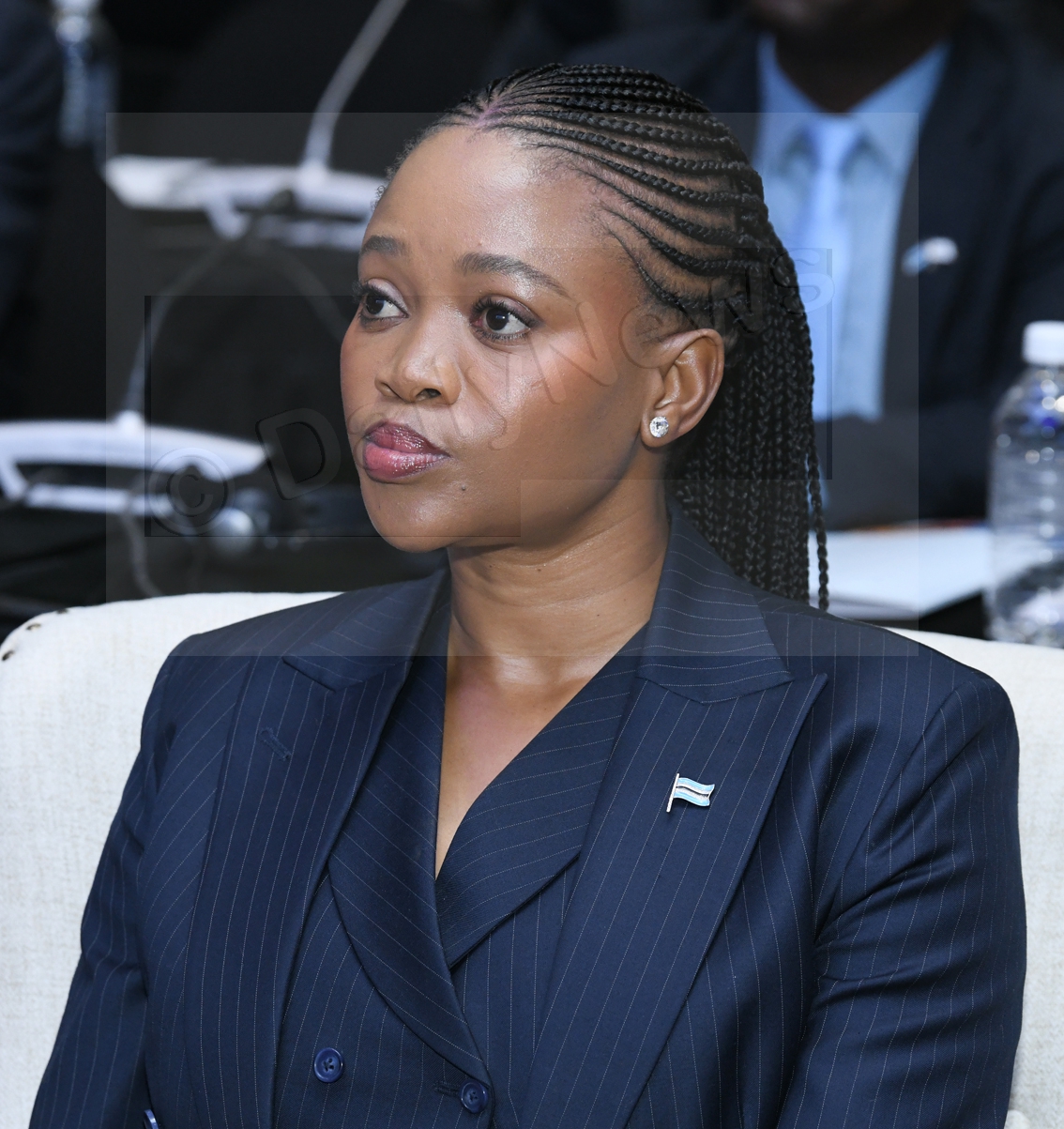
Minister of Investment, Trade and Industry, Ms Bogolo Kenewendo says the proposed Trade Bill, 2019 is intended to provide efficiency in the issuance of business licenses which will improve the ease of doing business in Botswana.
When presenting the Bill in Parliament on July 29, Ms Kenewendo said the purpose of the Trade Bill was to re-enact with amendments, the Trade Act of 2003 in line with the approved Doing Business Roadmap through a Presidential Directive of 2014.
She explained that under the Trade Bill, the number of licenses would be limited by moving from the negative to positive approach, which would remove licensing except for business activities with health and safety concerns.
Furthermore, Ms Kenewendo said that the law would not prescribe the type of business activities allowed, instead, it would specify what was unlawful.
This approach, she said would make every other activity legal thus creating more opportunities for business operations.
She also noted that negative listing approach would accommodate new ideas, unlike currently where an applicant who comes up with a new business activity would have to request exemption from the minister.
In that regard, she said businesses trading in activities that do not require licensing would only register with the Companies and Intellectual Property Authority (CIPA) and inform Local Authority where the business was operating within 30 days of starting operations.
In addition, she said business activities which do not have health and safety concerns would not go through inspection of business premises prior to issuing a license.
The proposed amendments, Minister Kenewendo said sought to simplify the licensing procedures and improve efficiency in the issuance of licenses.
This, she said would be a way of abolishing Licensing Committees and introducing the issuance of both licenses and registration certificates over the counter. She said the abolishment of the licensing committees would reduce the turn-around time for the issuance of licenses.
Therefore, Ms Kenewendo indicated that parts of the Bill provided for the preliminary provisions saying part II of the bill required for the director responsible for domestic trade to license a trade or business in a council area where the business activity was to be carried out.
She stated that this further ‘gives the director powers to register any other trade or business within a Council area.’
However, she said licensing shall be limited to trades or businesses with health and safety concerns.
Part III of the Bill shall provide for the licensing of trades limited to trades or businesses with health and safety concerns.
She indicated that the provisions would be such that the trading licenses shall be valid for an indefinite period; subject to compliance with the terms and conditions of the license and payment of an annual license fee.
The bill also proposed new provisions for registration of a trade or business without health and safety concerns.
Minister Kenewendo indicated that a trade or business without health and safety concerns which was opened to the public, would only be registered after such business was opened to the public.
She said the application for registration shall be made within 30 days from the date the business was registered with CIPA in terms of Clause 15.
She noted that in this instance a business registration certificate will be sufficient proof that a person was authorised to carry on such trade or business.
Concerning Part V of the Bill, Ms Kenewendo said it made provision for reservation of certain businesses to citizens or companies wholly owned by citizens and joint ventures where citizens have a minimum ownership of 51 per cent.
She said the bill provided for the application for a license or a business registration certificate to be made to the director.
Furthermore, she said Part VI of the bill afforded for supervision and enforcement by the director, which also provided for the appointment of authorised officers to conduct routine inspections as may be necessary.
The bill also, according to Ms Kenewendo had provisions for the Regional Appeals Board in Part VII.
She said in the Bill, appeals against the decisions of the director would be made to the Regional Appeals Board while those against the decisions of the Board will be escalated to the minister.
She noted that Regionals Appeals Boards were retained in the Bill to ensure that appeals could be heard timeously and in respective regions.
Ms Kenewendo also said the bill provided for the Secretariat responsible for the administrative business of the Board in Part VIII.
She said the bill had provisions on matters such as minister’s powers to give written directions to the director in the interest of public health and safety, offences and penalties in Part IX.
Also, she said this part of the bill would address the regulation making powers, the repeal of Trade Act and Transitional provisions. Ends
Source : BOPA
Author : Ketshepile More
Location : GABORONE
Event : Parliament
Date : 30 Jul 2019
Related News


25 Aug 2026
Forensic audit generates 90 priority actions
25 Aug 2026