UB strives to contribute to society
05 May 2019
The University of Botswana (UB) strives to make a full contribution to the social, economic, civic and cultural aspects of life in the society.
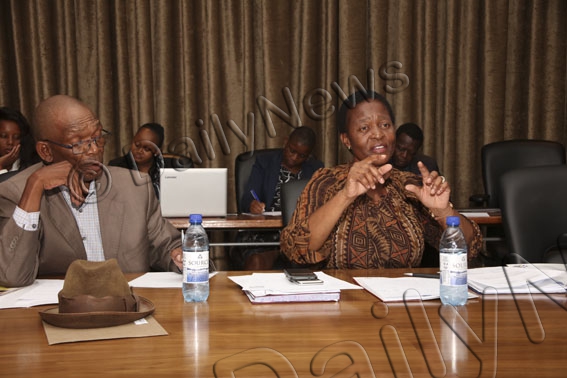
This was said by the deputy Vice Chancellor for Academic Affairs at UB, Dr Oathokwa Nkomazana during the Partnership for Economic Policy (PEP) Dissemination workshop on “localising Sustainable Development Goals (SDGs) on Gabane village case study, recently.
Dr Nkomazana stated that the university was built on the spirit of Botho through the “motho le motho kgomo” initiative, adding that the institution therefore wanted to give back to the same community that sacrificed a lot to bring it to what it is today.
She said they had forged strong links with the community to give back to the community before venturing into Africa and the world.
Through research, she said, the institution provided implementation solutions to socio-economic problems in communities.
Dr Nkomazana explained that a team of academic staff carried a research project that strengthened the link between the university and community as well as the world.
She added that they even sought research funding from the Partnership for Economic Policy to work with the Gabane community to identify the extent of poverty.
She said they were localising SDGs so that policy makers could take stock of how Gabane community had fared in terms of achieving the SDGs.
Presenting on the Gabane case study, the PEP Botswana team member, Ms Mavis Kolobe said 430 households in Gabane were living below the national poverty line, adding that the majority of the poor were females, standing at 61.3 per cent.
Ms Kolobe said 4.28 per cent of under five children were severely underweight.
She spoke of the goal to end hunger, achieve food security and improved nutrition and promote sustainable agriculture, saying the results from their study showed that 7.9 per cent of the population of interest was faced with extreme hunger, meaning that they had no food at all.
She further said 39.52 per cent of the Gabane population was faced with moderate hunger, adding that the figures revealed that meeting of zero hunger by 2030 might be a challenge unless appropriate policies were put in place.
Ms Kolobe also talked on the goal of ensuring healthy lives and promoting well-being for all ages, saying the main challenges under SDG 3 in Botswana were maternal mortality, HIV and TB related deaths, Non-Communicable Diseases and substance abuse.
She further stated that in Gabane, the main causes of death were heart diseases, accidents, diabetes and complications during pregnancy and child birth. She also stated 50 per cent of the under-five children were not attending pre-school.
Ms Kolobe however said that recommendations of the Gabane research were that there was a need to review labour legislation on the minimum wage rates, which were not currently linked to the cost of living and thereby leading to indecent jobs in terms of payments.
Furthermore, she pointed out that the minimum wage in Botswana was currently P700 a month for farm workers.
Research further revealed that there was low participation in government programmes by Gabane residents.
“People who were supposed to be in social safety nets were not enrolled, especially those living with disabilities,” she said, adding that there was need for effective monitoring and evaluation of the programmes on a continuous basis to ensure that they met their intended objectives.
Regarding the health challenge, she said there was need to intensify the food supplementation for children and make sure that it reached the intended beneficiaries.
She said there was also a dire need to educate people about the importance of healthy living to reduce the chances of obesity. ENDS
Source : BOPA
Author : Lesedi Thatayamodimo
Location : GABORONE
Event : workshop
Date : 05 May 2019
Related News

15 Aug 2026
15 Aug 2026