



Water supply remains challenge - Moipisi
13 Mar 2019
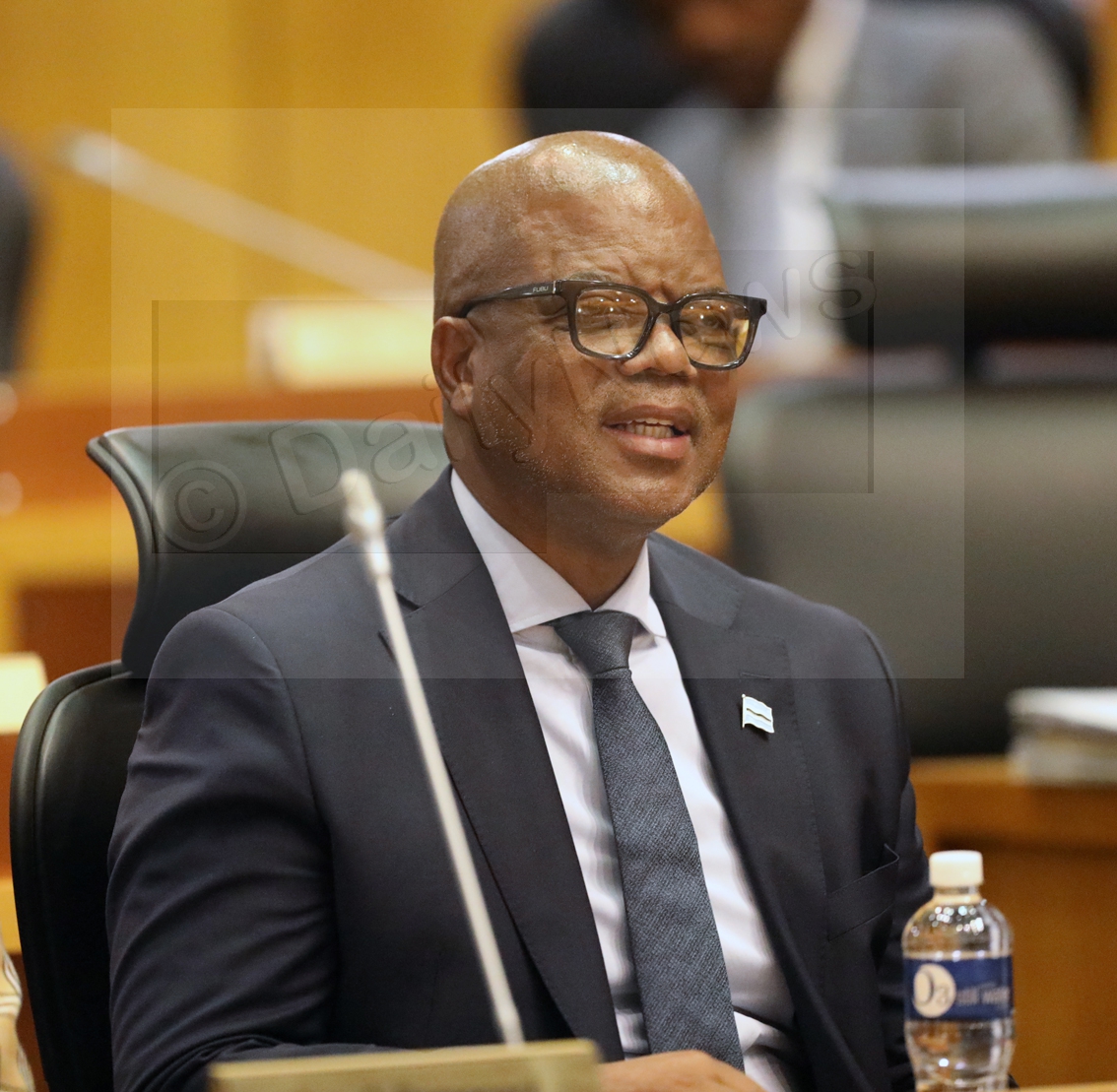
Water supply still remains a challenge throughout the country even after extensive investment in water resources and infrastructure development.
Assistant Minister of Land Management, Water and Sanitation Services, Mr Itumeleng Moipisi said this was due to the fact that most of the secondary infrastructure supplied by the dams and major pipelines were inadequate and dilapidated as they had exceeded their design life.
Mr Moipisi noted that it had resulted in restricted distribution of water from the dams to specific villages.
“This is the case in areas like the North East District and Francistown where some villages experience shortages whilst supplied from Ntimbale and Shashe respectively,” he said.
Furthermore, he said water supply was still a challenge because most villages’ network distributions were overgrown by village expansion resulting in built up areas without reticulation.
He said it was so because investment in infrastructure development were mainly conceptualised during the National Water Master Plan of 2006, and that growing demand continued to stretch the resources requiring identification of additional resources and ensuring water security.
Mr Moipisi told Parliament that the ministry was currently implementing National Development Plan 10 and 11 projects, and that Botswana emergency water security and efficiency projects funded by the World Bank were aimed at addressing challenges of water supply country wide.
In addition, he explained that reliable water supply to the South East District, excluding Tlokweng, was expected in May 2019 after completion of the design, construction and commissioning of the Ramotswa treatment plant project.
The project, he said, was initially planned for beneficial use by March 2019, but that it experienced further delays due to the delivery of wrong pump station roof sheets.
The scheme covers Ramotswa cluster which includes Taung, Boatle, Otse, Mogobane, Mogonye, Manyana and Mankgodi.
“The plant is expected to be connected to the Ramotswa wellfields to treat water from polluted boreholes and produce 8 000 kilolitres per day. The current supply status for the cluster is at 9 325 kilolitres per day versus demand of 10 711 kilolitres per day. Therefore the plant will produce excess of approximately 7 000 kilolitres per day which will be used to augment Lobatse water supply,” he said.
Mr Moipisi pointed out that Water Utilities Corporation (WUC) had limitations that resulted in challenged performance to carry out the mandate of providing water to homesteads.
In light of the challenges, the assistant minister said the ministry had allocated funding towards restructuring of the corporation which would address issues of skills alignment and recruitment, customer focused and credit worthiness.
He, however, told MP’s that “Botswana is generally a drought prone country resulting in lack of groundwater recharge and decline in ground water quality and dry spells more specifically in areas where the primary source is ground water.”
Mr Moipisi stated that climate variability also created disparity between abundant surface water resources and water high demands areas. He added that it called for long transfer pipelines.
Member of Parliament for Ramotswa, Mr Samuel Rantuana had asked the minister why reliable water supply remained a problem in the country after spending so much money building dams and constructing the necessary infrastructure.
He also wanted to know when reliable water supply could be expected in the South East District, and if WUC was resourced to carry out the mandate of providing water to homesteads. ENDS
Source : BOPA
Author : BOPA
Location : GABORONE
Event : Parliament
Date : 13 Mar 2019
Related News

25 Aug 2026
Forensic audit generates 90 priority actions
25 Aug 2026