



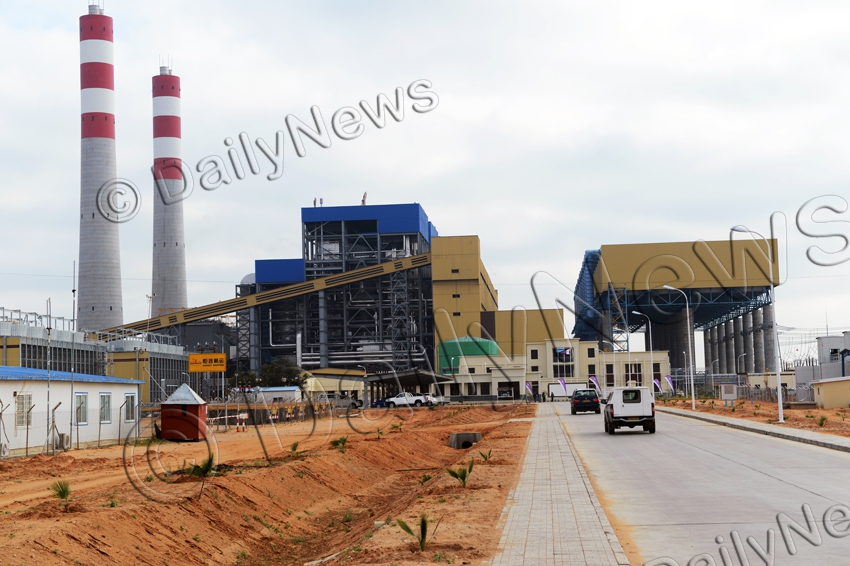
Morupule B Power Station not for sale
13 Feb 2019
Government has not reneged to sell the Morupule B Power Station.
Instead focus has for now been on remediation of the major defects to restore usability and value.
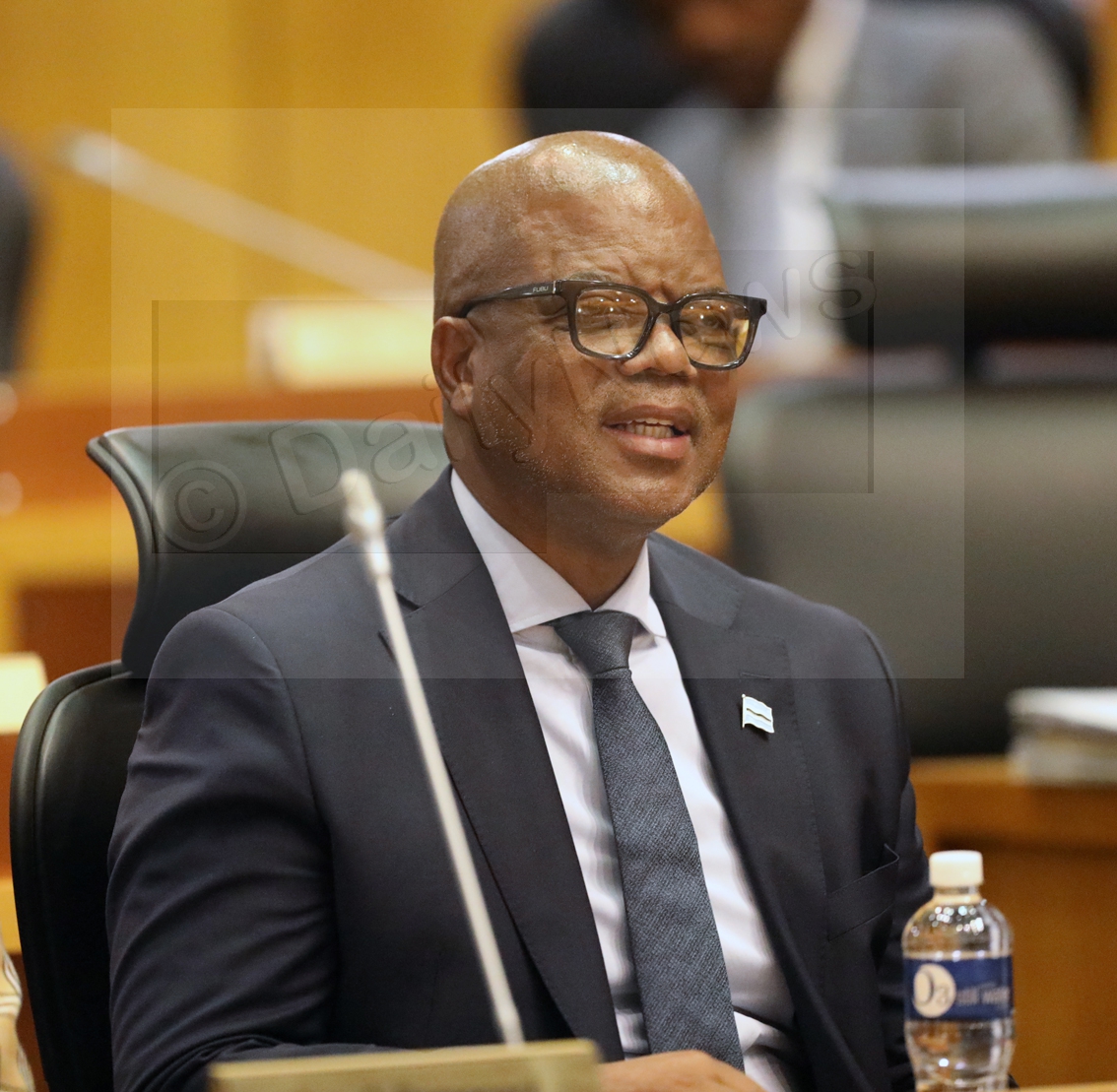
Minister of Mineral Resources, Green Technology and Energy Security, Mr Eric Molale said as with other government-owned assets, government wished to keep its options open on Morupule B, and would continue to review the strategic and economic case for divestiture from the assets.
“The case for divestiture at the time was for the Chinese to buy back and pay back to government, all loans and matters material thereto.
No other investor would buy at prime, while acquiring a defective plant,” he said.
Answering a question from the MP for Lobatse, Advocate Sadique Kebonang in Parliament on Tuesday, Minister Molale explained that there was no change of heart, as that was an evolving, but sensitive issue that had to be handled with care.
He highlighted that ‘if and when government decides to divest of its financial interest in the Morupule B, it will also, depending on the strategic and economic rationale, decide on the most prudent method of such divesture.’
Minister Molale also assured parliamentarians that citizen empowerment would be factored into government’s decision.
“We still have a power deficit.
We have to tender for alternative sources of energy and citizen participation is encouraged outright or through joint venture,” he said.
He explained that electricity in Botswana was regulated through the Botswana Energy Regulatory Authority Act in conjunction with the Electricity Supply Act and the Botswana Power Corporation (BPC) Act. Mr Molale stated that ‘Botswana Energy Regulatory Authority is responsible for ensuring that tariffs in the regulated sector are fixed on the basis of a tariff methodology that has been set up in a transparent manner, taking into account government policy on cross subsidies between classes of consumers.’
The Lobatse legislator had asked the minister to confirm whether government had reneged from its earlier decision not to sell Morupule B and also give reasons for such a change of heart.
Advocate Kebonang also wanted to know when an open competitive tender that would see citizens participating in the acquisition of Morupule B would be out.
Regarding power supply, Minister Molale told the House there was adequate power supply to meet the country’s demand from the domestic generation facilities, which are also supplemented through imports.
“Measures are in place to gradually reduce reliance on power imports through the return of Morupule A to commercial operation and defects remediation of Morupule B,” he said.
Mr Molale stated that Botswana’s electricity tariffs compared favourably in the region, citing as an example Botswana’s current average tariffs, which stood at 104t/kWh compared to Namibia’s average tariff of 170t/kWh. Furthermore, he said other countries with higher tariffs than Botswana included Tanzania, eSwatini and Zimbabwe, while Zambia has a lower tariff due to the low cost of hydro generation facilities.
“Botswana does not owe any companies that were hired by BPC to construct any power station,” he said. He was responding to a question from MP for Nata/Gweta, Mr Polson Majaga, who had asked the minister if he would consider coming up with a model to regulate increase of power prices in the country.
MP Majaga also wanted the minister to state why power connection was still expensive in Botswana than other countries in the region.
He also asked if it was true that Botswana still owed companies that were hired to construct power stations by BPC and when power shortage would be resolved.
Still in Parliament, Minister Molale explained that neither Debswana Diamond Company, Morupule Coal Mine nor Botswana Ash had sent engineers for further studies or post graduate specialisation in the past five years.
He however noted that the companies had financial assistance policies through which employees were encouraged and assisted to pursue self development programmes including postgraduate studies.
Minister Molale pointed out that the reason those companies did not undertake training in postgraduate specialisation course was that the principal qualification requirements for professional engineering roles was a bachelor’s degree.
He also clarified that specialisation in various fields was attained at first degree level, while professional engineers regardless of level of qualification had to undergo an on the job training to prepare them for the demands of the roles they had been identified for.
“The first degree is deemed good enough to create the necessary base or foundation and the major focus thereafter is on building experience and behavioural transformation to drive superior performance,” he said.
The minister noted that mining houses generally had robust tools that assisted to assess both technical and behavioural competencies with the aim of building a fully qualified person.
Mr Molale was responding to a question from the specially elected MP, Mr Mephato Reatile, who had asked the minister to state the number of engineers sent for further studies at Masters Level or specialisation for the past five years by Debswana Diamond Company, Morupule Colliery and Botswana Ash, and if not why. ENDS
Source : BOPA
Author : BOPA
Location : GABORONE
Event : PARLIAMENT
Date : 13 Feb 2019
Related News

25 Aug 2026
Forensic audit generates 90 priority actions
25 Aug 2026