


Agricutural sector potential untapped
29 Jul 2018
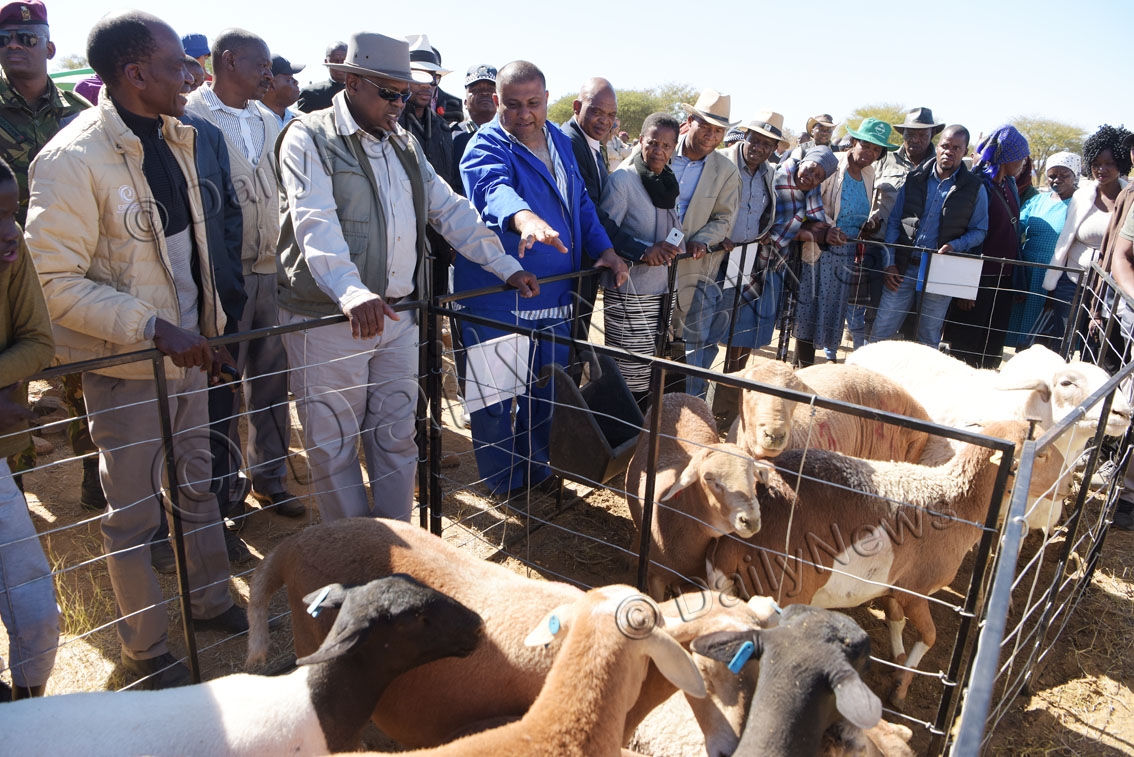
The President Mr Mokgweetsi Masisi has urged all stakeholders to develop the Molepolole Showground to be the hub of agriculture.
Officially opening the Molepolole District Show on July 28, President Masisi said the 49.8ha piece of land situated within the village should not be left idle but be put to productive use.
He said the land was big enough for the council and other stakeholders such as the Show Committee to set up an abattoir, adding such a facility could be leased to the private sector while they earn revenue through rental fees.
The Botswana Agricultural Marketing Board (BAMB) and other related organisations could also set up permanent residence in the area, the President said.
He also suggested that the showground could be developed through the Constituency Development Fund, saying each of the two constituencies could contribute P3 million each towards the project.
As the biggest village in the country, in terms of its size and population, Molepolole has a great potential to be the country’s bread basket, with the vast Kweneng land providing an added advantage, Mr Masisi said.
“Given its climatic and environmental conditions, Kweneng District has been found to be the most suitable for the production of beef, small stock, cereals, particularly sorghum, legumes and fodder,” he said.
The district also has high cattle population, estimated at 219 555, the third in the country behind Central and Ngami Districts and urged the farmers to take advantage to tap into the European Union market.
Another advantage is the proximity to Gaborone and the President called upon farmers to take advantage of the city to market their produce.
The small stock population meanwhile is approximately 200 000, third behind Central and Southern Districts.
“I am also reliably informed that the district has a high uptake of the LIMID programme on small stock which currently has 3 125 beneficiaries and this places it at number three after the Kgalagadi and Central districts,” the President said.
President Masisi said growth in the small stock population, which was mostly goats, was an indication of the positive impact of government funded programmes such as LIMID and the Poverty Eradication Pogramme.
“Therefore, it is worth noting that the Kweneng District is an area of high opportunity for the diversification of the agricultural production base,” he said.
Kweneng has the potential to produce 210 tonnes of pork, 6 200 tonnes of beef and 75 tonnes of goat meat annually and the President said if this was realised, it could go a long way towards reducing the county’s import bill and contribute significantly towards food security.
He said government had decided to replicate Lobu farm project in various suitable areas across the country.
Situated in the Kgalagadi District, Lobu farm has been dedicated to be a hub for small stock production in an unprecedented and massive scale.
“The benefits will include an increase in the quality and numbers of the national stock, and giving Batswana access to these animals, hence unlocking tremendous opportunities for local economic empowerment,” he said.
Mr Masisi said given the numbers of small stock in Kweneng, the district leadership should embrace this opportunity and adopt the Lobu model, adding this could be done at Mantshwabisi farms.
Government has also identified key sectors which will be critical in driving the economy and agriculture was one of them, he said.
He said the Botswana Meat Commission (BMC) was to be restructured to turn it into an economically viable business.
“BMC was established for a good purpose of buying cattle and processing beef for sale to external market, mainly to the European Union,” he said.
He said the abattoir was to be aligned to the new dynamics to secure its niche in the global markets hence its transformation.
He encouraged farmers to play a role in the transformation if they were to derive maximum benefits from the reformed BMC.
Talking about ISPAAD, President Masisi noted that Kweneng District has 97 projects with a potential to produce 200 tonnes of fodder to support the livestock industry.
“This will indeed have a significant impact on food production and eradication of poverty in the district through the production of quality crops and livestock for commercial purposes as well as for domestic consumption,” he said.
The District Show was held under the theme, Enabling Food Security through profitable communal farming. activities in the wetlands ENDS
Source : BOPA
Author : Tebagano Ntshole
Location : MOLEPOLOLE
Event : Agriculture Show
Date : 29 Jul 2018
Related News
18 Aug 2026
Government Commits To Electoral Reform

18 Aug 2026
Sincerity The Key to Lasting Friendship
18 Aug 2026