


Government EU collaborate to capacitate civil society - Batshu
14 Dec 2017
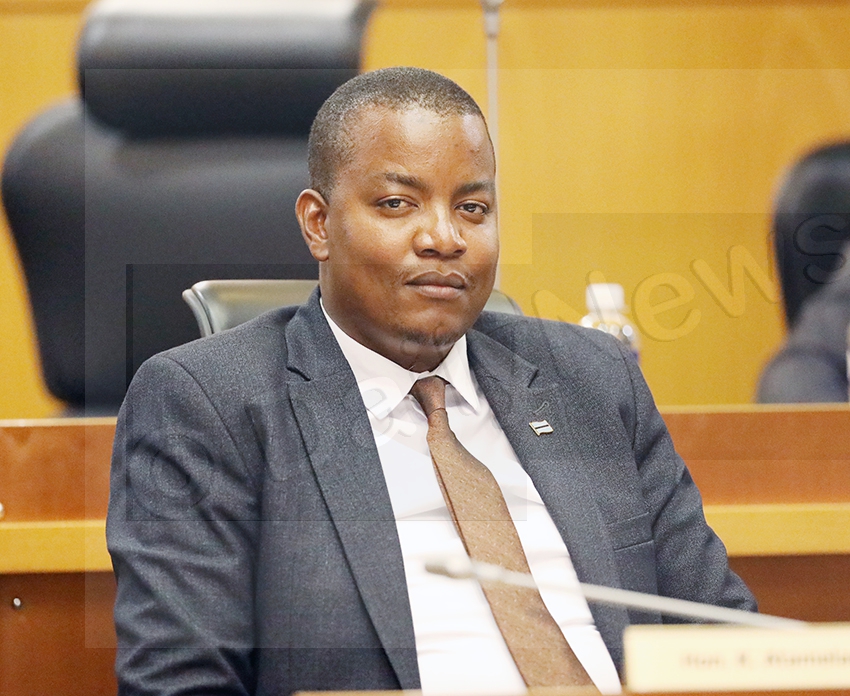
Minister of Nationality, Immigration and Gender Affairs, Mr Edwin Batshu says government has collaborated with the European Union through the Empowerment of Non-State Actors (ENSA) to capacitate civil society and improve the environment within which they operate in order to enable them to execute their mandates effectively.
Speaking at the closing ceremony of the ENSA programme on December 12, Minister Batshu said the government adopted a consultative strategy and allowed all stakeholders to participate in the engagement in order to ensure the programme’s success.
He said it was not an easy road as they came across obstacles that required them to go back to the drawing board in order to ensure that they were still on track.
He added that as a result of their joint efforts, the programme made commendable achievements which saw 40 NGOs supported with funding amounting to over P26 million for the implementation of initiatives aimed at uplifting the livelihoods of communities around them.
“Implementation of these projects country-wide covered education, especially early childhood education, orphans and vulnerable children, gender, environment and arts and culture sectors,” he said.
Mr Batshu also noted that further to financial support from the programme, comprehensive capacity building was provided to NGOs on project cycle management, governance, advocacy and policy dialogue, and that as a result of the capacity building programme, some NGOs were already showing improvements.
In addition, Mr Batshu said the ENSA programme has supported the NGO Council in the designing of the Civil Society Organisations (CSO) Fund whose main objective was to avail resources to leverage the civil society/government partnership in the national development process.
“Building on the ENSA experience with grants, the CSO Fund is conceived to be a tool that will champion a new way to motivate CSOs to extend their services to the hard to reach communities, promoting initiatives which have a huge social impact,” the minister added.
For his part, the head of delegation of the EU to Botswana and SADC, Ambassador Alexander Baum urged all stakeholders to ensure that the NGO Council could play its role of forging relations between government and civil society effectively as foreseen in the NGO policy.
He noted that with the successful implementation of the NGO policy, civil society should work to increase their role in development by ensuring accountability, good governance and improved service delivery.
“We are aware of the strong culture of consultation in Botswana where the government has also shown interest in strengthening dialogue with development partners, including NGOs.
The Non-State Actors Programme was intended to capitalise on the openness in Botswana’s society, contributing to improving skills and competencies which enabled NGOs to use the available space for dialogue efficiently and confidently,” he added.
Ambassador Baum further highlighted that the programme also contributed to the revision and updating of the policy guidelines for financial support to NGOs.
He said it was a positive outcome of the programme, and that it was expected to strengthen future relations between the government and civil society through a transparent and accountable process of dispensing public resources to NGO work. ENDS
Source : BOPA
Author : Matshidiso Moseki
Location : GABORONE
Event : ENSA Closing Ceremony
Date : 14 Dec 2017
Related News

21 Aug 2026

20 Aug 2026
Botswana Donates FMD Vaccines To Lesotho
20 Aug 2026