


Molao launches norms standards for institutions
11 Dec 2017
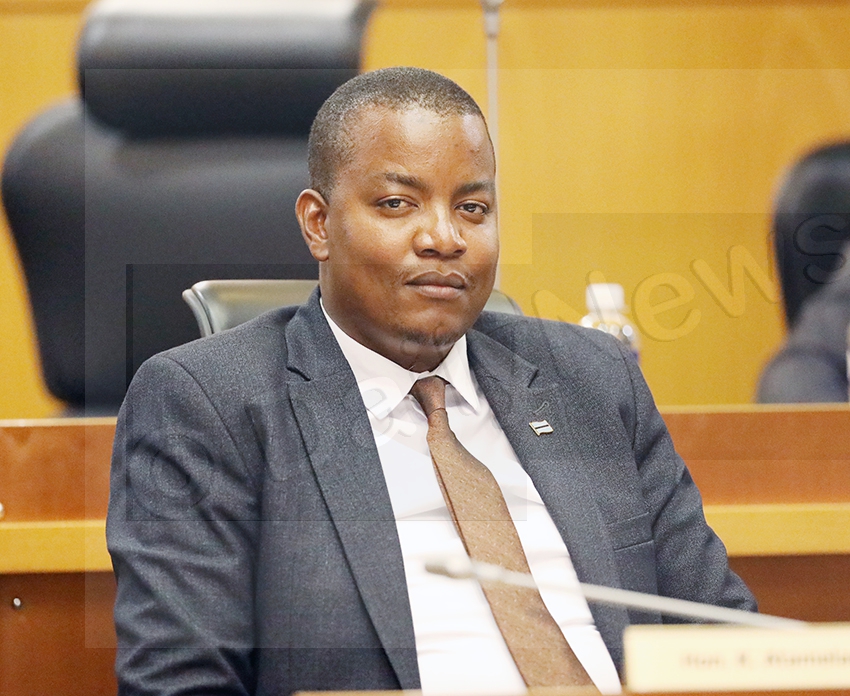
Assistant Minister of Tertiary Education, Research, Science and Technology, Mr Fidelis Molao has launched the students affairs services norms and standards for tertiary education.
The guidelines, formulated by the Human Resource Development Council (HRDC), are meant to guide tertiary institutions in developing policies and programmes geared towards improving student experience by providing the necessary support and to make it easier for learners to complete their programmes of study.
Speaking during the launch at BIUST recently, Mr Molao said through the norms and standards the country was moving towards a holistic approach to student learning in order “for us to have a well-rounded and civic graduate.”
He said it was regrettable that student affairs activities were not well integrated into academic plans and in some instances viewed as a waste of time.
“Whilst the primary aim of going to school is for academic purposes, we cannot turn a blind eye to co-curricular activities which have a profound impact on academic performance,” he said.
Furthermore Mr Molao urged all stakeholders to develop a professional and systematic approach to handling students affairs.
He said there was need to deploy qualified student affairs services professionals in areas such as counselling, sport and recreation and health, adding that it was a worthwhile investment that all stakeholders should consider.
He added that the level and quality of student support could influence the academic performance of students.
Mr Molao also said he was informed that only a few institutions have fully fledged departments headed by senior members of staff.
“We want to change this state of affairs,” he said.
He added that issues of student support, retention, success and employability could no longer be left to chance.
He noted that a situational analysis of tertiary education institutions was undertaken, and that it emerged that a lot was still needed to be done.
To correct this, he said his ministry, through the HRDC, has established generic guidelines to guide institutions on how to put in place learner support strategies and programmes.
He said one of the proponents of student affairs once asserted that it was possible for an A grade student to fail if support mechanisms were not put in place.
For his part, the Vice Chancellor of BIUST, Professor Otlogetswe Totolo welcomed the development, saying the norms and standards were meant to guide institutions in developing policies and programmes geared towards improving students experience by providing the necessary support and enhancing student completion and throughput rates.
He added that it would contribute to the creation of a knowledge based economy.
He noted that the whole process was informed by the findings of the situational analysis in tertiary education institutions done in early 2017.
He said the launch reinforced BIUST’s commitment to high standards and norms, adding that BIUST and HRDC had worked closely in the development of the norms and standards.
The workshop was aimed at sensitising the executive management of tertiary education institutions and key stakeholders about the role of student affairs in tertiary education.
The workshop was also aimed to advocate for the successful implementation of student affairs services and standards in tertiary education institutions.
For his part, HRDC chief executive officer, Dr Raphael Dingalo said the HRDC was about human resource development, and that by developing the students affairs services norms and standards for tertiary education, they were on their quest to develop the human resource.
Dr Dingalo said a firm foundation needed to be built to ensure that students were given support, adding that it would ultimately enable students to contribute to the economic growth of the country.
He said the mission could only be attained if tertiary institutions and stakeholders in the education sector worked the ground they were going to plant their seeds.
In addition, he commended Malatswai Primary School, which was adopted by the HRDC, for a job well done in the 2017 PSLE examinations by improving their academic results.
He said the school managed to reverse the trend of undesirable Ds and Es from 71.4 per cent to 8.7 per cent.
He also noted that the school’s AB performance increased from 11 per cent to 45.2 per cent, and that the ABC pass rate increased from 28.6 per cent in 2016 to 82.3 per cent this year. ENDS
Source : BOPA
Author : Kgotsofalang Botsang
Location : PALAPYE
Event : Launch
Date : 11 Dec 2017
Related News

21 Aug 2026

20 Aug 2026
Botswana Donates FMD Vaccines To Lesotho
20 Aug 2026