


Batshu urges men to seek medical attention
19 Nov 2017
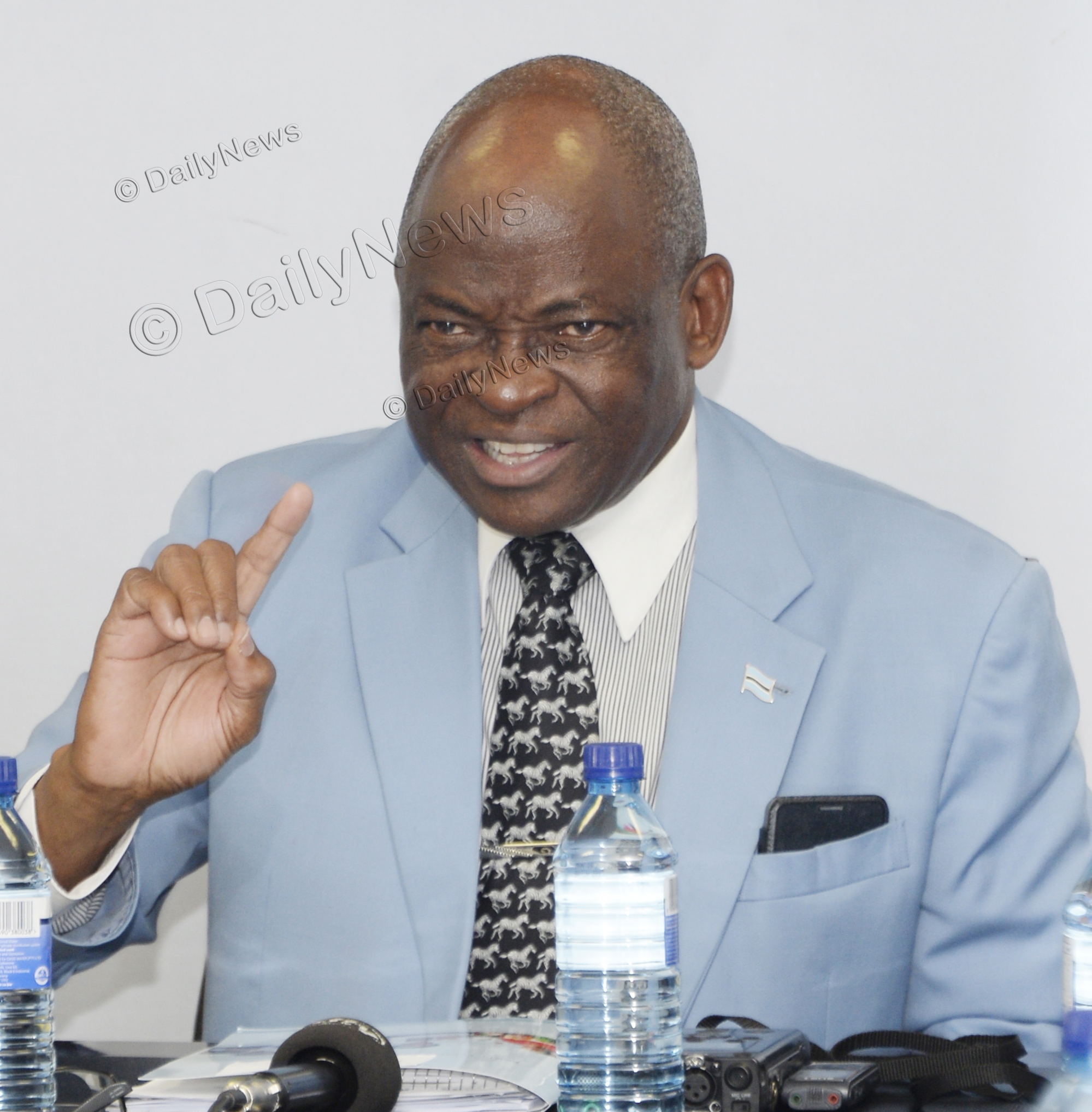
Minister of Nationality, Immigration and Gender Affairs, Mr Edwin Batshu has indicated that in Botswana, men die at a higher rate compared to their female counterparts due to failure to seek medical attention .
Mr Batshu said this while officially opening the 5th commemoration of the International Men’s Day, which was held in Serowe recently, under the theme, Celebrating Men and Boys in all their Diversity.
He therefore urged all men to come forth in seeking health services such as HIV testing, safe male circumcision, psycho-social support and management of STIs and other important services to improve on their health.
“The World Health Organisation (WHO), revealed that globally male life expectancy at birth was 69 years and 74 years for females. Women on a worldwide basis live 5 years longer than men,” he said.
Mr Batshu further noted that the theme was a call to action for individuals, institutions and organisations to innovate the manner in which they design and deliver resources and support services which speak to the unique needs and issues of men and boys.
“This means addressing their diversity and refraining from utilising a ‘one size fits all’ approach, creating tools for men and boys that help them empower themselves and strengthen the communities in which they live,” he said.
He noted that the theme implored ‘us’ to act and be alive to the reality of men and boys as a diverse group, thus a need to reshape, strategies and reassess development priorities to ensure that they address the diversity for the present and future generations.
“The theme evokes celebration and understanding.
It also accords us the opportunity to work towards a shared vision. I therefore urge you as individuals, institutions and organisations throughout this country to celebrate the diversity of men and boys for their positive contribution in development.
Mr Batshu noted that celebrating men and boys reinforced acknowledgement of positive behaviour and caused men and boys of all ages to respond much more energetically to positive role models than they did to negative stereotyping.
“I am delighted that we are seeing positive progress, where men now play an active role in upbringing of children.
We have witnessed men taking their children for medical routines, dropping them at learning facilities, being members of Parents Teachers Associations as well as attending school meetings, roles that were initially left to women,” he said.
Further, he noted that despite men’s significant contribution to the occurrence and persistence of gender based violence, inter-generational and adolescent sex, alcohol and drug abuse, and drastic impact of HIV and AIDS, there was need for healing for maintenance of peace and tranquility.
“I am personally convinced that by celebrating men and boys, we will be able to achieve peace and critical milestones towards realisation of equality. I therefore, would like to encourage all men to become instruments of positive influence,” he said.
Furthermore, he encouraged both the public and private sector to support institutions through out the country to engage in a solution-based dialogues that creates pathways for designing, implementing and support initiatives that recognise the diversity for men and boys.
“I wish to commend progress made by men’s organisations through implementing programmes such as Mencare, and those taking the lead on Know Your Status,” he said.
When delivering the key note address, the hospital superintendent of Debswana Orapa, Letlhakane, and Damtshaa Mines, Mr Hans Van Zyl urged men to invest in monitoring their current health risks and follow recommended goals and preventative actions.
“In the medical sector we have noticed some of our clients being too busy to attend to their health concerns.
We need to take grater responsibility of our health issues so as to prolong our positive contribution to family, society and our great nation,” he said.
Mr Van Zyl noted that Debswana had over the years been instrumental in Botswana’s Socioeconomic development, adding that the diamond mines had up until this day played a pivotal role in the development of Botswana and its people.
“Approximately 80 per cent of our workforce is male. Although this may be viewed in some development indices as a gender discrimination, the history is such that the mining industry was hard, physical work, and not necessarily female-friendly,” he said. END
Source : BOPA
Author : Thuso Kgakatsi
Location : SEROWE
Event : International Men’s Day,
Date : 19 Nov 2017
Related News

21 Aug 2026

20 Aug 2026
Botswana Donates FMD Vaccines To Lesotho
20 Aug 2026