


Ministries cripple Ombudsman
30 May 2017
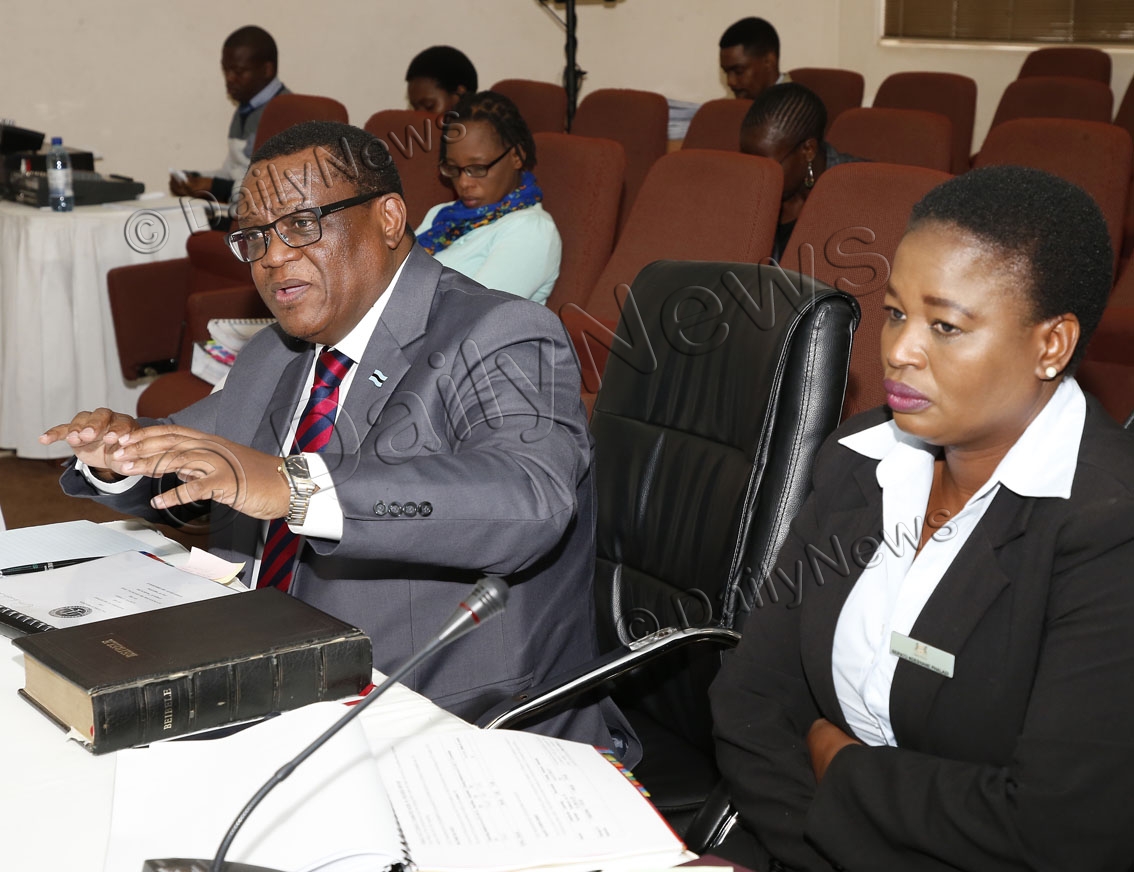
Lack of responsiveness by ministries to queries lodged by the Office of the Ombudsman has over the years continued to be an impediment to the office’ attempts to effectively discharge its mandate.
According to the Ombudsman, Mr Augustine Makgonatsotlhe, the status quo, coupled with the general delays in responding in situations where ministries chose to respond, has proven to be the most glaring of the challenges the office faced.
Mr Makgonatsotlhe, who was appearing before the Public Accounts Committee (PAC) on Monday, said the prevailing situation was a result of the weakness of the Ombudsman Act; which he observed empowered the office to only go as far as making recommendations to concerned ministries.
He said because of this, some ministries took the office for granted, and thus exhibited a high level of reluctance to respond to queries whenever called upon to do so.
He noted that while peers in other jurisdictions such as South Africa and Namibia produced binding resolutions, it was sad that locally, the office could only make recommendations.
“The Ombudsman Act is weak; hence the office itself is weak,” he said, adding further that the office’ work was limited as the Act only empowered it to address issues of maladministration in exclusion of such issues as unethical conduct of leadership as well as corruption.
The other challenge, Mr Makgonatsotlhe pointed out, was the public’s confusion regarding the mandate of the Ombudsman and that of the Directorate on Corruption and Economic Crime (DCEC).
He observed that the confusion was likely the result of what was happening in other countries; citing South Africa, where he said the Public Protector handled issues of both maladministration and corruption.
He said the situation resulted in cases which fall under the ambit of the DCEC being brought to the Ombudsman and vice versa; noting however that the two entities had signed a Memorandum of Understanding (MoU) to refer cases to the right institution in situations where a complaint had been lodged with the wrong office.
“Amalgamation of the Ombudsman and the DCEC could help as it could address the issue of splitting meagre resources among institutions with parallel mandates,” he added.
In response to a question by Specially Elected MP, Mr Mephato Reatile on what amendments could be made to enhance the effectiveness of the office, Mr Makgonatsotlhe highlighted the need to increase the tenure of office of the Ombudsman.
He said the current four-year term of office was too short a time for a person holding the position of Ombudsman to attain any notable achievements.
Further, he called for the total independence of the office; pointing out that such a development would ensure that the office of the Ombudsman discharged its mandate without fear or favour.
On whether the Ombudsman handled complaints from refugees, Mr Makgonatsotlhe said they had so far not received any complaints from the refugee community; pointing out however that the office did not have the mandate to handle human rights issues even if they were to be brought to the its attention.
On MP Shawn Ntlhaile’s question on whether the office of the Ombudsman was able to pick and make follow ups on media reports on maladministration, Mr Makgonatsotlhe’s response was that the Ombudsman Act only empowered the office to act in instances where a member of the public approached it for redress.
“The Ombudsman Act does not empower us to follow up on this. The provision says a member of the public ought to come to us, therefore we don’t address such systemic issues,” he stated, indicating however that even if the office had the mandate to act in such scenarios, resource limitations would hinder their efforts. ENDS
Source : BOPA
Author : Keonee Kealeboga
Location : GABORONE
Event : 55th Public Accounts Committee Meeting
Date : 30 May 2017
Related News

21 Aug 2026

20 Aug 2026
Botswana Donates FMD Vaccines To Lesotho
20 Aug 2026