


UN system accommodative of changing times
06 Apr 2017
Ambassador of the European Union (EU) Delegation to Botswana and Southern African Development Community (SADC), Mr Alexander Baum has commended the UN system how it has been reflecting on the changes that are taking place around the world and how the UN and the international community at large can respond to the challenges facing the human kind.
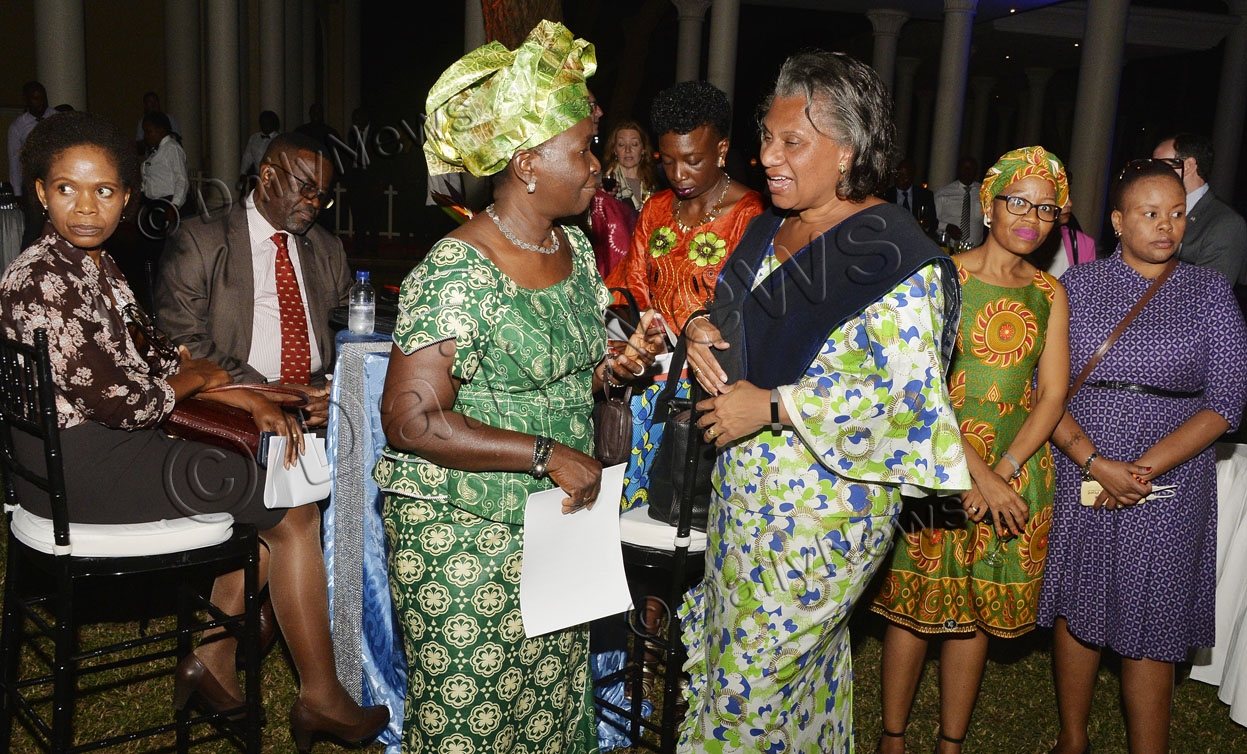
Speaking at a reception for participants of the joint regional United Nations Development Group (R-UNDG) for Eastern and Southern Africa (ESA) and Western and Central Africa (WCA) annual meeting in Gaborone on Tuesday, Mr Baum said the EU had gone and was still going through similar deliberation regarding its relationship with Middle Income Countries (MICs).
He said these deliberations were not just a technical discussion, but more so a political discussion that was exemplary for the arguments exchanged around MICs, and said under the European Commission and notably commissioner for development Piebalgs, their policies were adapted with an approach of graduation, meaning that countries were graduating from aid as their economies and per capita income grew and would receive less development aid or even none.
Mr Baum said this had implications for their aid allocations and consequently for their infrastructure in their partner countries, and EU delegations in some parts of the world were seriously downsised as a consequence and said their internal political debates were intense as many development practitioners were quite aware that advancement into MIC status would not necessarily diminish the development challenges.
He said on the other hand, it had been difficult to explain to European taxpayer why countries with higher income still need development aid instead of using their own resources and stated that the responsibility for taking countries forward rests after all first and foremost with the governments concerned and should not be externalised to the international community.
The EU ambassador said behind this argument was often a deep dissatisfaction with the quality of governance in countries where the average income was elevated, but resources were usurped by small elites and said their current political debate in Europe had rebalanced again these arguments and they did recognise today that MICs faced challenges that would demand a continuous engagement with the international community and that MICs still needed support to achieve the SDGs and their own ambitions.
He said this implied of course that their partners must be open for this debate on what is required to move ahead, accept the need for learning while they as the international community must open to adapt their approaches and instruments as they are important because there is no resource transfer and the traditional thinking is still widespread on both sides.
For his part, the chairperson of the Regional UN Development Group (R-UNDG), Mr Abdoulaye Mar Dieye commended the government of Botswana for its strong commitment and significant contributions to the United Nations including through cost-sharing for the country’s development and also for its invaluable role in the UN through the R-UNDG in particular, the Botswana’s illustrious daughters, Dr Sheila Tlou and Dr Matshidiso Moeti, who are regional directors of UNIAIDS and WHO respectively.
He also commended the country for its role with regard to Common Africa Position on the post-2015 Development Agenda and the global level on Agenda 2030 (SDGs) and said the country has made significant contributions to continental, regional, including hosting SADC, and contributions to the formulation of Agenda 2036. ENDS
Source : BOPA
Author : Aubrey Maswabi
Location : GABORONE
Event : Reception
Date : 06 Apr 2017
Related News

21 Aug 2026