


Malaria cases rise in Okavango
22 Mar 2017
North West District has been hard hit by a malaria epidemic with 670 recorded cases and five deaths since the beginning of the rainy season.
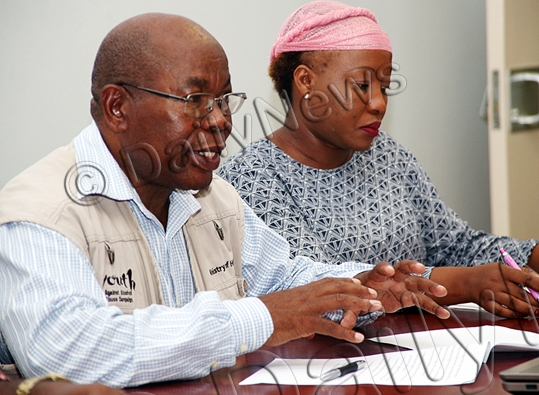
Head of the District Health Management Team, Dr Malebogo Pusoentsi revealed this at a press conference aimed at evaluating efforts made in the district to control the disease, recently.
A task force was in the district to assess and appreciate the situation as well as discuss what more could be done going forward.
Dr Pusoentsi said the highly affected region was Okavango which recorded over 90 per cent of the cases.
Highly affected areas include Shakawe, Xakao and Seronga in the Okavango District while in Ngami, Tsau and Mababe were the most affected.
Out of the affected people, it was reported that males were mostly affected as compared to females, and that more than 30 per cent of the affected were children. The most affected areas were said to be schools.
Dr Pusoentsi explained that malaria infection in humans was mainly transmitted through the sting of the female anopheles mosquito, adding that the disease in people could present clinically as either uncomplicated, complicated or asymptomatic, especially for people living in malaria endemic areas.
She stated that prevention of malaria remained a priority with strategies aimed at vector control. She said two strategies have been used to control mosquitoes in the area such as indoor residual spraying and the distribution of the long lasting insecticide treated nets. She added that 57 000 nets having been distributed across the country.
Regarding indoor spraying, Dr Pusoentsi revealed that for the transmission period of 2016/17, the district achieved an average of 69 per cent coverage as compared to the 85 per cent target.
Asked if the district was winning the battle, she said they were on the right track as health officials have doubled up efforts to tackle the epidemic.
She said social mobilisation was effective as the community and leadership were taught to make malaria a priority in their agenda, adding that if one member of a family was affected, chances were high that the rest of the family were also at risk.
Furthermore, Dr Pusoentsi explained that many opportunities still existed at community level to effectively control the spread of malaria, citing the cleaning of surroundings to minimise the breeding spaces for the mosquitoes.
Another strategy was to work collaboratively to ensure community knowledge and participation during the epidemic period. She urged the community to visit health facilities if they experience any symptoms of malaria so that they could be assisted on time.
She noted that common signs and symptoms include high temperature, headache and rigors, pallor and vomiting.
Dr Pusoentsi also noted that Botswana was among the countries which were aiming to eliminate malaria by 2018, adding that as part of the strategy, all efforts and investments had been put in place to control the spread.
Effective surveillance mechanism, she said had been put in place to monitor the disease burden and response efficiency at all times.
In addition, she pointed out that case management and drug supply had been strengthened to ensure quality management of cases of malaria to avoid deaths. ENDS
Source : BOPA
Author : Esther Mmolai
Location : MAUN
Event : Press Conference
Date : 22 Mar 2017
Related News

21 Aug 2026