

Former Tanzania president encourages prudence in education
06 Mar 2017
Over 100 million young people are out of school in Africa with current global statistics standing at 163 million.
Former President of Tanzania, Dr Jakaya Kikwete therefore said with more than 20 world leaders, including five former presidents and prime ministers and three Nobel Prize recipients having been appointed to an International Commission on Financing Global Education Opportunity to reverse the lack of financing for education around the world in 2015, the world needed to take drastic interventions with regards to education.
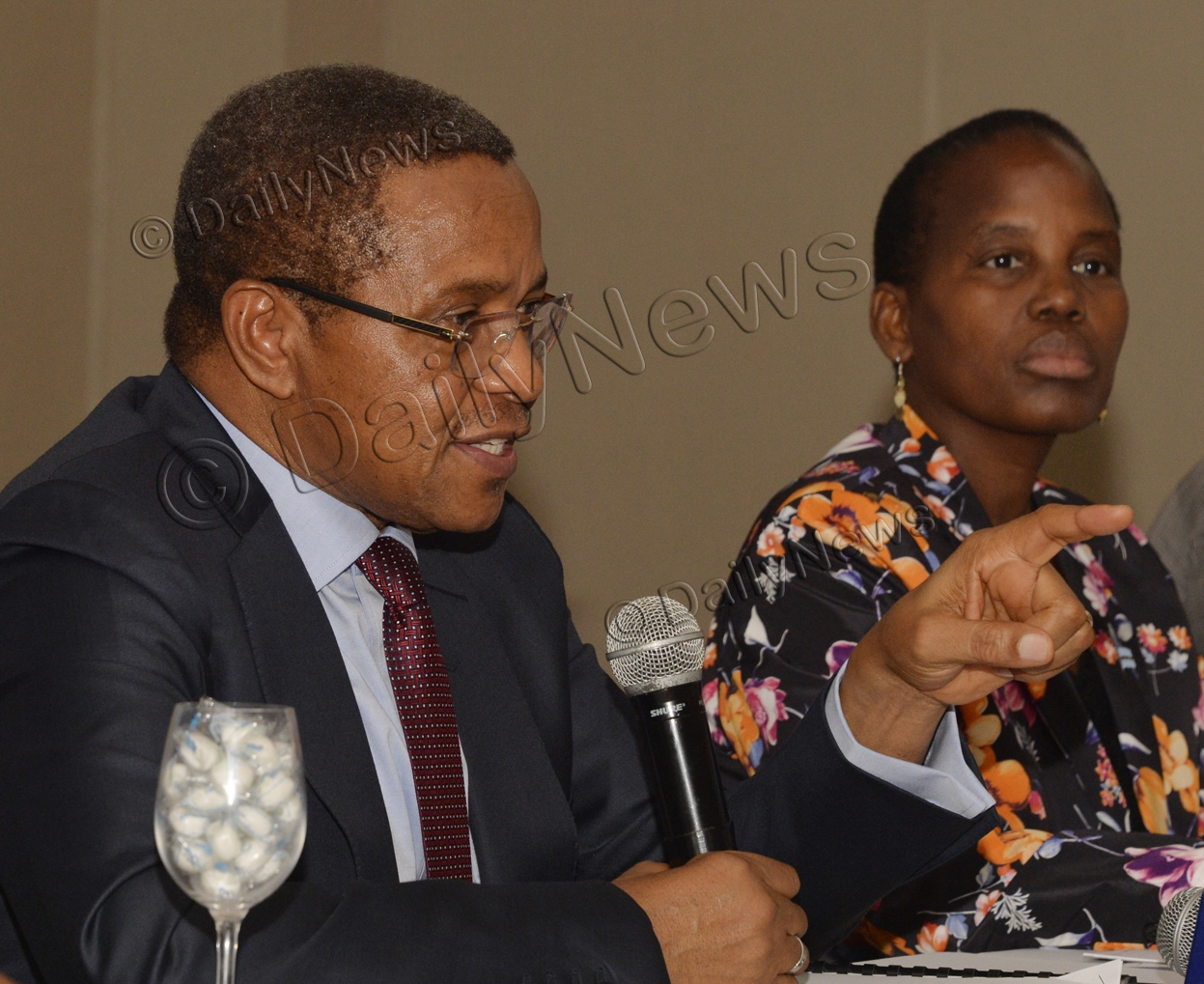
Speaking at the global Education Financing Roundtable meeting in Gaborone, Dr Kikwete, who is the United Nations Commissioner on Global Education Financing, said the selection of this diverse group of individuals came at a crucial time when more children were out of school and increased conflict had forced millions of children out of the classrooms to become refugees with no prospects of education.
The Commission was to explore how over the next 15 to 20 years, education could lead to greater economic growth, better health outcomes, and improved global security.
The Commission was co-convened by the Norwegian Prime Minister alongside President Michelle Bachelet of Chile, President Joko Widodo of Indonesia, President Peter Mutharika of Malawi and the Director-General of UNESCO, Irina Bokova, he explained, adding that Mr Gordon Brown, UN Special Envoy for Global Education, was appointed Chair of the Commission.
“The Commission, supported by the government of Norway and Prime Minister Erna Solberg, was tasked with reviewing the future of global education, which currently leaves a huge number of young people out of school,” he said.
He said the fears that were raised when the commission was set up were found to be true and that the world was facing an education crisis.
“We worked for a year and presented a report to the UN Secretary General and five conveners, where we came to the conclusion that the crisis of education was more pronounced in low and middle income countries,” he said.
“Our countries in terms of the level of development and achievement in education we have attained are lagging behind compared to developed countries. We are at a level they were 50 to 70 years ago,” he continued.
Dr Kikwete said the commission found out that only 63 per cent children in schools complete primary school.
“Looking at Sub-Saharan Africa, only 20 per cent have access to secondary school, which means we are a continent of primary school leavers.
Only five per cent have access to University,” he said.
He indicated that some of the recommendations that the commission came with was that technology needed to be leveraged in education.
Dr Kikwete said teacher absenteeism was one aspect that needed to be looked at, along with teacher competency.
“Education is key to fighting poverty, and I believe educating girls is the single most powerful investment for development.
When you educate a girl, you educate a nation.
I am confident that the Commission will play an important role in mobilising the resources needed to achieve education for development set out for 2030 and beyond,” he said. ENDS
Source : BOPA
Author : Omphile Ntakhwana
Location : GABORONE
Event : global Education Financing Roundtable
Date : 06 Mar 2017
Related News

21 Aug 2026