

Botswana partners highten cancer battle
28 Feb 2017
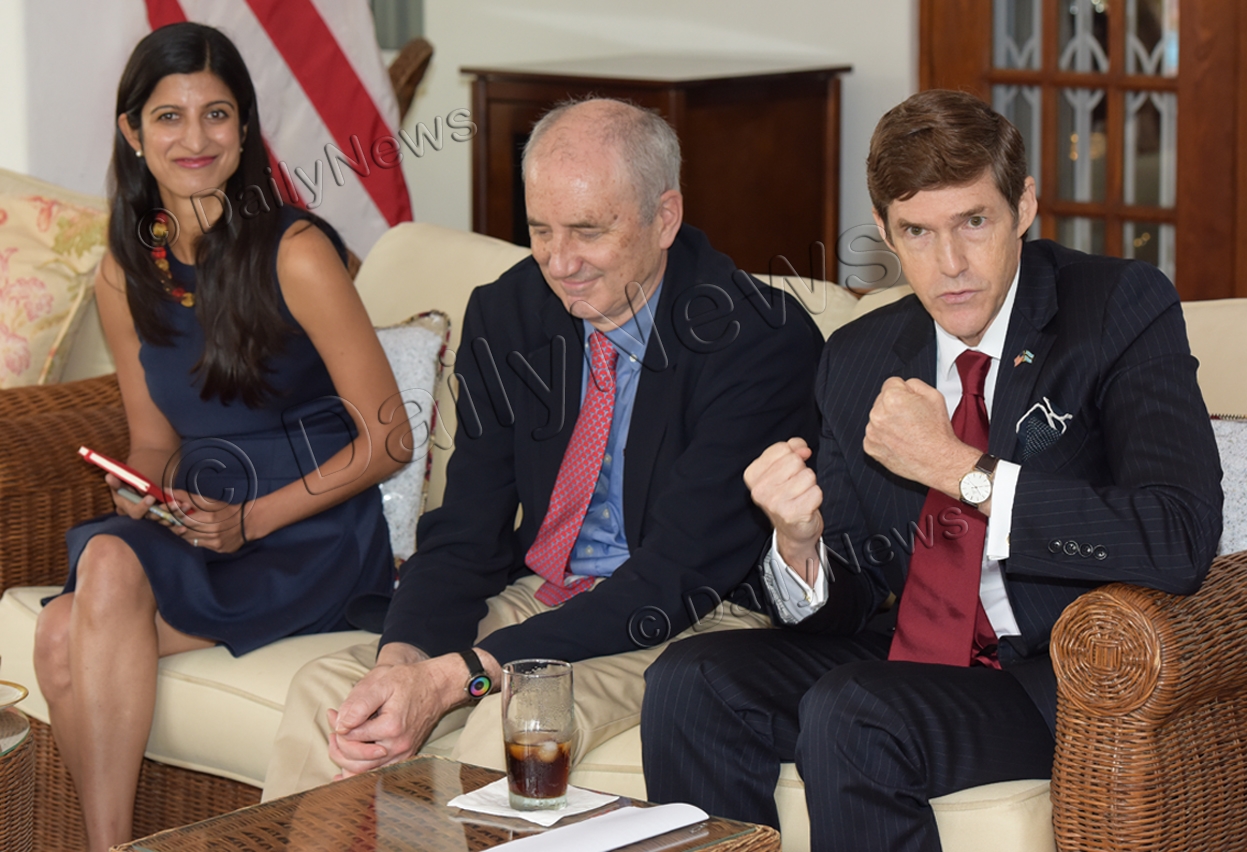
United States of America Ambassador to Botswana, Mr Earl Miller has hailed the Ministry of Health and Wellness for ‘the good work’ in regard to fighting cancer.
Speaking during the Cancer Control and Research round table event on February 27, Ambassador Miller said Botswana had indeed made giant strides in cancer research, prevention, diagnosis and treatment.
Ambassador Miller said the public-private partnership between the Pink Ribbon, Red Ribbon campaign and Jhpiego, an affiliate of Johns Hopkins University was working hard in fighting breast and cervical cancer, the top two cancers among women in Botswana. “Together we are making a difference,” he stated
He pointed out that the number of women screened for cervical cancer doubled from 10 000 to more than 22 000 in the past year.
He further mentioned that the nationwide HPV vaccine campaign of 2015 vaccinated close to 70 000 girls between the ages of 9 and 13.
Moreover Ambassador Miller revealed that 22 809 girls were vaccinated last year.
He hailed yet another success that came from the University of Pennsylvania’s Botswana office which announced last week its new model of care for cervical cancer at Princess Marina Hospital, saying it has reduced the time between diagnosis and treatment initiation by more than 50 per cent.
He stated that the reduction could mean the difference between life and death for the estimated 75 per cent of patients who were diagnosed late and wait as long as three to five months to begin treatment.
Ambassador Miller stated that cancer remained a top priority for public health in Botswana and that the great work of the National Cancer Institution (NCI) and its local partners would continue with the full support of the government of Botswana and the United States.
For her part, The head of Non-Communicable Diseases in the Ministry of Health and Wellness, Dr Neo Tapela said the main challenge about cancer in Botswana was late diagnosis.
Dr Tapela pointed out that over 70 per cent of cancer ailments were diagnosed at a late stage, saying then treatment options were limited and survival was poorer.
She mentioned that a lot of people did not know that they had cancer until they arrived at the hospital in an almost critical and advanced stage
She said at that time, many of the patients diagnosed late would have one other health condition that may complicate their treatment.
She highlighted that early diagnosis and treatment could make a huge difference in chances of surviving cancer.
Dr Tapela nevertheless said the Ministry of Health and Wellness had found ways to diagnose the cancer disease earlier.
She mentioned that all doctors and nurses in all the districts in Botswana are urged to look for signs and symptoms on every patient getting in the local clinic.
She said in suspecting something “a lump or anything”, they are meant to further evaluate the patient as well as make follow up for and towards that particular patient.
Dr Tapela also mentioned the Primary Care guidelines that were introduced in Botswana saying they were crucial in improving Batswana’s lives together with cancer survival to the standard of comparable countries.
She said for that reason, things like Pap smear results no longer take time as the turnaround time has improved.
She highlighted that results are now available on time, adding that it takes two weeks of so to get cancer diagnosis results and treatment rather than the six months.
Dr Tapela also hailed the public-private partnership for prevention of cancer of any type, and that it is a good initiative adding that now there is a need for strengthening the oncology care unit.
She said there is a need to provide all the care under one roof such as of radiation for treatment and pathology radiation. ENDS
Source : BOPA
Author : Lesedi Thatayamodimo
Location : GABORONE
Event : Cancer Control and Research round table
Date : 28 Feb 2017
Related News

21 Aug 2026