Farmers want more players in beef industry
09 Feb 2017
Farmers in Ghanzi and Kgalagadi region have called for government to end the Botswana Meat Commission monopoly in the beef sector.
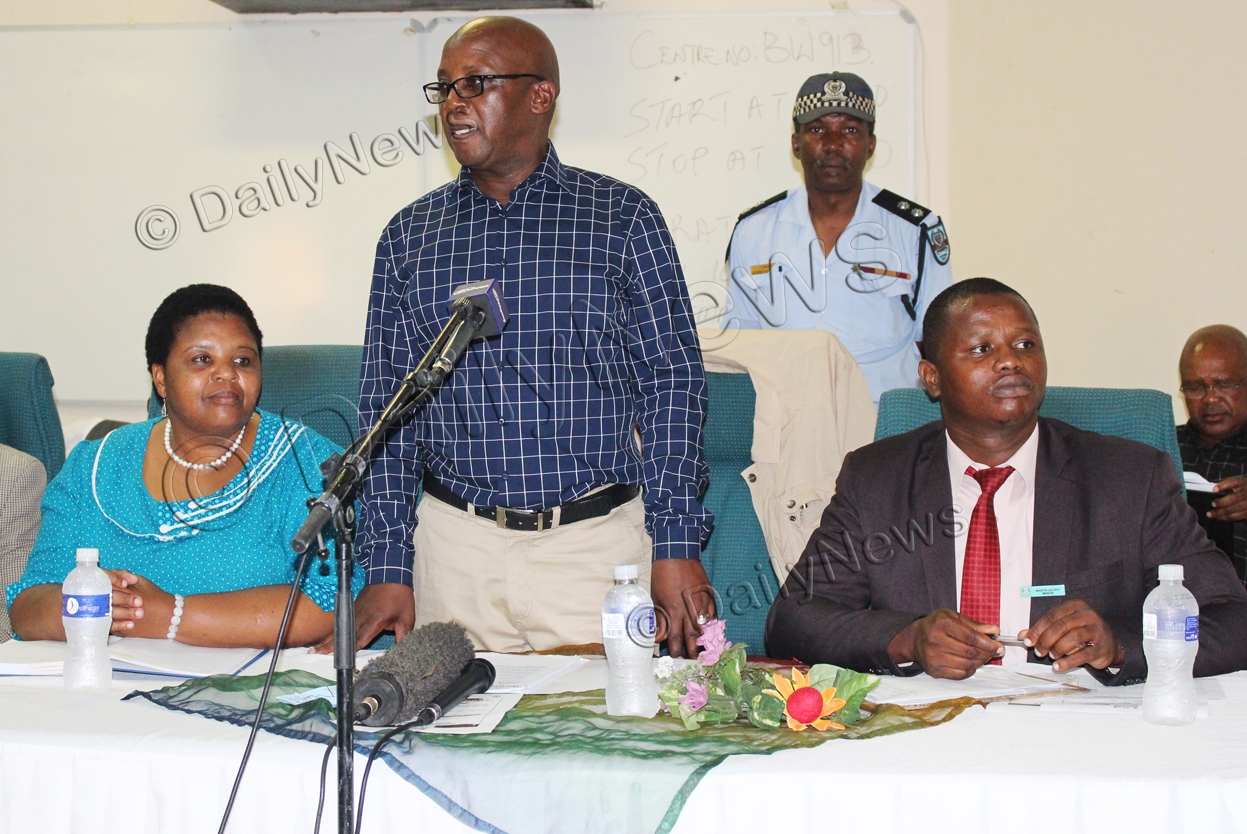
Commenting during the consultation meeting on the future of BMC addressed by Minister of Agriculture and Food Security, Mr Patrick Ralotsia in Kang on Tuesday, a representative from Ghanzi Beef Producers Association, Mr Thabiso Kebadile pleaded with government to grant a license for an establishment of a private export abattoir preferably in the western region.
The liberalisation of the BMC, he said, would modernise and create a vibrant beef trade industry in Botswana, which would highly benefit both the farmer through highly competitive market prices and the country’s economy through employment creation to the locals.
Mr Kebadile stated that it is evident that BMC has in the past been financially struggling to sustain itself and heavily dependent on government bailouts, something which he proposed could be easily avoided by either de-monopolising or privatising BMC.
He said privatisation of BMC makes business sense as it would relieve government from spending on BMC bailouts and channel those funds towards other government initiatives.
For his part, Ghanzi District Council chairperson, Mr Thato Tshweneyagae said Ghanzi and Kgalagadi regions are renowned for beef production, therefore the establishment of an abattoir in that region would work to the advantage of both the farmer and the country’s beef industry.
Mr Tshweneyagae also urged government to consider the proximity of Ghanzi or Kgalagadi districts to the Walvis Bay dry port in Namibia as an added advantage to establishing an abattoir in the western region.
He said the exportation of beef directly through the Walvis Bay would cut on transportation costs currently incurred through exporting via South Africa, and would also reduce the risk of failure to meet export market demand whenever there is foot and mouth disease outbreak or any related disruption in South Africa.
Another farmer, Mr Gavin Grant decried the dilapidated and outdated status of Lobatse abattoir, adding that the facility was so old it might be too costly to refurbish it in order to meet the European market demand. He therefore suggested the licensing of a new private export abattoir to save government money.
He said the provision of a commercially-driven abattoir would also ensure that farmers get good value of cattle as it would also maximise the use of other cattle by-products such as blood, bones and hides.
In response, Mr Ralotsia highlighted that his ministry was concerned by the future of BMC, hence the need to consult with all key stakeholders in finding ways on how the privatisation of BMC would benefit the entire beef industry, including small farmers across the country.
He said BMC is currently not profitable and it depends on government financial bailouts for its sustainability, therefore government saw it fitting to consult with the farmers in order to take an informed decision on the proposed privatisation of the organisation.
He indicated that government would only privatise the company and liberalise the beef industry if liberalised beef industry would be of great benefit to the farmer.
Mr Ralotsia stated that in privatising the BMC, government would also ensure and safe guard the interests of both small-scale and commercial farmers. ENDS
Source : BOPA
Author : Thato Mosinyi
Location : KANG
Event : Consultation meeting
Date : 09 Feb 2017
Related News
24 Aug 2026

24 Aug 2026