


Budget caters for NDP 11 priority areas
06 Feb 2017
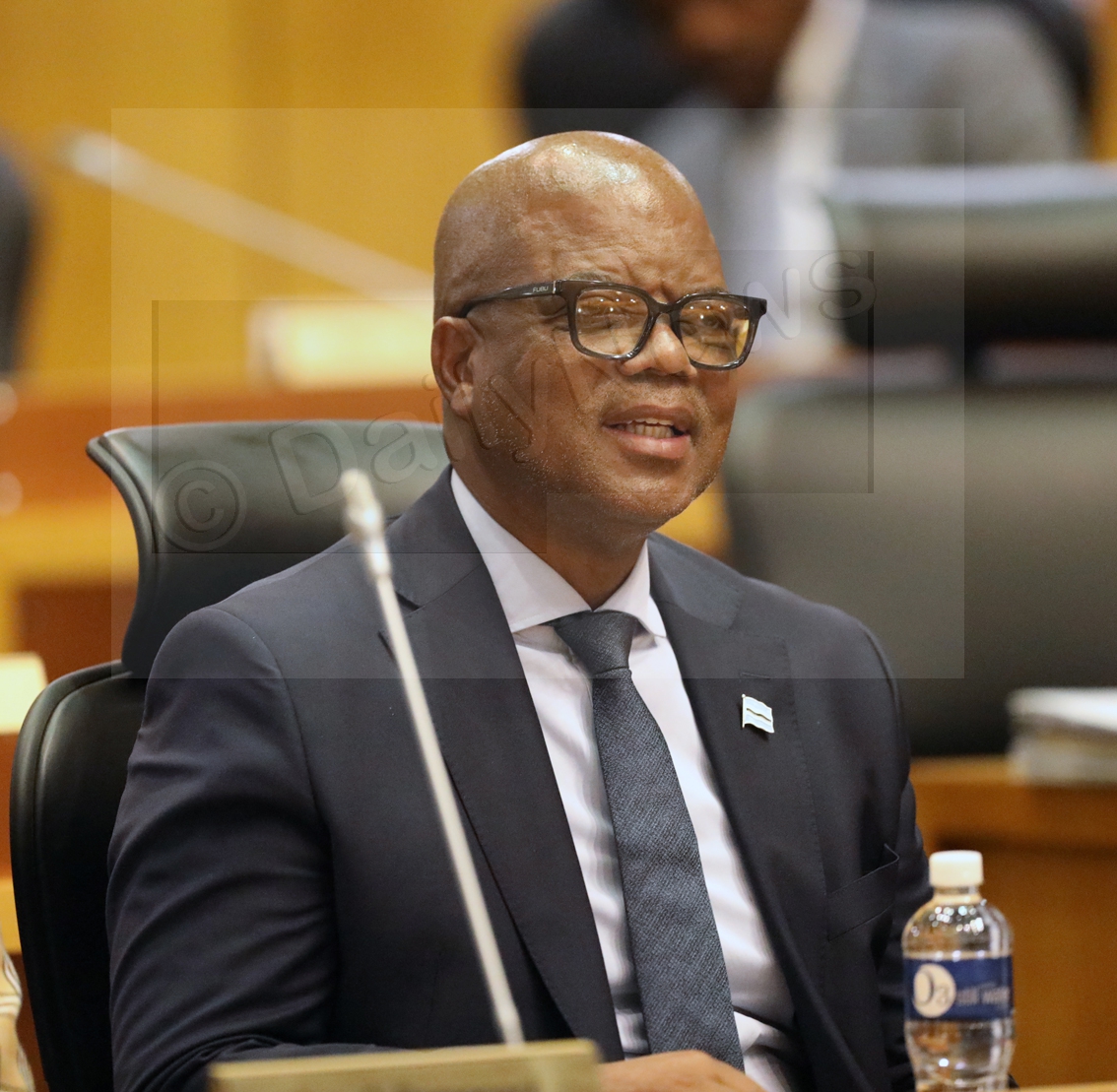
The budget proposals for the 2017/2018 financial year caters for the eleventh National Development Plan (NDP) 11’s six priority areas, Minister of Finance and Economic Development, Mr Kenneth Matambo, has said.
These six priority areas include; development of diversified sources of economic growth and revenues, human capital development, social development, sustainable use of natural resources, consolidation of good governance and strengthening of national security and monitoring and evaluation.
Delivering 2017 Budget Speech, at the National Assembly, on Monday, Mr Matambo said to address development challenges of unemployment, poverty and income inequality the priority areas had to be addressed in the medium term.
Additionally, the minister said the priorities, would be guiding the budget formulation process during the Plan period, starting with budget proposals for 2017/2018 financial year, as they were ‘key in promoting inclusive economic growth, which is a necessary condition to address the development challenges.’
Botswana, Mr Matambo said continued to be heavily dependent on exports and revenues from diamond and there was need to diversity exports, which he said had remained the same and largely dominated by diamonds.
“It is for this reason that, the development of diversified sources of economic growth and revenue was identified as one of the priority areas to be pursued during NDP 11,” said Mr Matambo.
Besides consolidating on achievement made on structural economic transformation, he said export diversification should also be the main objective going forward, adding that “as a general principle, economic development and employment creation require rapid economic growth.”
He however said over NDP 10, which ends in March 2017, the economy grew on average by about 3.8 per cent. “The economy is also forecast to grow at an average of about 4.4 per cent per annum over the entire NDP 11,” he added.
Mr Matambo however said these growth rate were not sufficient to adequately address development challenges of unemployment, poverty eradication and income inequality.
He told Parliament that with regard to unemployment creation, it was important to clarify that the principal role of government is not to create jobs directly, but to provide a conducive macroeconomic environment to facilitate the development of the private sector.
The minister said the private sector, in turn is expected to take advantage of such an environment to undertake investments, which would contribute to the growth of the economy and creation of sustainable employment opportunities.
Furthermore, to promote diversified and export led growth, the minister said provision of basic infrastructure such as; Information and Communications Technology (ICT), electricity and water supply, which are critical enablers for setting up a business, should be among strategies to be pursued during the 2017/2018 financial year.
“Other critical inputs such as; land serving as well as residence and work permits have of late received attention as basic requirements for business operation,” he added.
An efficient ICT infrastructure, he said, was needed as a pre-requisite for research and business mainstreaming within and outside Botswana, adding that progress had been made in enhancing national broadband connectivity through installation of major fibre backbone network around the country.
As a way of enhancing universal access to ICT, he said the Ministry of Transport and Communications would also subsidise telecommunication operators to connect primary schools with Broadband internet at rural and underserviced areas.
Besides extending Morupule B with units 5 and 6 and Refurbishment of Morupule A Power as additional power sources, Mr Matambo said the use of solar energy had also been identified as a potential alternative sources of electricity supply in the country.
“It is against this background that a comprehensive renewable energy strategy which is aimed at attracting domestic and foreign investments is being developed, and would be completed by February 2017,” he added.
Government, in collaboration with the German Agency for International Cooperation, he said was also undertaking a Green Energy Feasibility Study to provide alternative sources of electricity. Furthermore, Finance and Economic Development minister said government would fund construction of various pipelines such as; the ones connecting Thune Dam to Mathathane, Tsetsebye and Moletemane, which was expected to be completed in 2018, and other connecting Kanye and Molepolole to North South Carrier.
Other major water projects planned for 2017/2018 financial year, he said included; rehabilitation of Shakawe Water Treatment Plant and its connection to Seronga, Gunotsoga, Beetsha and Gudigwa villages.
All these projects, the minister said were expected to provide adequate water supply to these villages.
Furthermore, Mr Matambo said implementation of Botswana Land Policy approved by Parliament in July 2015 was ongoing, with stakeholders being engaged to create common understanding of the policy.
Preparation of “National Spatial Plan” which is replacing Botswana National Spatial Development Framework, he said commenced in January 2016 and was expected to be completed in June 2018.
The plan, he said was aimed at creating a balance between economic development and the environment.
Additionally, to address challenges of lack of serviced land, he said, the Ministry of Land Management, Water and Sanitation Services would prioritise 37 000 plots under Economic Stimulus Programme, emphasising on; design and building of waterlines and storm water drainage, upgrading of sewerage and water schemes, debushing and grubbing, gravelling or paving.
The private sector, he said would also be engaged to augment and accelerate land servicing. ENDS
Source : BOPA
Author : BOPA
Location : GABORONE
Event : Budget Speech
Date : 06 Feb 2017
Related News

25 Aug 2026
Forensic audit generates 90 priority actions
25 Aug 2026