Migration cross border phenomenon - Ramokoka
17 Aug 2016
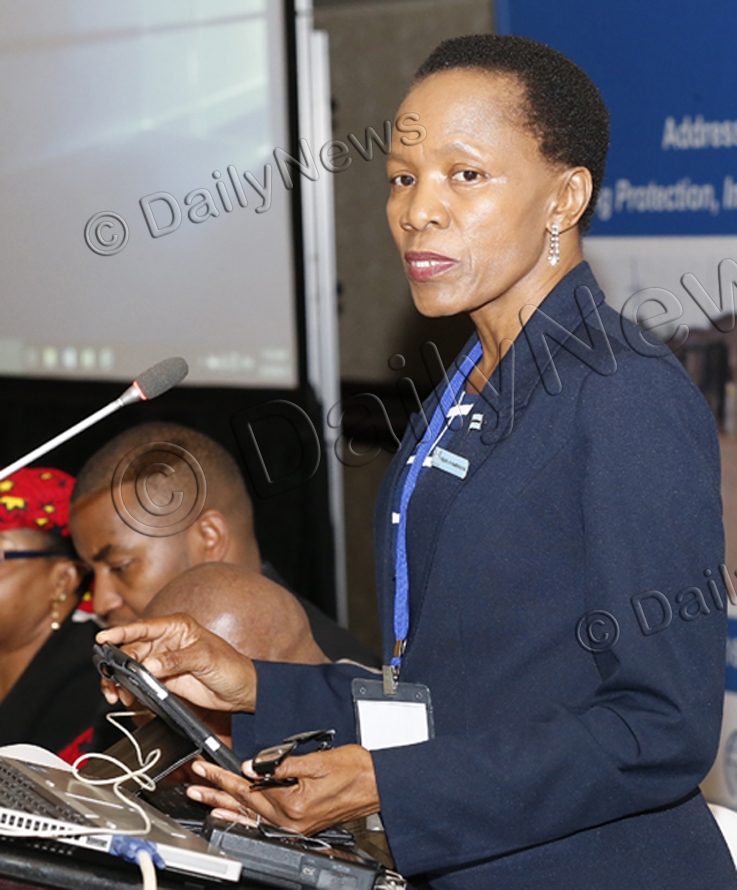
Migration is a cross border phenomenon as such it should be placed in a broader context of regional cooperation and regional policy development says permanent secretary in the Ministry of Labour and Home Affairs Ms Pearl Ramokoka.
Speaking during the meeting of Technical Migration Dialogue for Southern Africa (MIDSA), Ms Ramokoka said the rise in inter-state cooperation that have been witnessed in Southern Africa over the past twenty years is a clear evidence that states have realised that migration issues are better addressed through inter-state cooperation.
She said the Southern African region has seen a rise in recent years in the phenomenon known as 'mixed migration' particularly coming from East and the Horn of Africa, the Great Lakes Region and countries in the SADC region.
“Large mixed migratory groups pushed by war, lack of protection economic disparity or hope for better livelihood opportunities have been moving south with many countries in the SADC region frequently used as transit, rest-stops and a majority of individuals on the move aiming to reach South Africa,” she said.
Ms Ramokoka noted that recent research indicates that countries traditionally used as transit are also becoming source and destination for mixed and irregular migration adding that most of these migrants are handled by multiple groups of smugglers in the different countries through which they pass on foot, by vehicle or boat citing that such movements give rise to actual or perceived threats to national security.
She said mixed and irregular movements challenge States to protect refugees, asylum seekers and migrants while maintaining their sovereign prerogative and duty to regulate the entry and sojourn or stay in a country.
Ms Ramokoka observed that over the years MIDSA has served as a platform for migration related issues to be discussed in a formal setting, increasing awareness of both the challenges and the best practices in migration management and most importantly coming up with concrete strategies for effective migration management hence it is the role of every government involved to provide protection of migrants and ensure that migration is legal and safe.
“Last year, SADC Ministers of Home Affairs met at the MIDSA in Zimbabwe and signed a statement that approved a Regional Action Plan for implementation by all Member States to individually and collectively prioritize the sections of the Action Plan pertaining to the protection of unaccompanied migrant children and to begin the implementation of proposed actions as well as pursue preliminary work on statelessness, alternatives to detention and return,” she said.
The Government of Botswana as Chair, she said, took the document to the SADC Secretariat for alignment with SADC structures including initiatives by the Ministerial Committee of the Organ with the view to have it formally adopted at the regional level as per recommendation of the Ministers. She said the labour mobility element cannot be ignored as a considerable number of individuals travelling in these flows are migrants seeking employment opportunities in Southern Africa and estimates indicate that 3.1 million migrants moved between SADC member states during 2012/13 alone.
Ms Ramokoka said for a comprehensive approach to migration management the issue of border management is a critical component and porous and unmanaged borders and weak immigration and border management capacity among affected states exacerbates the situation.
She said in this process, most migrants often suffer great hardship that include elements such as starvation, abandonment, exploitation, lengthy detentions, physical abuse, sexual abuses and further the situation is particularly dire for unaccompanied migrant children. ENDS
Source : BOPA
Author : Goweditswe Kome
Location : GABORONE
Event : Meeting
Date : 17 Aug 2016
Related News