Beneficiaries appreciate poverty programme
10 Aug 2016
Poverty eradication programme beneficiaries have expressed mixed feelings about the initiative.
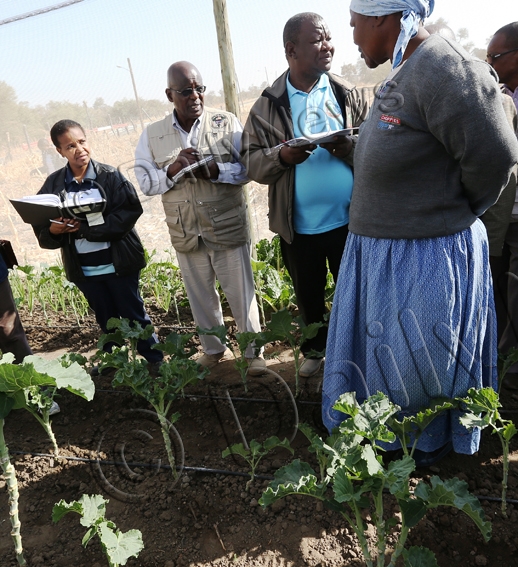
Speaking at a briefing for the Presidential Inspectorate Task Team on August 8, one of the beneficiaries, Ms Chawada Mphake, who was funded for a backyard garden, applauded government for the initiative.
Ms Mphake said in 2013 when the programme started, she cultivated eight hectares where planted tomatoes and lettuce. She said she supplied some chain shops and s individuals.
Therefore, was able to pay transport fares for her children as well as put bread on the table for the entire household.
Ms Mphake noted that she used to make P1 000 per week until her water was disconnected due to high bills.
She, however, indicated that the water disconnection did not deter her from planting as she had already realised the benefits of the garden.
She said fortunately she had two rainwater harvest tanks and even after the disconnection she continued planting.
“I have also diversified my backyard gardening by selling sweets, airtime and bread and I have managed to pay the bill,” she said.
She told the team that she realised that the Water Utilities Corporation (WUC) bills were too high because they never did meter readings but instead estimated and appealed to the team to negotiate with the corporation to reduce the water tariffs.
Another beneficiary, Ms Kegope Ramotswiri thanked government for funding her for a fashion design project.
Ms Ramotswiri said through the project profits, she purchased a second hand mini truck that she has since registered for refuse collection.
Ms Boremo Obed said in 2013, she was trained for a catering project and although she registered a company name and she has a tax clearance certificate, the council denied her a trading licence because there was no water in her kitchen.
She suggested that instead of denying poverty eradication beneficiaries licences for not meeting some requirements, they should instead be given temporary licences so that they could make money to implement the requirments.
Mr Joel Nchenje lamented that some potential beneficiaries were rejected because either their parents or siblings were working. He said he was denied a catering project because one of his parents is working.
In response, the chief social and community development officer, Ms Sikhwebu Phama explained that the assessment encompasses the livelihood of the household as a whole and not only that of the potential beneficiary.
The vice chairperson of the trade licensing committee, Councillor Lesego Kwambala said the requirement for trade licensing did not favour poverty eradication beneficiaries.
He suggested that there should instead be guidelines that could be specific to the beneficiaries or rather be a different licence for them.
Councillor Kwambala said the city council passed a motion requesting the relevant ministry to exempt poverty eradication beneficiaries from some of the trade licence requirements but the response from the ministry was disappointing.
He lamented that encouraging beneficiaries to register for companies and at the same time delay to fund them worsened their poverty because once registered the company would continue to accumulate arrears in returns.
Councillor Kwambala urged the government to come up with a legislation that would protect poverty beneficiaries from competition from Chinese and chain shops.
“For instance, Chinese shops sell BOT50 t-shirts for as little as P40 whereas fashion designers sell them for P150 and chain shops sell cooked food such as menoto which should instead be sold by poverty eradication funded projects,” he said. Ends
Source : BOPA
Author : Keamogetse Letsholo
Location : FRANCISTOWN
Event : Briefing for the Presidential Inspectorate Task Team
Date : 10 Aug 2016
Related News