Australia assistance can boost agric sector
31 Jul 2016
The agricultural sector could develop further with assistance from Australia, which has similar climatic conditions to Botswana.
Just like Botswana, Australia has been having challenges of chronic water shortages.
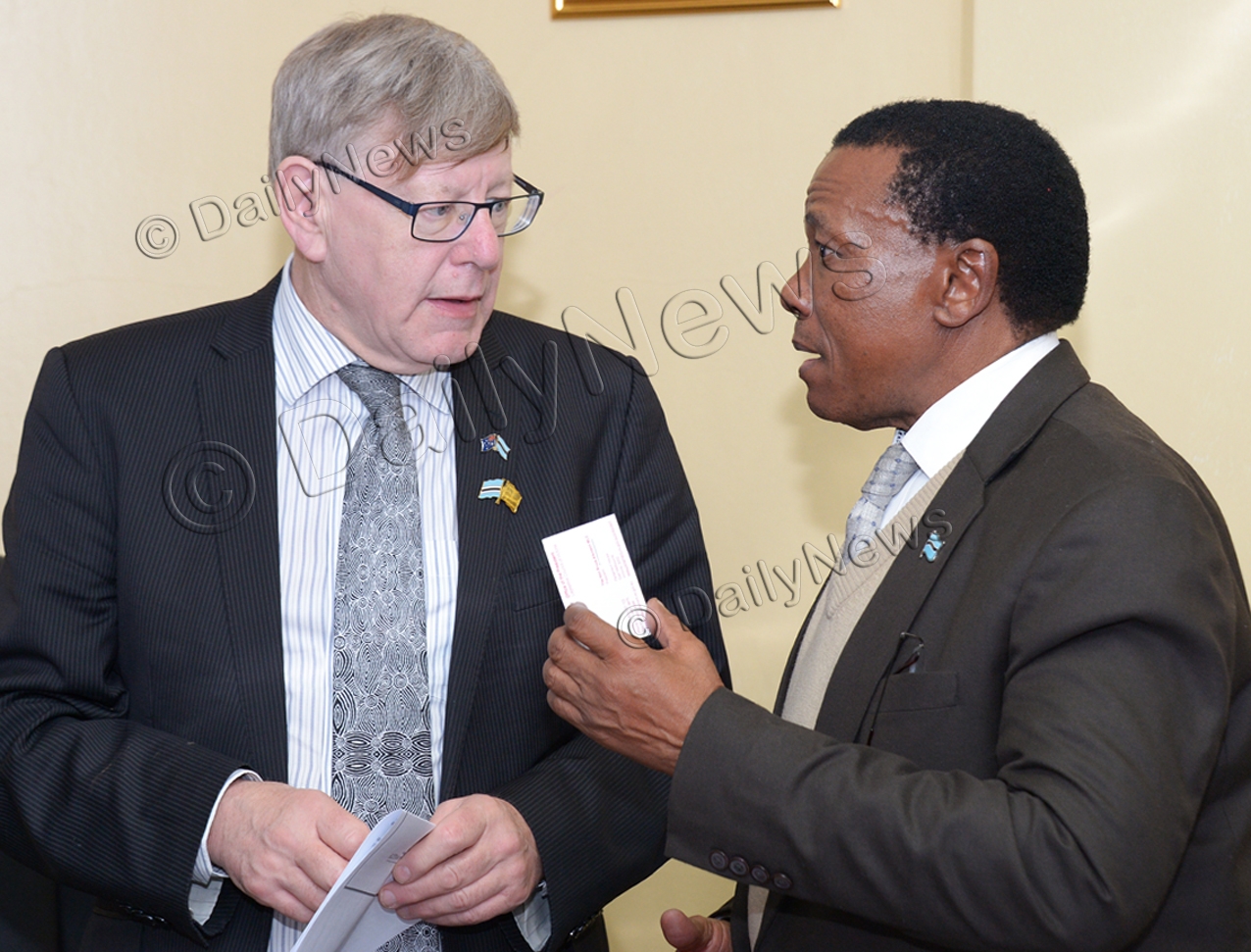
Assistant Minister of Agriculture, Mr Kgotla Autlwetse, said this when briefing the Australian parliamentarian delegation that visited his ministry recently.
“Botswana and Australia enjoy stable and cordial relations characterised by high levels of visits, cultural exchanges, offers of developments assistance as well as trade investment and tourism exchanges”, he said.
Mr Autlwetse said Botswana and Australia bilateral cooperation in agriculture could be further developed in areas of sustainable rain fed farming systems, marketing of agricultural commodities such as beef to broaden Botswana’s export market.
“Rain fed is mostly practiced where arable farming is concerned. The department of crop production has a programme in place aimed at increasing food production such as Integrated Support Programme for Arable Agricultural Development (ISPAAD)”, he said.
He said the Ministry of Agriculture had made a deliberate move to categorise farmers according to their production capacities, adding that there were 110 000 subsistence farmers cultivating up to 16 hactares, 200 emerging farmers cultivating up to 150ha and the remaining 90 commercial farmers cultivating 500ha and more.
“The areas planted for the past three seasons averages 350 000 hactares. Out of this, cereals cover an area of approximately 250 000hactares, oil seeds and cowpeas approximately 45 000 hactares and the remaining hactarage is for cowpeas”, he said.
Mr Autlwetse said on average, cereal production accounts for 8 000 metric tonnes while oil seeds and cowpeas combined account for 14 000metric tonnes, adding that the annual cereal requirement fluctuates between 250 000 and 350 000metric tonnes and production has never met even the cereal national requirement.
He expressed concern that the major constraints to arable agriculture included poor management practiced, traditional farming methods, recurrent drought, erosion, low and erratic rainfall and poor soils.
“The mitigation strategies in place are crop rotation, minimum tillage, mulching, intercropping and water harvesting”, he said.
For his part, the president of the Legislative Council of Victoria in Australia, Mr Bruce Atkinson said they treaured their visit, which enabled their state and Botswana to share ideas.
“We have a state that is so intensive in terms of agricultural, horticultural, and viticulture production, we grow wheat, fruits, grains and extensive wine production areas and we are very strong in terms of livestock”, he said. He said Victoria was one of the leading states, particularly dairy products.
“We are renowned as the major producer of dairy products. We have very much of an eye on the climate change issues particularly focused on water management. We are doing better in terms of water and also investing in national research agency and specific agricultural research centres that are supported by the state government to research different kinds of crops and varieties of foods that are more productive and more secure in a changing environmental conditions”, he said. ENDS
Source : BOPA
Author : Thuso Kgakatsi
Location : GABORONE
Event : Delegation visit
Date : 31 Jul 2016
Related News
01 Sep 2026
Dream big to achieve more
01 Sep 2026
Marulamantsi swimming pool project takes flight
01 Sep 2026
Botswana and Ukraine toast to strong relations
01 Sep 2026