Justice ministers attorney generals discuss SADC legal instruments
19 Jul 2016
SADC committee of ministers of justice and attorney generals met in Gaborone July 11-15 to consider and adopt legal instruments that will facilitate Heads of State and Government during a SADC Summit in Swaziland.
The committee also deliberated on the draft plan of action which once adopted, would become a basis for guiding the committee’s work and a benchmark of its performance.
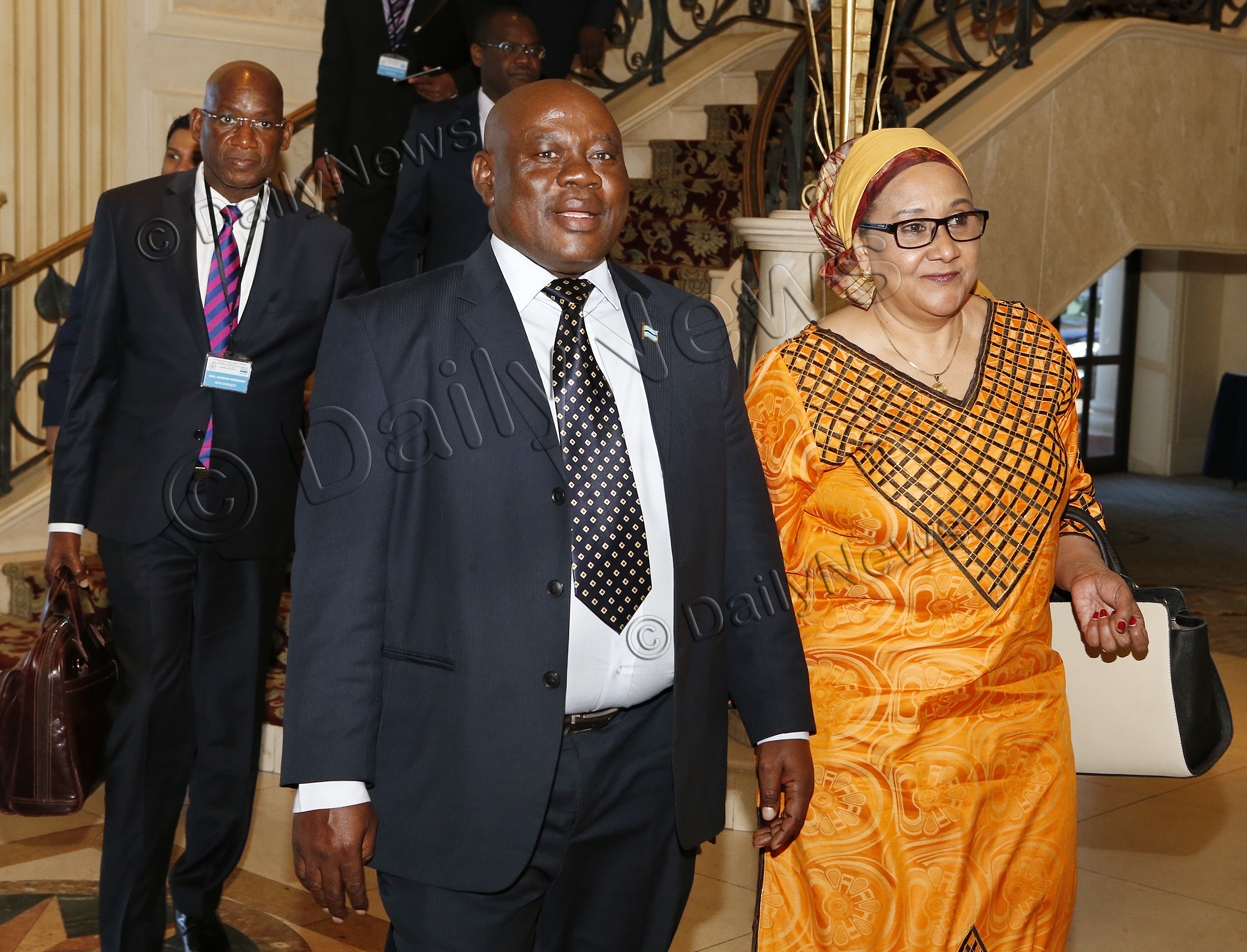
The five-day meeting was officially opened by Minister of Defence, Justice and Security, who is also the committee’s chairperson, Mr Shaw Kgathi, on July 14.
Mr Kgathi said as ministers of justice and attorney generals should provide legal advice to their principals and also to be a clearing house for legal instruments, treaties, agreements and protocols that provided an important compliance framework for SADC to such legal instruments.
To achieve this role, Mr Kgathi said it was important for committee members not to lose sight of the fact that the legal instruments would be fundamental in facilitating SADC heads of state in taking decisions during the summit that would enhance governance, democracy, defense and security structures at the level of individual member states, as well as the regional level.
“I have no doubt that this is one easy task to accomplish, given the community of legal minds and learned lawyers gathered here, balanced with the necessary political might that is here through ministers present here,” he added.
As part of its business, the committee also considered a wide range of draft amendments to existing SADC legal instruments and new legal instruments.
These legal instruments and agreements, Mr Kgahti said were a critical platform through which justice might be strengthened in their respective countries and the region as a whole.
Justice, he said was a pillar of peace, stability, democratisation and development and the Draft Plan of Action covered a wide range of areas necessary for the facilitation of the delivery of SADC principles within a robust legal framework and also made provision for inter-state matters, like extradition and mutual legal assistance, between member states.
“This is also important in view of emerging crimes, such as; cybercrime, terrorism and human trafficking,” he added.
The successful implementation of this Plan of Action, he said would depend on the institutional capacity building in the respective countries and within the SADC Secretariat ‘if we are to follow-through commitments, and deliverables espoused in the Plan of Action.’
In this regard, he encouraged committee members to give sufficient consideration to the resources required for the actualisation of the Plan, as they considered it. By so doing, he said it would ensure effective coordination, implementation, monitoring and evaluation of the Plan.
As the meeting also considered the process and criteria for selection of seven judges for the SADC Administrative Tribunal, Mr Kgathi said he believed this would be along the lines advised by Council of Ministers when they met in March 2016.
“It is my view, that as legal advisors of SADC, we may need to look at the said Directive and determine whether it was the most prudent, practical and fair approach. If it is not, what should be the best alternative.” he added. ENDS
Source : BOPA
Author : Lorato Gaofise
Location : GABORONE
Event : SADC meeting
Date : 19 Jul 2016
Related News