Water energy key components of economy - Mokaila
22 Jun 2016
Water and energy are one of the key components in every nation’s economy.
Without sufficient water and energy, there will be no food security. Energy is itself required to make water resources available for human consumption, through; pumping, transportation, treatment and desalination. Therefore, these two utilities cannot be managed in isolation from each other.
In view of this, President Lt Gen. Dr Seretse Khama Ian Khama, in his capacity as the current chairman of SADC, recently called an urgent meeting for the sectors of energy and water to meet and look at the existing problems regarding energy and water in the region.
The President challenged SADC ministers responsible for water and energy to do some serious introspection and come up with suggestions on how best they could deal with the current energy and water crisis in the region.
The high level SADC Energy and Water Joint Ministerial workshop themed: Accelerating Energy Delivery and Access to Water Resources in the SADC Region – A Collective Approach, was attended by ministers and senior officials from the ministries responsible for energy and water in the SADC member states.
Additionally, representatives of national energy and water regulators and utilities; international cooperating partners, SADC energy and water thematic group members, academic research and training institutions; development finance institutions and independent power producers also attended the workshop.
The workshop was meant to facilitate exchange of ideas and forge practical and sustainable solutions in addressing energy and water crisis in the region with a view to map out a strategic direction and agree on a way forward.
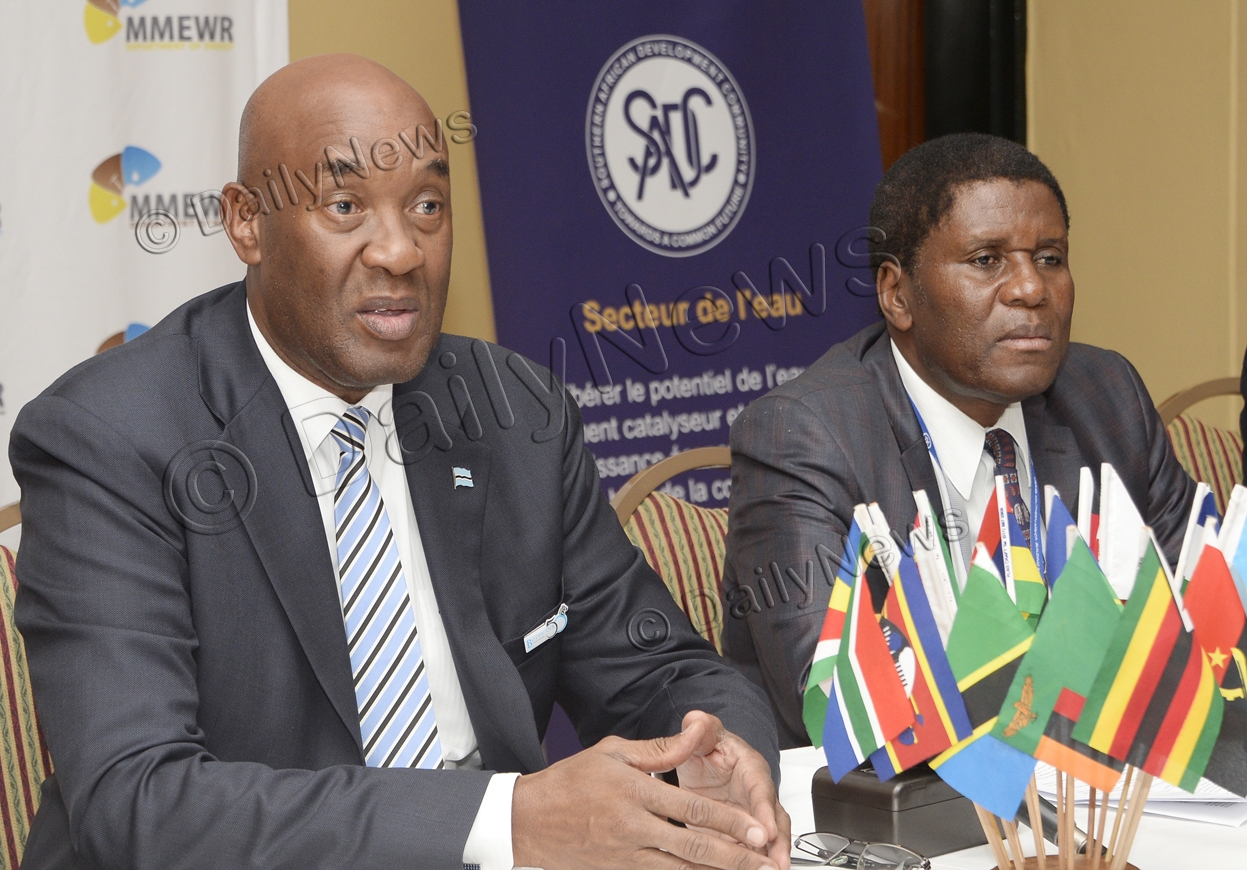
Giving an overview of the workshop and SADC Water and Energy ministers meeting, during a press brief on Tuesday, Minister of Minerals, Energy and Water Resources, Mr Kitso Mokaila said SADC ministers responsible for water and energy ministers had adopted the recommendations in the workshop outcome statement, as a reflection of their deliberations during their meeting.
Persistent load shedding and power shortage, in some other countries in the SADC region, Mr Mokaila said had proved that there was a crisis which seemed not to be addressed by ministers.
“On the water side, we seem to be caught off guard when there are persistent droughts, due to issues of infrastructure, lack of infrastructure and the President challenged us, as ministers of water, to look at the situation and suggest to the Council what needs to be done for us as SADC to deal with these issues,” he said.
Both water and energy, he said were ‘enablers to all our economies, especially within the SADC region. Therefore, it was important that the President stepped up to the plate to direct us, as ministers to do something, because it is the mandate of all the Presidents of SADC to ensure that we provide decent livelihoods for our people and without water and energy we would be challenged to do so.’
Some of the things that were discussed, he said included; combining efforts, as one group, in terms of development of infrastructure, financial resources, and projects implementations to ensure the region was self-sufficient in both water and energy.
For his part, SADC Director of Infrastructure and Service, Mr Remmy Makumbe said SADC ministers responsible for energy and water had expressed excitement and appreciation for President Khama’s wisdom in convening the workshop.
“We believe this was a very successful event. We are also happy that the ministers reviewed issues around water, specifically the river basin organisations, infrastructure projects in the area of water and energy, the power situation in the region and the extent of implementation of the projects and also guided the region on how best to move forward,” he added.
Mr Makumbe also said ministers reviewed the SADC Energy and Water Joint Ministerial Workshop outcome statement, which outlined key challenges and recommendations the ministers found fit to identify and document.
“The outcome statement, indeed, has a number of recommendations which pertain to a number of areas, which include issues relating to; financing of infrastructure, cooperation with international cooperating partners,” he said.
These issues, he said were specifically aimed at accelerating the implementation of infrastructure projects as documented in the SADC infrastructure Master Plan. Ministers having identified these issues, as SADC Secretariat, he said they were now going to work with senior officials to craft an action plan.
This action plan, he said would indicate the activities with timelines aimed at rolling out a programme to accelerate infrastructure and address a number of challenges that were identified during the workshop.
Once that has been done, he said ‘we believe it is going to be handed over to the SADC chairman who will then share it with the Council in Swaziland in August 2016.’
In order to have a water and energy secure region, the workshop recommended and encouraged member states to have joint investments on strategic water and energy projects. To maximise the benefits and accelerate delivery, member states and the Secretariat were encouraged to ensure energy, water and food security sectors planned and worked jointly and avoid sectoral silos.
Additionally, as a matter of urgency, the workshop also encouraged member states to embark on intensive energy and water demand side management strategies, which combine use of high efficiency technologies, methodologies and better awareness creation and to promote and invest in alternative energy sources. ENDS
Source : BOPA
Author : Lorato Gaofise
Location : GABORONE
Event : Workshop
Date : 22 Jun 2016
Related News

31 Aug 2026