


Local government budget gets approval
02 Mar 2016
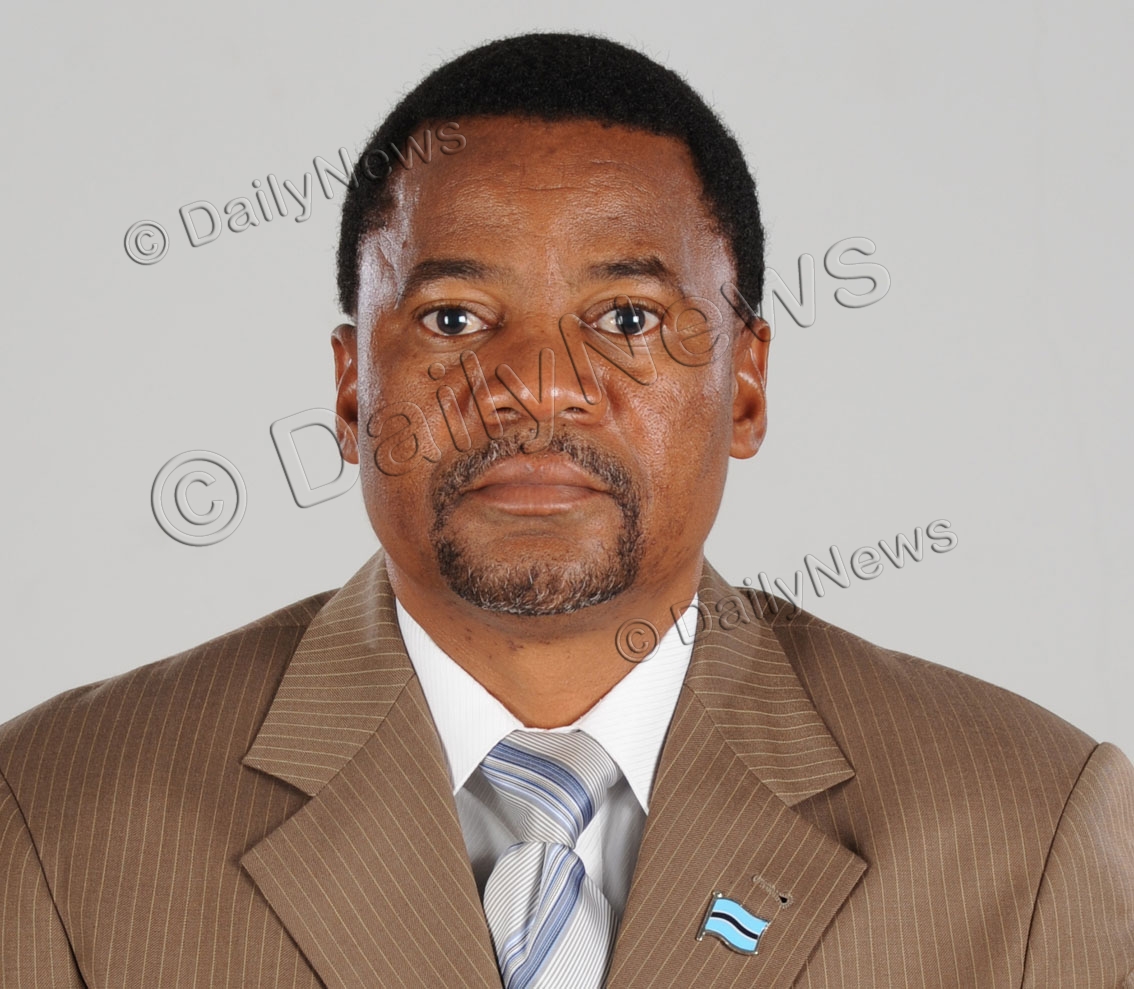
Parliament, on Tuesday, approved Ministry of Local Government and Rural Development’s 2016/17 budget.
Minister Slumber Tsogwane had requested P1.2 billion for development programmes and over P4 billion under the recurrent budget.
In response to Members of Parliament debates, Mr Tsogwane thanked them for their support and contribution to the ministry’s proposed budget.
Some MPs had welcomed programmes offered by the ministry, especially those intended for welfare of citizens.
However, they asked the minister to consider having some programmes enhanced, particularly allocating more money for them to benefit beneficiaries.
They commented on a number of issues which included improving the conditions of service for dikgosi, inadequate allowances and wages under social safety nets, conditions of service for Village Development Committee (VDC) members, increase of Ipelegeng wages, construction of internal roads, storm water drainage, street lights, improvement of remote area dwellers programme as well as inadequate amenities.
On conditions of service for dikgosi, Minister Tsogwane indicated that he was aware of shortage of resources at tribal administration offices, especially furniture and vehicles.
“We have purchased 30 vehicles and we will also have an additional 25 to be distributed under the one-vehicle per village initiative,” he said.
Furthermore, he said the ministry would construct 30 customary court offices across the country in the next financial year under the Economic Stimulus Programme (ESP). The package, he said, included furniture and vehicles.
“The ministry will also continue to make budgetary provisions on annual basis to address these challenges,” he added.
Again, he told members that an additional P7 million was allocated to tribal administration for procurement of furniture, household requisites and computers, adding that installation of ICT infrastructure was ongoing at selected kgotla offices and more computers were being procured even though not every kgotla will be covered.
He also indicated that many projects were deferred in the 10th National Development Plan (NDP 10) due to financial constraints and some of the affected projects under the Department of Tribal Administration included four dikgotla in Molepolole, Francistown, Lobatse and Mochudi.
However, he said he was hopeful that such projects would be considered in the National Ddevelopment Plan 11.
On conditions of service for VDC members, he said even though the proposed increase of their allowance was justified, it would not be, for now, affordable for government given the current economic outlook as well as other competing priorities.
“There are currently a total of 736 village ward development committees countrywide, out of which 21 are umbrella committees. These combined make 7 368 and their current sitting allowances cost over P90 245 200 million per annum,” he explained.
On increasing of Ipelegeng projects, he said the programme did not focus only on labour intensive projects, but also undertook small scale construction ones including maintenance, infrastructure and environmental cleanliness.
He added that the programmes also complemented other ministries through initiatives such as crime prevention and special constables.
On increasing of Ipelegeng wages, he explained that by nature, its remuneration was meant to relieve beneficiaries from economic hardships and therefore it was not meant to be permanent.
Some members had advocated for construction of internal roads, storm water drainage and street lighting in their respective areas.
To that, Mr Tsogwane said the ministry was aware that a lot of major villages required provision of internal roads, associated storm water drainage and street lights, but due to financial constraints, only Gabane, Kang and Tutume had been prioritised for implementation through ESP.
Since NDP 11 preparations are currently ongoing, other villages will be considered along with other priorities for inclusion in the next plan period.
He further, on construction of storm water drainage, indicated that the drainage master plan should be developed prior to road construction.
“However, because of budget constraints and the need to tarmac roads urgently as opposed to drainage, the roads end up being constructed first before the drainage system as it is very costly to do both at the same time.”
On RADP, he said those who had been relocated to established villages such as Tutume and Nkange, needed support and qualified for assistance under normal government programmes and policies.
On transportation of remote area communities’ beneficiaries to major centres to access basic services, he indicated that councils and RACs had been provided with vehicles to attend to all identified transport needs.
However, he explained that due to many competing needs for transportation, vehicles may not always be available to assist.
Some MPs had decried stoppage of LIMID, but the minister explained that government had not abandoned the livestock scheme.
The scheme, he said, was used to empower remote area communities, but was temporarily suspended on account of economic downturn, which had affected a number of projects planned for NDP 10.
However, he said the ministry would continue to monitor the economic situation with a view to re-establish the scheme.
On inadequate facilities in primary schools including lack of maintenance, he said more facilities would be constructed through the ESP and beyond, resource permitting.
On extended feeding programme, he said since inception, vulnerable groups feeding programme came with elaborate guidelines and by then cancer patients were not included, but the ministry would consider them as suggested by some members. Ends
Source : BOPA
Author : Thelma Khunwane
Location : Gaborone
Event : Parliament
Date : 02 Mar 2016
Related News

25 Aug 2026
Forensic audit generates 90 priority actions
25 Aug 2026