

Statistics Botswana consults stakeholders
14 Oct 2015
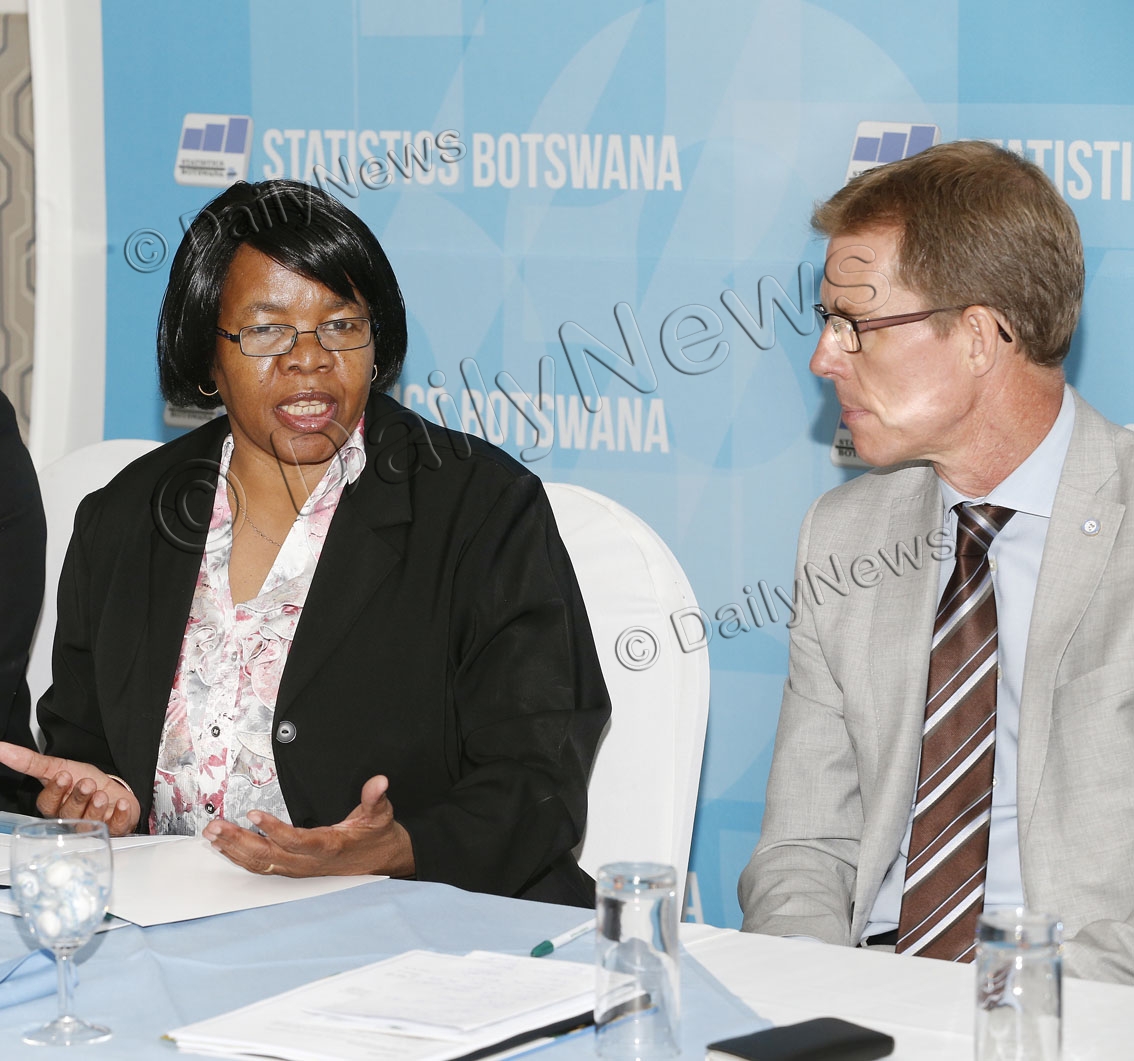
Ministries, private sector companies, parastatals and civil society gathered in Gaborone recently to participate in the preparation of Botswana’s contribution to the indicator framework and comment on the relevance of the proposed Sustainable Development Goals (SDGs) indicators.
The SDGs are a brainchild of the UN following the culmination of the Millennium Development Goals (MDG) in 2015 which were a 15 year development agenda.
Botswana signed on the declaration thereby committing herself to improve the wellbeing of citizens in a number of areas by 2015.
The 2030 agenda for SDGs is underpinned by 17 goals addressing poverty, health, education, gender equality, water, energy, economic growth, infrastructure, climate change, global partnership, sustainability and peace.
Statistician general, Ms Annah Majelantle revealed at the consultative workshop that the UN General Assembly deliberated on the world development agenda beyond 2015 where world leaders signed to adopt the 17 SDGs to be achieved by 2030.
Ms Majelantle said the development of the goals followed a consultative process with all potential role players in government, private sector, development partners and civil society.
She stated that the workshop was part of the global consultative role for Botswana to discuss the goals and further come up with possible indicators that would monitor the progress.
She said Botswana’s position should be in line with that of the African continent.
Ms Majelantle stated that SDGs would form part of the bedrock of the national development planning as it comes at a time where they were formulating NDP 11, preparing the budget for 2016/17 and Vision 2016 celebrations.
UN resident coordinator, Mr Anders Pedersen said Botswana was presented with an opportunity because of the MDG, SDGs, NDP 11 and Vision 2016 happening simultaneously, noting that they should be synchronized.
He stated that the indicators for measuring Vision 2016 and SDGs should be aligned and speak to each other.
Mr Pedersen stated that there were factors that make SDG stand out from MDG, citing that the goals were broader with an inclusive agenda and not just tackling abject poverty.
He said they were also ambitious and universal addressing all countries unlike MDG which were so much about developing countries.
An official from the Ministry of Finance and Development Planning, Dr Ernest Makhwaje said the new development agenda was unique in that it calls for action by all countries whether rich, poor or middle incomes.
He said a unique opportunity arises for Botswana to align its medium long term national goals and priorities to those of the new SDGs.
Dr Makhwaje said the national priorities were geared towards tackling the main challenges facing the country such as poverty, unemployment and income inequality.
He said Botswana was renowned for good policies, but that the challenge has been on translating the good policies into outcomes on the ground.
However, he said in conjunction with the stand alone goal 17 which reads, “strengthen the means of implementation and revitalize the global partnership for sustainable development,” the SDGs have specific procedures for implementing each of the 17 development goals.
“Such specific implementation procedures are expected to provide guidance for facilitating a paradigm shift away from the business as usual approach to development towards a result based approach,” he said. Ends
Source : BOPA
Author : Portia Keetile
Location : Gaborone
Event : Meeting
Date : 14 Oct 2015
Related News

11 Jun 2026