Declining cheetah population worrisome
06 Sep 2015
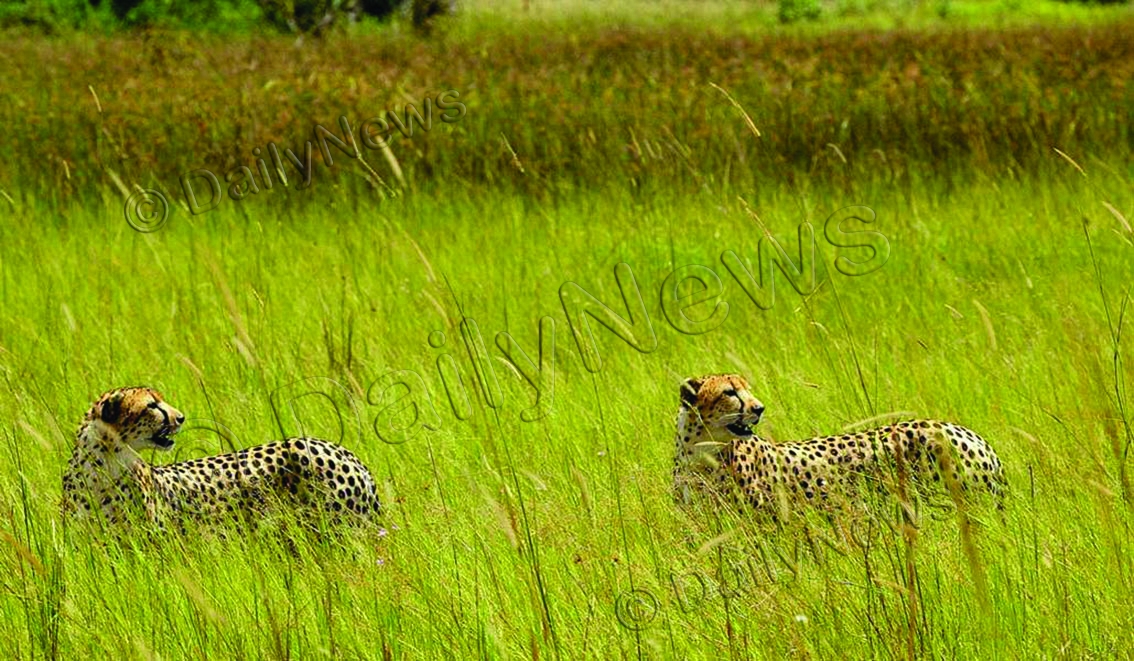
Evolving over four million years ago and able to employ breathtaking acceleration to achieve speeds of around 110 kilometres per hour, the oldest of Africa’s big cats and the fastest land mammal on earth is today engaged in a race against extinction.
The declining number of cheetahs in Botswana is so worrisome and according to Cheetah Conservation Botswana public relations officer, Ms Tapologo Sebati, Botswana had a cheetah population of 1 700 while the rest of Africa was left with 10 000.
The cheetah or (Acinonyx jubatus) as it is scientifically known, has been listed as vulnerable, facing various threats including loss of habitat, conflict with humans, the illegal pet trade, competition with and predation by other carnivores.
Cheetahs reportedly inhabit dry and open areas such as, savannahs and grasslands, acacia scrubs and light woodland. Human conflict with cheetahs in Botswana is usually based on the fact that rural communities are almost completely dependent upon livestock farming for their livelihoods.
The common perception that predators have a significant impact upon rural welfare has led to indiscriminate retaliatory killings.
Organisations such as Cheetah Conservation Botswana (CCB), which was formed in 2003 to address the threat to the nation’s cheetah population give hope that these endangered cats could still be saved. The major challenge for the project, funded by grant aid and donor support, is one of improving community perceptions towards cheetahs and ensuring that retaliatory killings do not continue to threaten cheetah numbers, while, at the same time, supporting and protecting rural community welfare.
CCB has a research base in Gantsi whose purpose is to conduct a program of sampling and monitoring of the local cheetah populations to gather data on ecology, home ranges, behavior, the effects of trans-location, disease and genetic status.
Public relations officer of CCB Ms. Tapologo Sebati says that currently in their research facility in Gantsi they have about 60 goats and have never lost a goat to these predators, this she said is to gather information on predator attacks upon livestock or the perceived threat of such, which have resulted in conflict on a scale which has identified human persecution and exploitation as the primary extinction threats to the cheetah.
“CCB aims to preserve the nation’s cheetah population through scientific research, community outreach and education, working with rural communities to promote coexistence with Botswana’s rich diversity of predator species,” she said. Ends
Source : BOPA
Author : Thuso Mackenzie
Location : Ghanzi
Event : Interview
Date : 06 Sep 2015
Related News

09 Jun 2026

09 Jun 2026
SARS cautions foreign motorists against scammers

09 Jun 2026
Labour agreement to strengthen workplace harmony
09 Jun 2026
Motsamai hails Werda for role in FMD fight
09 Jun 2026