Bobirwa determined to fight Malaria
31 Aug 2015
The head of Bobirwa District Health Management Team (DHMT) has told councillors that his team was keen to eliminate Malaria from the sub-district.
Giving a presentation on the Malaria situation in Bobirwa recently, Dr Jackson Kaguamba said the hotspots villages were Semolale, Mathathane, Lentswelemoriti, Molalatau and Moletemane. Dr Kaguamba said the Indoor Residual Spraying (IRS) exercise to wipe malaria a disease caused by anopheles mosquito, would start in October.
He assured the councillors that he would personally lead the campaign to ensure that all houses in areas where IRS would be conducted were covered.
During September, he noted that DMHT would be engaged in the recruitment as well as the training exercise. Dr Kaguamba stated that unlike in areas like Chobe and Okavango, Malaria in Bobirwa was seasonal especially during rainy seasons, could cause fatalities if unattended.
Therefore, he called for collaboration with the general public to allow the DHMT team to spray their houses, because malaria had devastating effects as it causes illness and death, had negative repercussions on the economy, affects tourism and agriculture.
“Tourists fear visiting countries that are prone to malaria listed by World Health Organisation (WHO)”, he said.
Botswana, he said had a clear mission to totally eliminate malaria out of the country, but was concerned that the blanket IRS campaign in the previous years in the district did not produce the intended results, yielding only 62 per cent, which was below the WHO target of 85 per cent.
Dr Kaguamba said every year the country uses over P20 million for IRS, and as such there was a need for thorough supervision to ensure that the government funds were not wasted. He described IRS as an extremely effective method of controlling malaria, but stated that people did not have faith in it, because they said they still get being bitten by mosquito after spraying.
Apart from spraying, he said they issue treated nets especially to pregnant mothers, children under five years, elderly and disabled people.
The DHMT head said such mosquitoes that bite after conducting IRS were harmless and nonsensical and could not spread the Malaria parasite.
“IRS shortens the lifespan of the mosquito and we should spray enough houses to eliminate malaria and failing to do so waste government money,” he added.
If the areas were fully covered, he said there would be no need to conduct the IRS the following year, but would engage in the monitoring exercise only. He described the IRS as the safe chemical recommended by WHO experts and used across countries in the world, and advised that inhabitants that might develop reactions after spraying must visit clinics and hospitals.
Dr Kaguamba stated that DHMT needed four vehicles to supervise the campaign and he appealed to other departments to help them with resources, because currently they had two vehicles on the ground.
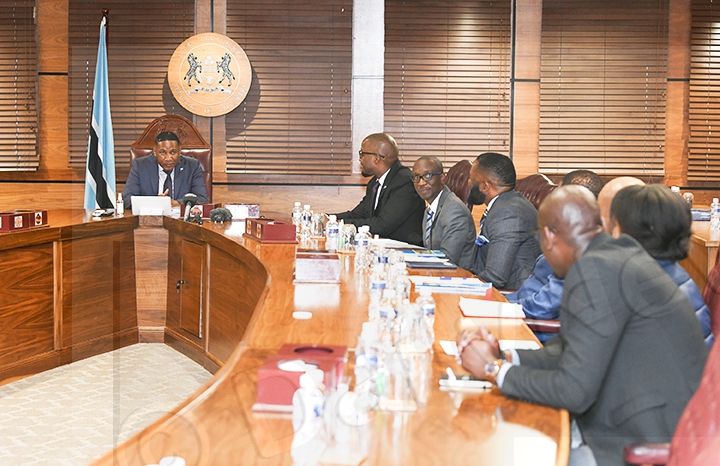
Councillors applauded DHMT for the exercise and Kgosi Letso Malema of Molalatau suggested that areas such as cattle posts, septic tanks must be sprayed because they were the breeding points for mosquitoes. Councillor Keoagile Ramatlotlo of Dandane-Mabeleng said there was a need to educate the general public about IRS, because some people had misconceptions about it. Ends
Source : BOPA
Author : Goratileone Kgwadu
Location : Bobonong
Event : Council meeting
Date : 31 Aug 2015
Related News
09 Jun 2026

09 Jun 2026
SARS cautions foreign motorists against scammers

09 Jun 2026
Labour agreement to strengthen workplace harmony
09 Jun 2026
Motsamai hails Werda for role in FMD fight
09 Jun 2026