

Environmental education important
20 Aug 2015
The Ministry Environment, Wildlife and Tourism (MEWT) through the Department of Environmental Affairs (DEA) have recognised the importance of public education to influence behaviour change towards more sustainable lifestyle choices.
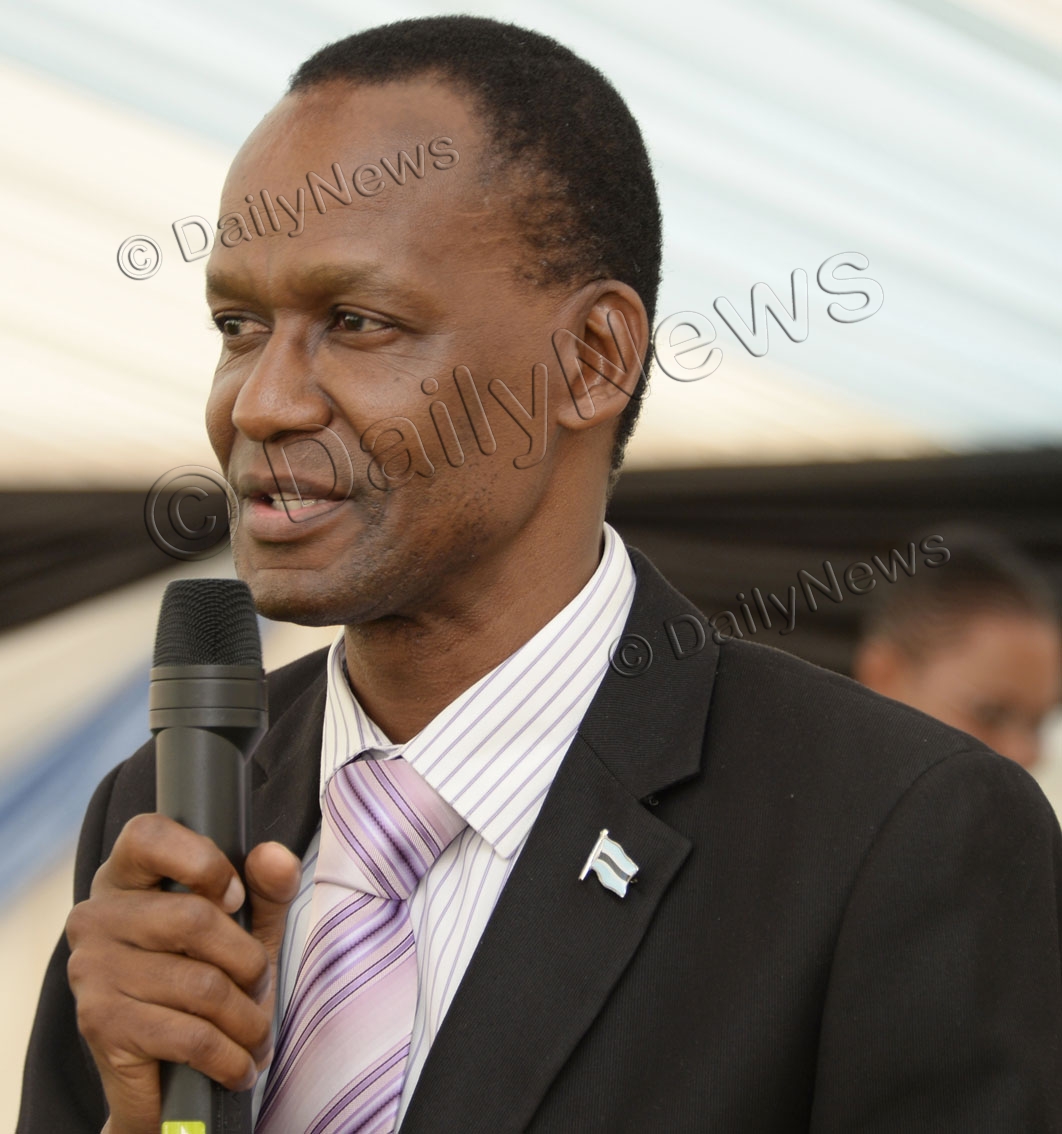
Officially opening Environmental Education Third Conference at Adansonia Hotel recently, the Permanent Secretary (PS) in the ministry Mr Elias Magosi said the conference reflects more on the progress made since the last conference in 2012 regarding education for sustainable development and the era beyond.
He mentioned that this is a vehicle the nation of Botswana is using to implement the 1990 National Policy on the Natural Resources Conversation and Development.
Mr Magosi explained that the population in Botswana is very small young, hence the need to invest in review of evens the education curriculum to align it to Educational Strategy Development (ESD).
He said the objective in the National Environmental Education Strategy and Action Plan (NEESAP) are all encompassing, making it the appropriate document to implement the post ESD activities.
Mr Magosi said their aim is to ensure that the captains of government, industry and civil society that will be driving this country will be equipped with the skills and knowledge to do so in a manner that is sustainable and inclusive.
In addition, he said the process is hinged on the objective to ensure that Botswana develops in the manner that is considerate of economic, social and environment arms of development and is considerate of the needs of the future generations.
Mr Magosi stated that the National Strategy for Sustainable Development (NSSD) framework has identified priority areas termed buildings blocks for the country to pursue a development pathway that will take them towards a more sustainable future. Furthermore, he said some of the focal areas identified in the framework for sustainable development actors and investing in education research and development for sustainable development.
He said the development of ecosystem management plans is particularly in the sensitive ecological areas of Okavango, Makgadikgadi and currently the Chobe areas. The PS noted that the main aim of these plans is to ensure effective management of these resources so that resident communities continue to subsist and benefit from these ecosystems for generations to come.
He said issues discussed in the last conference in Maun in 2012 under the theme: ‘’Striving for Environmental Change in the 21st Century and Beyond,’’ were on climate change, global warming, and pollution, disappearance of indigenous knowledge as well as extinction of some species.
He said by ensuring sustainable consumption and utilization of these resources in various productive purposes they also implement another building block for sustainable development.
A representative from DEA, Mr Moemedi Mbakile said lack of funding is one of the challenges in the implementations of ESD sustainable development.
He said even though they encountered some challenges, some would be turned into activities to be one of the solutions on the matter of fact.
Mr Mbakile said they need to raise awareness and supported by the parent institutions, adding that NESSAP is not widely shared nationally and regionally.
The conference was held under the theme: ‘Celebrating a Decade of Education for Sustainable Development: Reflecting on Botswana`s Footprint.’ Ends
Source : BOPA
Author : Mpho Goitsemang
Location : Francistown
Event : Conference
Date : 20 Aug 2015
Related News

09 Jun 2026
09 Jun 2026
Government to review civil litigation practices

09 Jun 2026
Hirschfeld laid to rest
09 Jun 2026
Harvard Health Partnership role significant

09 Jun 2026
SARS cautions foreign motorists against scammers
09 Jun 2026