


Management of water resources critical
23 Mar 2015
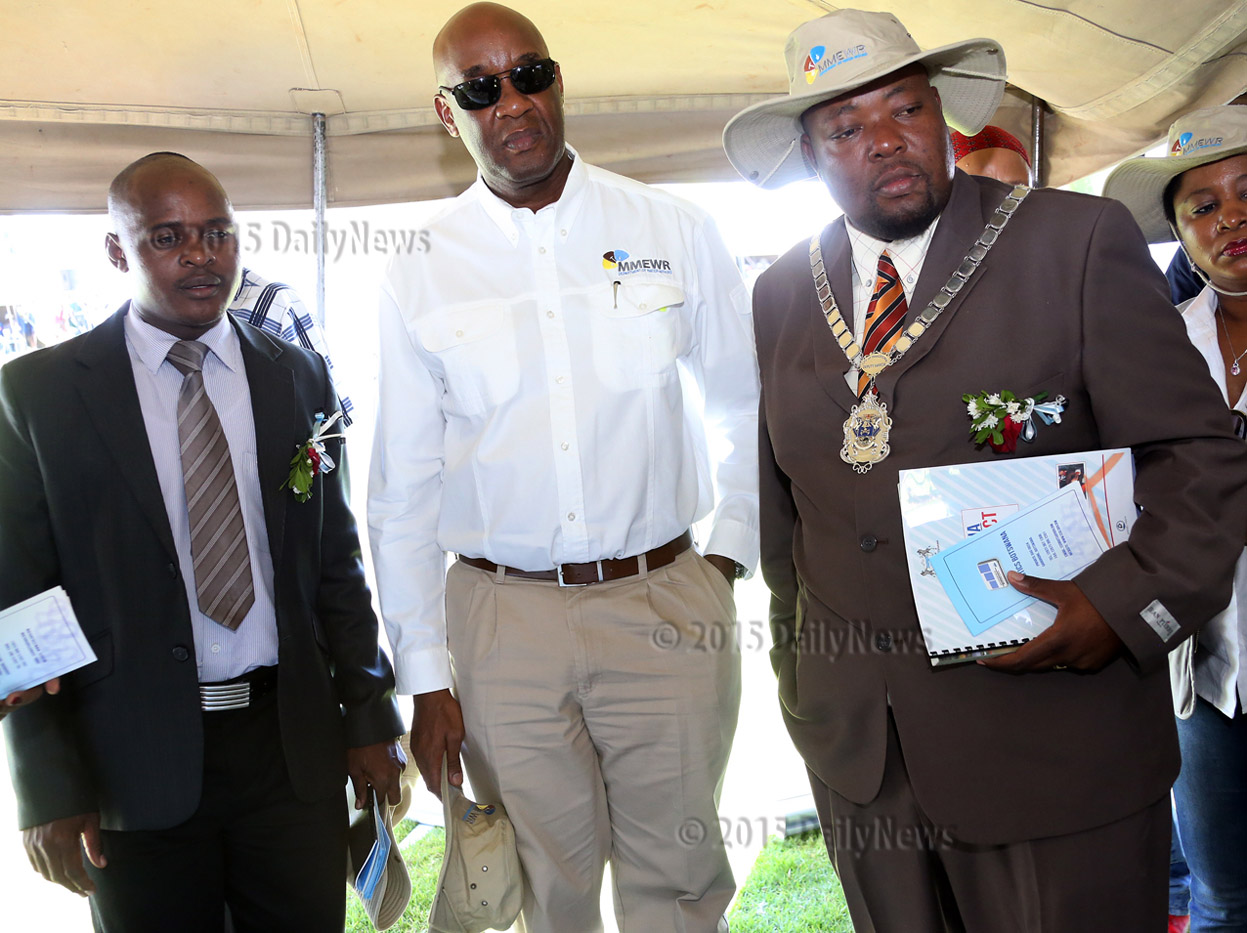
The Minister of Minerals, Energy and Water Resources, Mr Kitso Mokaila, says the World Water Day provides an opportunity for stakeholders to introspect.
Speaking at the commemoration of the day in Francistown on March 21, Mr Mokaila said it was a period in which the world was challenged to focus its attention on action orientated activities and policies that ensure long term sustainable management of water resources.
That is in terms of both quantity and quality, including measures to improve sanitation.
Mr Mokaila said as a way of ensuring the world achieves the desired outcomes, the leaders came up with commitments and a proper plan of action that called on their governments to integrate sustainable development into national strategies and highlight the importance of involving different stakeholders and the public in the process.
He noted that Botswana as a member of the world community acceded to the plans and commitments. The Minister said the country has on the recognition that water represents one of the key constraints to future sustained growth, developed the National Water and Waste Water Policy.
“The National Water and Waste Water Policy represents the first step in a continual process to ensure that water is properly positioned to meet the needs of the nation and its people, thereby promoting economic growth and improved livelihoods,” he said.
He explained that still in line with the International Decade of Action, to ensure good governance in water resources management, the country is also in the process of establishing the Botswana Energy and Water Regulator and Water Resource Board.
“The Botswana government has also adopted an open, inclusive and transparent multiple stakeholders’ platform to Thematic Working Groups (TWG) and through the groups, national development plans are developed in line with Vision 2016 to ensure that the nation’s financial, manpower and natural resources are used effectively, efficiently and in accordance with national priorities,” he said.
Mr Mokaila said following the Millennium Development Goals (MDGs), the country has set a target to reduce by 50 per cent, the proportion of people without access to safe drinking water and basic sanitation by the end of this year.
“The situation in regard to access to safe drinking water is quite promising as in 2004, the proportion of the population with sustainable access to improved water sources stood at 95.8 per cent and rose to 96 per cent in 2007,” he said.
Minister Mokaila said the current water demand in Botswana for the various sectors of the economy stands at 221 million cubic metres per annum and only 218 million cubic metres per annum is currently committed for use.
He said by the year 2016, Botswana will require 225 million cubic metres per annum to stimulate growth in various sectors of the economy and there are some strategies in place to ensure the demand is met.
Mr Mokaila said Botswana has acceded to the Revised SADC Protocol on Shared Water sources of 2000 and through the protocol Botswana is a member of four River Basin Organizations, which are Okavango River Basin Commission (OKACOM), Orange-Senqu River Basin Commission (ORASECOM), the Limpopo Basin Commission (LIMCOM) and the Zambezi River Basin Commission (ZAMCOM).
He explained that within the framework of the regional initiatives as a way of increasing water resources and exercising the national rights, Botswana has negotiated to utilize the shared water resources for her economic development and livelihood improvement.
“Some of the notable projects include the planned 495 million cubic metres of water per annum withdrawal from Chobe/Zambezi for agro-commercial project and the water supply from South Africa to the five Middlepits cluster villages,” he said.
Mr Mokaila said on sanitation, more effort is still need because in 2004, the population with access to improved sanitation stood at 39 per cent and rose to 60 per cent in 2008.
He cited that inadequate planning for sanitation infrastructure development and waste water management poses a challenge to water quality due to pollution of the water resources.
“It is government’s intention to pursue the goal of achieving access to improved sanitation as improved sanitation and good health has direct influence on the economic performance of a country,” explained the Minister.
He said potential investors consider the availability of reliable, safe and affordable water as a factor for investment. The theme for this year’s national water day was “Water and Sustainable Development”.
ENDS
Source : BOPA
Author : Keamogetse Letsholo
Location : FRANCISTOWN
Event : World Water Day
Date : 23 Mar 2015
Related News

16 Jun 2026
15 Jun 2026