


Day of broadcasting makes children more responsible
01 Mar 2015
UNICEF deputy representative says children’s participation in the International Children’s Day of Broadcasting (ICDB) does not mean that children could now tell their parents what to do.
Speaking at the day’s commemoration in Gaborone on February 28, Mr Scott Whoolery said the UN Convention on the rights of a child encouraged adults to listen to opinions of children and involve them in decision making. “Moreover, the convention recognizes that the level of a child’s participation in decisions must be appropriate to the child’s level of maturity,” he said.
The main objective of the event was to highlight the importance of child participation as spelt out in Article 12 of the Convention of the Rights of the Child (CRC), which asserted that children and young people had the right to freely express their views and that there was an obligation to listen to children’s views.
Mr Whoolery said ICDB was launched by UNICEF in 1991 in order to encourage broadcasters worldwide to create awareness for children issues. “On the day broadcasters’ air quality programming for and about children,” he said.
This year’s theme “My Voice Counts Too” Mr Whoolery said emphasised the importance of child participation in all matters affecting them within the family, schools, local communities, public services, institutions, government policy and judicial procedures.
The day also aimed to sensitise children on the importance of their participation and the Children’s Act, sensitize law makers, administrators, communities, leaders and parents on the importance of child participation.
Speaking on Botswana and child participation, he said there was a children’s consultative forum established in 2010. “Children are consulted mainly through the forum and it meets bi-annually,” he said, adding that representation on the forum cut across all the districts in Botswana.
He further said Botswana’s Children’s Act of 2009 promoted child participation but the country could still do more to enhance such. Mr Whoolery said there were some initiatives that could be done to increase child participation in Botswana.
“Some countries have set up structures for children that are copies of adult institutions, such as youth councils or children’s parliaments, and these are channels for children’s views to be made known and also provide opportunities to learn citizenship skills,” he said.
He said another approach was to introduce planning and budgeting processes that involved children in choosing priorities alongside adults.
“Children’s participation is not best achieved through inviting them to major events and conferences nor by involving them in a single piece of research, but rather to more effective, participation requires widespread changes in political and institutional structures, as well as in attitudes, values and cultural practices, so that children are recognized as citizens and stakeholders in the present, not just in the future,” he said.
Mr Whoolery said the UN CRC did not give children the right to veto decisions made by adults, but required adults to seek out children’s views and to take them into account. He also encouraged the media to treat children and their views with respect. “Report on any steps government is taking to include children’s views in decision making and facilitate children’s participation in writing,” he said.
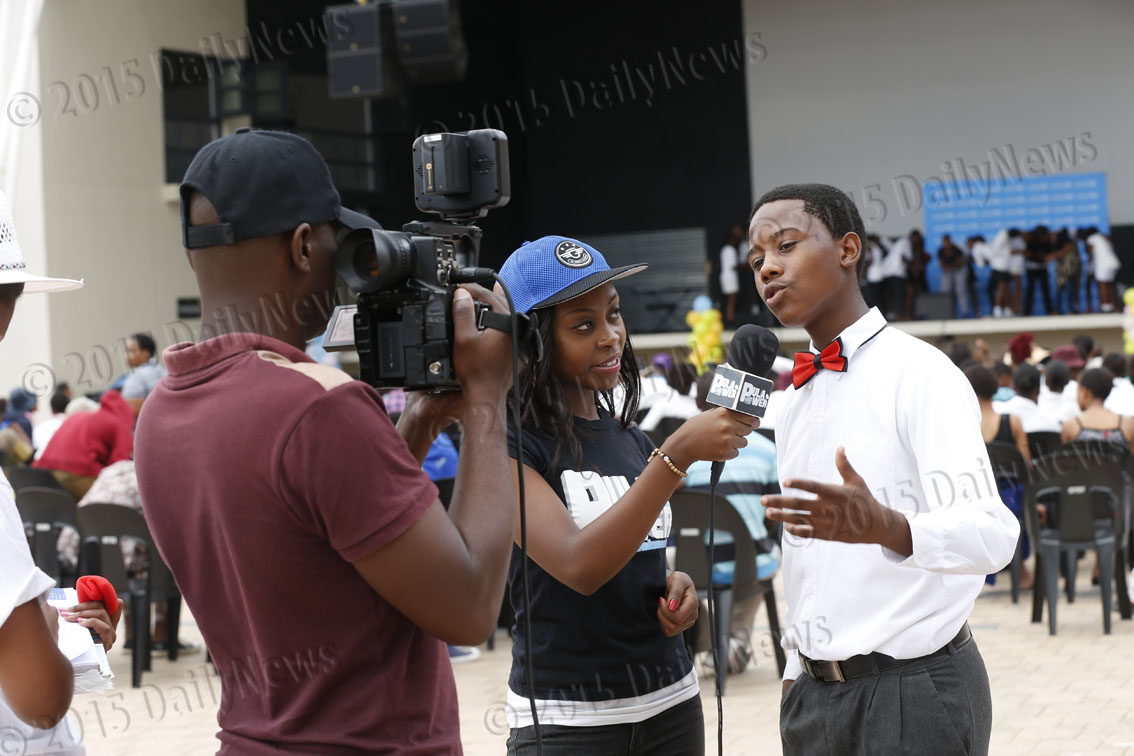
The event saw children given opportunity to manage radio stations, decide on programming, anchor selected programmes and compile news. RB 1, RB 2, Yarona FM, Duma FM and Dee Zone Productions were some of the participants at the event. Children were also exposed to behind the scenes activities such as camera work and sound engineering and were also treated to performances by artists. ENDS
Source : BOPA
Author : Omphile Ntakhwana
Location : Gaborone
Event : Commemoration
Date : 01 Mar 2015
Related News
16 Jun 2026
First Lady courts Bahumagadi for support Mpepu
15 Jun 2026