Tailbone dance When eyes dont lie
25 Jan 2015
“Don’t try this at home!” This is a common refrain whenever WWE programmes hit your television screen. However, one wonders whether the tricks wrestlers displayed are real or just an illusion.
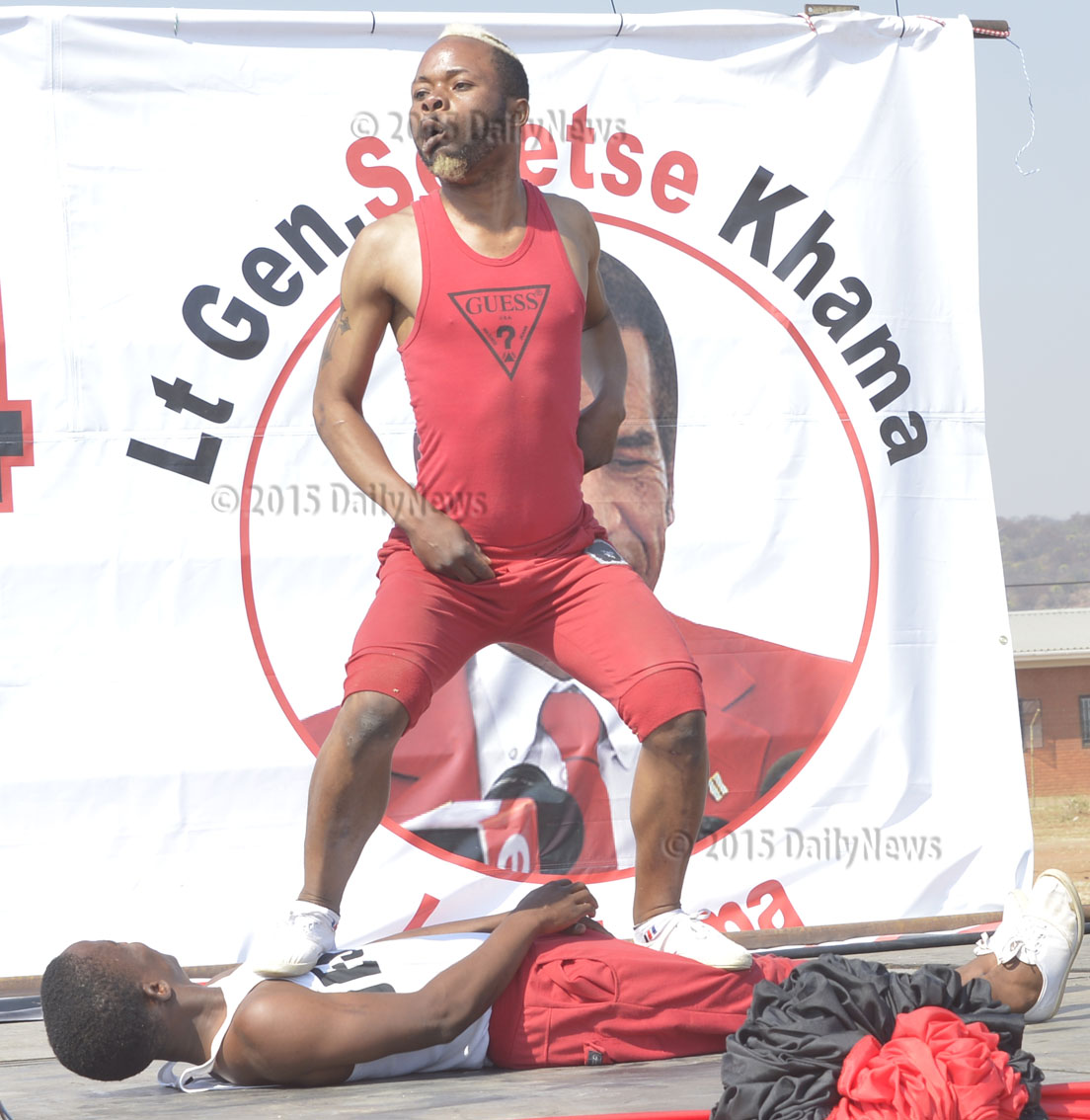
For Vee’s music fans, the trick is real. There are no cameras or visual effects to lie to the eye. Thus, when “Coming Soon” springs up and lands on his buttocks on hard surfaces, it is real.
For the faint hearted, the stunt will certainly send cold shivers down their spines.
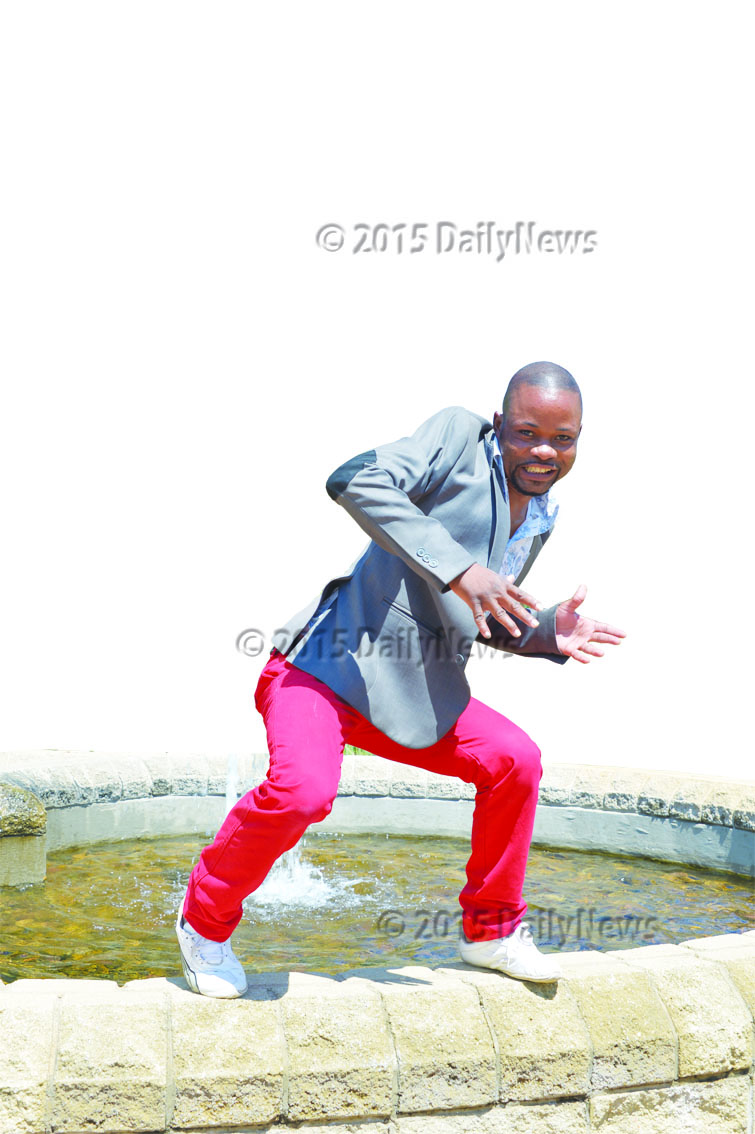
I too felt a hair raising sensation on the back of my neck as I sat down for the interview with this slick dancer whose real moniker is Francis Kalwawashi. Conversely, the pint sized “Coming Soon” is eased up.
He describes his ‘outrageous’ dance of daring-do, as nothing to worry about.
Nonetheless, the 32 year-old Democratic Republic of Congo lad who has been doing this for over a decade now, is quick to warn that “do not to try this Masokonase dance at home”.
“…my first Masokonase dance was in 2003. It just came to mind during one of my performances and I nailed it. It is not painful, I have a trick and I do it so fast that I can’t feel the pain,” says the dancer spotting Channel O styled beards.
From just one stunt, today he does up to five during each performance and readily admits that the more the height, the higher the risk.
He is quick to point out that Masokonase is risky like any other dance because once in a while mistakes happen.
“It’s all about talent,” he quips. Indeed, this is because he has invariably become the life and soul of performances.
Even his stage name derives from his outlandish dance. “I was branded “Coming Soon” in Zimbabwe because of my ‘upcoming’ classic dance.”
Whenever the king of Kwasa Kwaito, Odirile ‘Vee’ Sento, appear on stage, all eyes are on “Coming Soon” as revellers strain their eyes to capture every move he makes. And who is Coming Soon?
He describes himself as a multi-linguist who has never lived the life of Riley.
Armed with Swahili, Lingala, French, Setswana and English, he quit school while doing form four and his destiny was Zambia where he was lucky to join the Zambian Defense Force Green labels.
At age 19, many groups across Southern Africa wanted to poach him to their side hence his short stay in Zambia.
He would reminisce about his primary school days at Imara where he always came up tops during dance competitions but his mother never appreciated his talent, rather he got scolded as a ‘reward’.
Then he landed next door in Zimbabwe where he worked for a month under Diamond Musica stable prior to shipping out to the president’s nephew’s Newstars Musica stable.
His stint lasted only three years before he migrated to Botswana where he worked with groups such as Extra Melody until Vee bought his services in 2006.
Never will he be a free footloose and fancy because he has a daughter to fend for here.
However, one wonders whether his stunts will not have long term effects on his tail bone (coccyx) or spine such that it would be the end of his carrier and reduced quality of life.
Dr Tshepang Tshube, University of Botswana lecturer in the Department of Physical Education, explains that a fall onto the tailbone in a seated position cannot cause damage but such is nevertheless determined by factors such as force applied as well as height.
He says falling on buttocks is different from falling on one’s back or face provided the impact is not much. “…but falling on a hard surface would cause some damage.”
Dr Tshube warns that “if this type of dance is done repeatedly, it can result in overuse injuries because of use of muscles over and over again.”
Overuse injuries are more subtle and usually occur over time.
They are the result of repetitive micro-trauma to the tendons, bones and joints.
Dr Tshube adds that if the dancer falls on the same side repeatedly, it could lead to such injuries (coccyx injuries) which he warns take time to heal.
Meanwhile, according to www.webmd.com, a coccyx injury results in pain and discomfort in the tailbone area (the condition is called coccydynia).
The injuries may result in a bruise, dislocation, or fracture (break) of the coccyx.
The internt source says although the injuries may be slow to heal, the tenderness may be felt in the tailbone area.
The coccyx is the triangular bony structure located at the bottom of the vertebral column.
It is composed of three to five bony segments held in place by joints and ligaments.
A fall onto the tailbone in the seated position, usually against a hard surface, is the most common cause of coccyx injuries
A direct blow to the tailbone, such as those that occur during contact sports, can injure the coccyx. Repetitive straining or friction against the coccyx (as happens in bicycling or rowing) can injure the coccyx. ENDS
Source : BOPA
Author : Ndingililo Gaoswediwe
Location : GABORONE
Event : Artist feature
Date : 25 Jan 2015
Related News
06 Aug 2026

06 Aug 2026
Mayor implores creatives to be innovative

05 Aug 2026
Batho Ba Metsi honours Okavango Delta custodians

05 Aug 2026