


Prioritise fight against Foot and Mouth Disease
05 May 2026
Residents of Kgalagadi North District have been urged to cooperate with government efforts to contain the outbreak of Foot and Mouth Disease (FMD), which has led to the suspension of slaughtering cloven-hoofed animals.
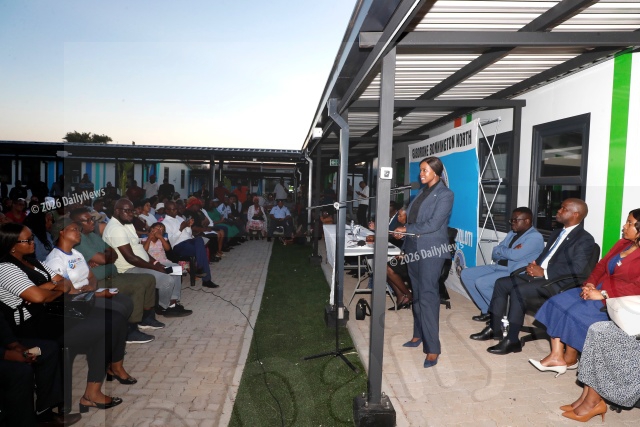
Acting Minister of Lands and Agriculture, Dr Edwin Dikoloti made the appeal during a consultative kgotla meeting at Kang recently to brief the community on the outbreak and outline possible interventions.
Dr Dikoloti emphasised that unity and adherence to veterinary officers guidance was critical in overcoming the crisis.
He assured residents that the country possessed the expertise and experience to manage the disease, noting the country’s long history of combating FMD.
“We will win this battle. We can never be defeated by FMD,” he said. However, the acting minister expressed concern about individuals who do not view the outbreak as a shared responsibility.
He cautioned against attitudes that prioritised immediate economic gain over collective disease control efforts, stressing that government alone could not manage the situation without the support of farmers.
Dr Dikoloti highlighted that preventative vaccinations in designated containment zones were nearing completion, expressing optimism that these measures would help bring the outbreak under control.
He added that lifting the suspension on slaughtering would depend highly on the success and speed of these interventions.
Dr Dikoloti also revealed that the government is working to strengthen veterinary services, including restructuring efforts aimed at retaining skilled personnel, adding that early detection of the disease reflected improved national capacity to respond effectively.
In addressing long-term resilience, Dr Dikoloti attested that there was need for farmers to consider establishing an FMD Fund to support agricultural infrastructure and provide relief during outbreaks.
He suggested that such a fund could be financed through mechanisms such as slaughter levies or a percentage contribution from live exports.
“This is a matter that requires collaboration. Farmers and government must work together to determine sustainable solutions,” he noted.
Dr Dikoloti acknowledged the financial strain on farmers, noting that a dedicated fund could be used to provide subsidies during periods when livestock sales were halted.
He also raised concerns about the underperformance of government-allocated ranches, calling for a review to improve productivity and value.
Dr Dikoloti further underscored the need to enhance biosecurity measures, including the installation of wheel baths, checkpoints, and buffer zones once rezoning becomes feasible, adding that for now, efforts remained focused on controlling the current outbreak.
He called on farmers to actively participate in policy discussions, particularly around rezoning strategies.
The acting minister assured residents of the support of President Advocate Duma Boko, adding that it was through that the approval of P3.7 million was disbursed to assist in addressing the outbreak.
He added that the President’s ongoing international engagements, included efforts to strengthen technical partnerships for the Botswana Vaccine Institute, adding that that when successful, it could enhance the country’s capacity to respond to animal health challenges and contribute to economic growth.
Dr Dikoloti also warned against the politicisation of the FMD issue, urging stakeholders to remain focused on practical solutions.
In addition, he acknowledged challenges such as stock theft and indicated that stricter laws might be necessary, especially as agriculture continued to attract increased investment.
He noted that prior to the outbreak, the country’s beef industry had shown strong performance.
Dr Dikoloti said approximately 12,000 cattle had already been slaughtered, with a target of 100,000 set for the year. He noted that plans were also underway to exceed the Norway quota by July and expand into the European Union market, where demand remained high, adding that all these would not been achieved due to FMD.
Further, he said efforts to scale up operations also included engaging the multi-species abattoir in Gaborone as an extension facility and increasing capacity at the Maun abattoir, adding that recently the abattoir was certified for Halaal markets with its slaughtering from 120 and were planning to increase to 240 cattle per day.
These initiatives, however, have been disrupted by the current outbreak. Despite the setback, Dr Dikoloti reaffirmed government’s commitment to restoring the sector and ensuring that farmers ultimately benefitted from expanded market opportunities once the disease is contained.
For his part, Kgalagadi North MP, Mr Reason Lekhutlane echoed the call for discipline and cooperation, urging farmers to comply fully with regulations aimed at containing the spread.
However, residents raised concern over the absence of dipping points between Borolong and Charleshill, saying the lack of visible control activity is fuelling panic and uncertainty in livestock zones.
Some farmers further pleaded with government to subsidise them by assisting with payment of herd boys who care for cattle at farms, and to scrap the four percent tax charged on cattle sales, arguing it worsened financial pressure on already struggling farmers.
Meanwhile, butchery operators questioned the duration of the restrictions, saying their businesses are struggling to cover basic operating costs under the prolonged controls. ends
Source : BOPA
Author : Thuso Kgakatsi
Location : Kang
Event : Kgotla meeting
Date : 05 May 2026
Related News

09 Oct 2026
Duma Boko School prepares for January intake
09 Oct 2026
Botswana and Zimbabwe seal waste management deal

08 Oct 2026